

Transparent packaging shown to boost sales by enhancing psychological ownership


Key takeaways
- New research shows that packaging with transparent windows or cut-outs increases consumers’ purchase intention.
- The researchers suggest that consumers tend to prefer transparent packaging over opaque options for visually desirable products.
- Eco-friendly materials like cellulose films or recycled PET can provide the transparency that draws consumers’ attention.
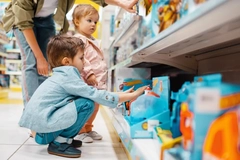
Recent research conducted by Bayes Business School and Vienna University of Economics and Business, Austria, reveals that transparent packaging can boost sales, as product visibility plays a key role in influencing consumer purchasing decisions.
The findings, published in the International Journal of Research in Marketing, show that transparent windows or cut-outs in packaging create greater psychological affinity for consumers when a product is visually appealing and when the buyer is purchasing for themselves.
The researchers explain that transparency heightens a psychological sense of ownership. When presented with an image of an identical product in either concealed or partially cut-out packaging, consumers indicated greater purchase intention.

Zachary Estes, professor of Marketing at Bayes and co-author of the study, tells Packaging Insights: “Our findings will generalize across cultural contexts, because the transparency effect is driven by a basic sense of psychological ownership of the product, and that appears to be a universal psychological desire.”
Increasing product visibility
The study highlights that consumers prefer transparent windows for products before considering packaging color or brand labeling. It further reveals that when the package content was not visually informative, participants would still prefer transparent packaging, albeit to a lesser extent than for treats or cravings.
.webp) Zachary Estes, professor of Marketing at Bayes and co-author of the study.“Over seven independent studies, we show how items in transparent rather than opaque packaging affect choices and intention to buy a variety of food and non-food products, with various packaging materials and window types,” says Estes.
Zachary Estes, professor of Marketing at Bayes and co-author of the study.“Over seven independent studies, we show how items in transparent rather than opaque packaging affect choices and intention to buy a variety of food and non-food products, with various packaging materials and window types,” says Estes.
“Our findings create a new dimension for retailers and marketers when considering the most appropriate and revenue-driving packaging for their products.”
However, the researchers note that psychological ownership is also higher when products are visually desirable. When the products are visually unappealing, transparent packaging does not increase purchase intention.
In terms of sustainability, enhancing packaging transparency does not necessarily lead to an increase in packaging waste, shares Estes. “For example, when using jars or other glass packages, our research indicates that managers should resist the temptation to maximize the label size and instead let the product show through, allowing consumers to develop a sense of owning the product.”
“For non-perishables, our research shows that consumers like a package with a cut-out, so they can directly see and imagine owning the product. And for eco-friendly alternatives to petroleum-based plastics, packs using cellulose films or recycled PET can also offer the transparency that consumers want,” he concludes.