

Interpack 2026: PulPac to showcase “plastic-like” fiber-based closures


Key takeaways
- PulPac will showcase its plastic-like Dry Molded Fiber bottle caps at Interpack 2026.
- The new caps deliver stiffness, internal threading, and torque performance close to traditional plastic closures.
- Developed with partners including PA Consulting, Optima Packaging Group, and SIG, the caps aim to match consumer experience and industrial scalability.
 Viktor Wingård Börjesson, chief operating officer at PulPac (All image credits: PulPac).
PulPac will exhibit its Dry Molded Fiber caps for the first time at Interpack 2026 in Düsseldorf, Germany (May 7–13).
Packaging Insights speaks with Viktor Wingård Börjesson, chief operating officer at PulPac, about the development stage of the new generation of fiber-based caps, the consumer experience they offer, and how closely they match traditional plastic bottle closures.
What makes PulPac’s fiber caps different from existing solutions?
Wingård Börjesson: These caps are a step up from what’s been possible with fiber before. What we’ve developed together with our partners is essentially a new kind of fiber material that behaves much more like plastic. When you hold it, it has that same stiffness and rigidity you’d expect of plastic, to the point where people don’t even realize it’s fiber unless you tell them. That opens up a whole new level of design possibilities.

For example, we can now do internal threading that handles real torque, meaning you can properly twist and secure the cap onto a bottle. That’s something traditional Dry Molded Fiber just hasn’t been able to handle before. So instead of being limited in performance, we’re now much closer to what the market expects from a cap.
How close are your fiber caps to matching plastic performance?
Wingård Börjesson: We’re still in development, but it’s looking very promising. The key here is that we’re not doing this in a vacuum — we’re working closely with PA Consulting, Optima Packaging Group, and SIG as a cornerstone customer.
That setup keeps us grounded in real-world needs. It’s not about creating something that’s just technically interesting, but something that actually works in the market. Even at this stage, we’re already seeing performance levels that are much closer to plastic than anything we’ve seen from fiber before, which is a strong signal that we’re on the right track.
What are the biggest technical challenges Pulpac has faced?
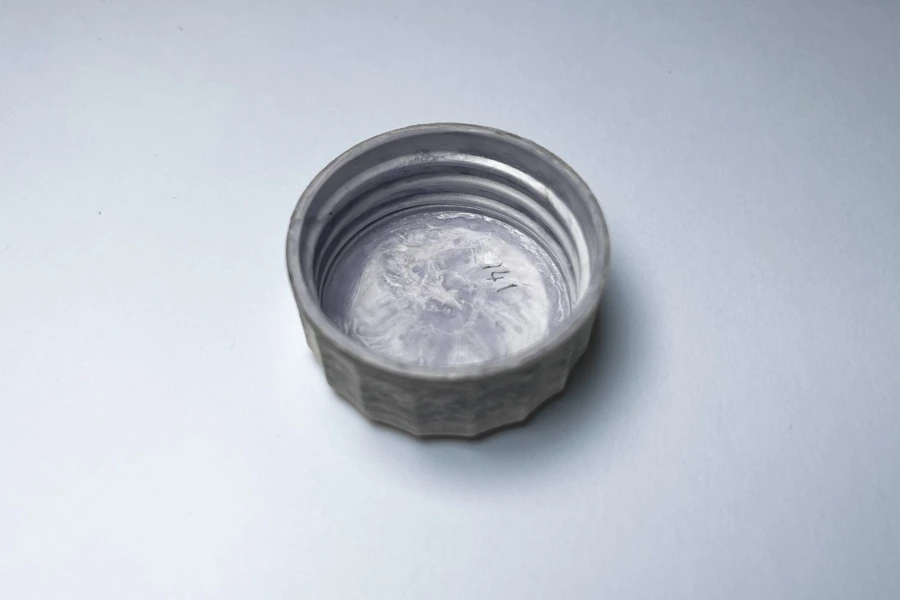 PulPac says its Dry Molded Fiber closures achieve plastic-like rigidity and performance.Wingård Börjesson: The biggest challenge has been staying focused. When you’re trying to replace something as established as plastic, it’s easy to go in a hundred different directions at once.
What we’ve done instead, together with SIG, PA Consulting, and Optima, is to narrow things down. We’ve focused on specific use cases and asked: where does this absolutely need to perform? What are the non-negotiables?
That focus has been key. It’s helped us tackle the hardest challenges early on and make sure we’re building something that’s not just innovative, but ready to compete with plastic where it matters.
How does the opening and closing experience compare to plastic caps?
Wingård Börjesson: It’s very close. When people try the cap without any context, they assume it’s plastic. The feel, the resistance, the way it behaves when you open and close it, all line up with what you’d expect from plastic.
What’s interesting is that people familiar with what we’ve done in fiber before often question the bottle, not the cap. They don’t pick up that the cap is fiber, which says a lot about how close we are to that plastic-like experience.
Why is Interpack 2026 the right moment to showcase this innovation?
Wingård Börjesson: Interpack is one of the biggest moments in the industry, so it’s a great place to show where we are today and where we’re heading. We’re splitting our presence into “now” and “next.” The “now” side is all about what’s already out there through our licensees, lids, trays, cutlery, and more, showing that this is already happening.
Then the caps sit in the “next” space. We’ve made huge progress over the last couple of years, and this is the right time to show that journey. Alongside the caps, we’re also showing things like bottles and blisters, which highlight the strength of what’s coming next and the value of being part of the PulPac ecosystem.
Is there anything else you’d like to add?
Wingård Börjesson: One thing that’s been important for us is making sure this isn’t just a great material — it actually works in production. We’ve put a lot of focus on process parameters: speed, efficiency, consistency, all the things you need to match plastic at scale.
That’s been a core part of the development from day one, and especially in this project.
Because in the end, it’s not enough to have a sustainable alternative. It has to perform in the factory just as well as it does in the hand.