

Nuon Medical explores beauty packaging shift to performance-driven tech


Key takeaways
- According to Nuon Medical CEO Alain Dijkstra, beauty packaging is becoming performance-driven.
- Packaging is evolving to function as an engineered system that improves product efficacy through technologies.
- Connectivity tools, advanced materials, and integrated functions are turning packaging into an interactive platform.

Beauty packaging is no longer a passive vehicle for product delivery, according to Alain Dijkstra, CEO at Nuon Medical. Dijkstra identifies beauty packaging as an extension of the brand’s promise, a driver of performance, and a touchpoint in the consumer relationship.
Nuon Medical’s advanced cosmetic packaging solutions have combined technologies including phototherapy, microcurrents, and skin measurement sensors to improve product performance.
Dijkstra tells Packaging Insights that brands should treat packaging as an engineered system, “one that balances aesthetics, functionality, sustainability, and user-centric design,” as the beauty packaging industry is moving away from single-metric sustainability.
“The industry is shifting toward performance-driven materials that also reduce carbon footprint, like bio-based polymers tuned for barrier performance in sensitive formulations.”

“Today’s consumers equate packaging with product performance. Tactile materials, sensor-enhanced closures, and multisensory elements are no longer fringe features. They’re often baseline expectations in premium segments,” he adds.
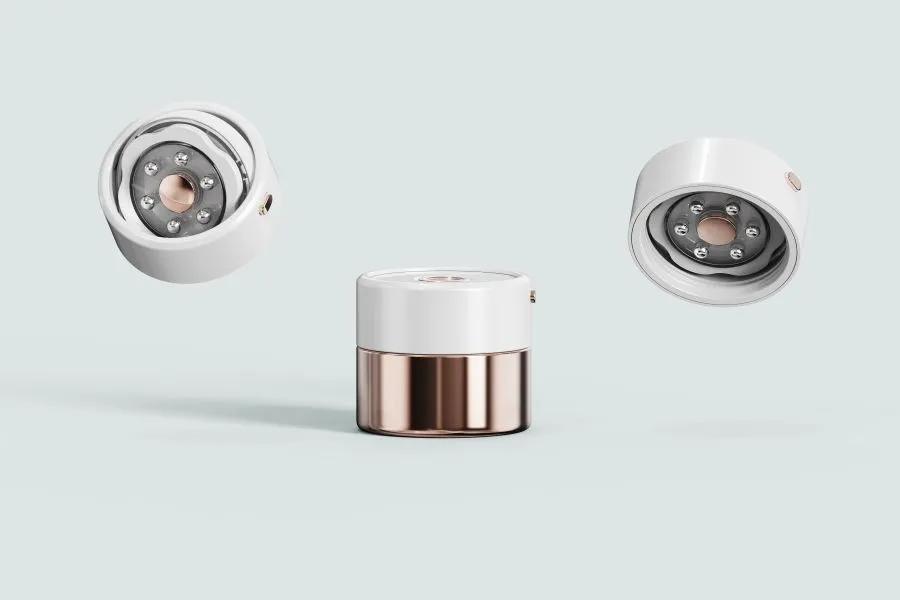 Nuon Medical's intelligent cap is developed to enhance skincare application and efficacy.“At the same time, consumers increasingly expect refillability to be intuitive, premium, and friction-free. Success isn’t about slapping a refill on a jar anymore. It’s about an elegant design that feels premium at every touchpoint.”
Pushing for eco-friendly premium design
Dijkstra notes that balancing aesthetics, functionality, and environmental responsibility requires a holistic design approach.
“Consumers equate premium with heavier, thicker, and more embellished packaging, yet these traits often worsen environmental outcomes. The real tension is designing perceived premium without actual waste premium.”
“Premium finishes (metals, lacquers, multimaterial assemblies) often conflict with recyclability. Without careful design for disassembly, these finishes can render an otherwise recyclable bottle non-recyclable,” he notes.
Meanwhile, Dijkstra adds that lightweighting can improve carbon footprint by reducing material volume, “but it can compromise dispense control or product protection, which are key for sensitive formulas.”
Dijkstra says that addressing these tensions requires a strategy that considers material science, user experience, and end-of-life infrastructure, rather than relying solely on marketing claims.
Brands should “prioritize end-of-life considerations, designing packs for disassembly, recycling, and reuse from day one.”
He also notes that packaging should deliver tangible results beyond visual appeal, focusing on ergonomics, precision dosing, and intuitive interaction that improve usability and convenience.
According to Dijkstra, companies should move beyond generic sustainability claims toward material transparency, supported by measurable environmental KPIs. Packaging design should also align with existing waste infrastructure, ensuring materials can be recycled or reused within current systems.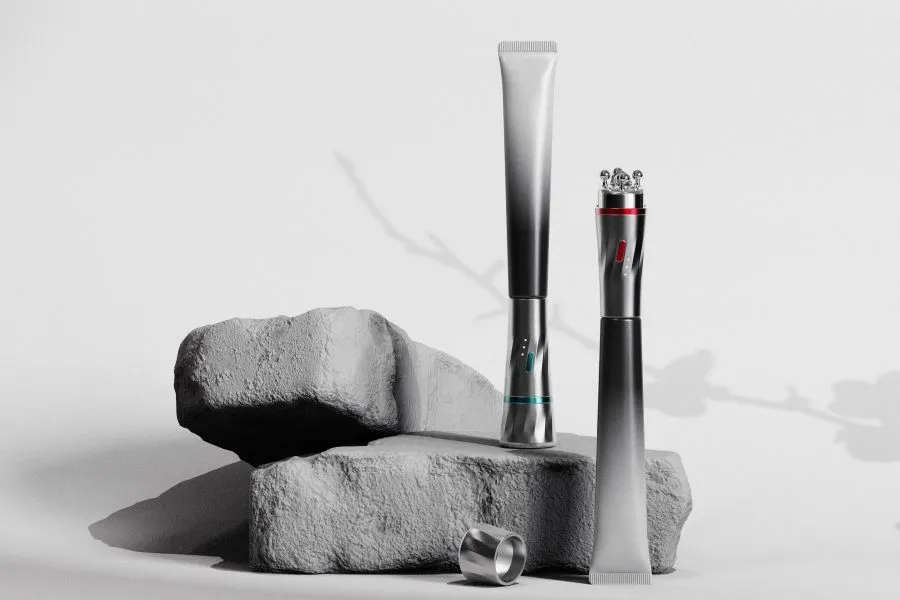 Packaging integrated with technology can enhance smart skincare delivery and improve performance outcomes.
Technology integration
Dijkstra highlights that technology plays a central role in creating future-proof packaging. Brands can leverage connectivity tools such as QR codes and NFC tags, along with traceability and smart material systems, to enable “real-time engagement, personalized product guidance, and product authenticity.”
“Smart labels and tags can turn packaging into a data capture and consumer connection point rather than just a container,” he says.
“Meanwhile, new barrier materials and engineered polymers are extending shelf life without preservatives, enabling brands to reduce formulation compromises. Tech-enabled production, such as digital printing and serialization, is allowing brands to personalize at scale while maintaining anti-counterfeiting standards.”
“Furthermore, integrating functional elements, such as cooling, vibration, microcurrents, into packaging is blurring the line between product and tool, enhancing efficacy and ritual.”
Dijkstra shares that Nuon Medical tech-integrated packaging solutions are “actively enhancing the effectiveness of cosmetic products.”
“For example, our light-based applicators, microcurrent-enabled packaging, and vibration-integrated designs are engineered to optimize ingredient absorption, stimulate skin, or improve user experience during application.”
“These innovations were designed to solve the challenge of bridging product efficacy with daily consumer routines. Many active ingredients in cosmetics require consistent activation or targeted application to deliver their full benefits,” he says.
“By integrating technology directly into the packaging, we help brands demonstrate visible results, elevate the at-home skincare experience, and differentiate their products in a crowded market — all while keeping the packaging itself functional, elegant, and intuitive.”
With reporting from Milana Nikolova.