



AI, sorting tech & data optimize packaging recycling systems

Key takeaways
- New technologies are emerging to address complex waste streams, including improved mechanical recycling and advanced processes.
- AI and data-driven tools are transforming recycling operations, with computer vision, deep learning sorting systems, and real-time waste monitoring helping facilities.
- Industry players emphasize the need for greater collaboration across the value chain.
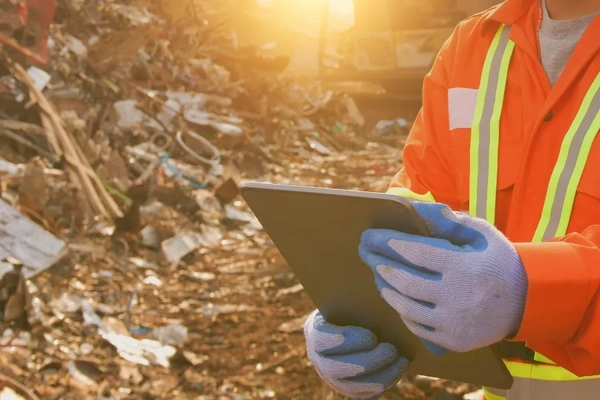
Packaging recycling is a key challenge in the global effort to reduce waste and increase circularity. With advanced solutions and a collaborative approach, the industry is exploring scalable, adaptable, and capable technologies to handle complex waste streams.
Packaging Insights speaks to Greenback Recycling Technologies, Greyparrot, and Tomra Recycling about the latest innovations in packaging recycling. We also explore the future trends predicted to shape the industry.
“Packaging recycling continues to be difficult, particularly when providing recycled content for sensitive and highly regulated applications, such as direct food contact, baby, and medical products,” says Samuel Martínez, chief revenue officer at Greenback.
“Technology developments are taking place to precisely tackle that problem and provide solutions to recyclability and circularity enablement.”
Evolving policy requirements
The recycling industry continues to face hurdles in developing systemic solutions that are scalable, according to Martínez. Effective approaches that can avoid requiring extensive additional improvements across the value chain to function at scale and can operate across different contexts are needed.
Another key obstacle to scaling up recycling technologies is the lack of a level playing field across regions, suggests Martínez. “A solid, clear, and active regulatory and legislative foundation that is aligned and supports the circular economy will help businesses invest, operate, and thrive in a complex ecosystem.”
“Furthermore, improved value chain engagement is required, as this challenge is not something a single value chain stakeholder can take or solve by themselves; therefore, a coordinated and collective approach is essential for success.”
Meeting evolving policy requirements also remains a challenge for the recycling industry. Ambarish Mitra, co-founder of Greyparrot, argues that the next phase of recycling innovation will be defined by the integration of better data.
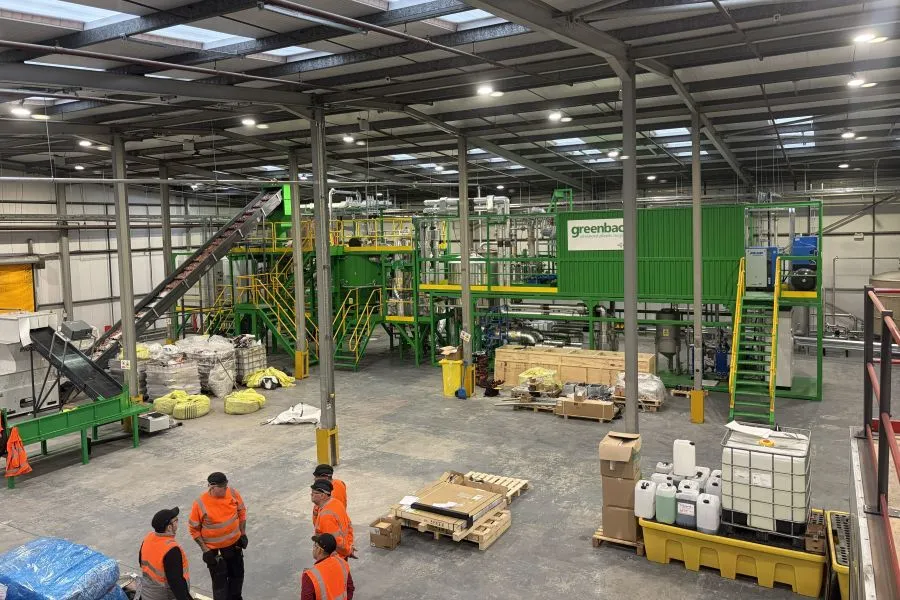 Greenback operates in the plastic waste neutralization via diverting waste from the environment and incineration.He notes that a major shift is underway toward data-driven policy. “Regulation and EPR schemes will be fuelled by what’s actually happening in recycling plants to move the agenda on circularity.”
New tech unlocks circularity
Martínez shares that advanced recycling technologies, such as pyrolysis and gasification, are being developed to process mixed and contaminated waste streams that are usually hard to recycle. Meanwhile, mechanical recycling is now advancing through improved cleaning and purification of the recyclates to enhance quality.
“Specifically in the pyrolysis space, these new technologies will unlock circularity for highly sensitive applications, providing recycled feedstocks to the chemical- and plastics-producing industry while tackling the most acute waste problem — mixed flexible and multi-material waste that is left in the environment and landfilled, or in the best case sent to incineration,” he says.
“Solutions that are less- to non-intrusive, adapted to existing ecosystems, which also allow for a distributed approach to provide solutions close to where waste problems occur, will be instrumental to provide solutions at scale everywhere it is needed, more efficiently.”
“AI and new and enhanced technologies for improved sorting and waste handling to increase the qualities and purity of waste streams and maximize the valorisation of waste are also essential going forward.”
Martínez shares that Greenback’s Enval modular microwave-induced pyrolysis technology can improve waste valorization.
“The solution allows simpler and less costly waste collection and sorting, ensuring a recycled feedstock is produced suitable to close the loop to new plastics with recycled content for sensitive and highly regulated applications.”
“The process can also recycle and harvest the aluminum present in plastic waste streams. This process is unique to Enval’s pyrolysis and delivers more versatility and improved carbon footprint than other pyrolysis technologies.”
Digital traceability
Arnoud te Winkel, regional director for Central Europe at Tomra Recycling, highlights that as global regulations become more stringent, the ability to provide a digital “birth certificate” for recycled materials will become as critical as the physical sorting process.
To meet the emerging trend of digital certification in the recycling process, Greenback has developed eco2Veritas, a digital certification platform that ensures traceability.
“This technology certifies the waste neutralization from the environment, so brands and consumer goods companies can rely on evidence-based data on waste diverted from the environment,” Martínez explains.
“It can also certify the circularity and proof of origin of recycled outputs, ensuring value chain traceability and provenance throughout. It puts the evidence into the blockchain for undisputable, immutable, accessible, and transparent proof.”
Deep learning for sorting
In the packaging recycling industry, AI is gaining increased attention for its role in improving sorting accuracy and ensuring the purity of final recycled materials.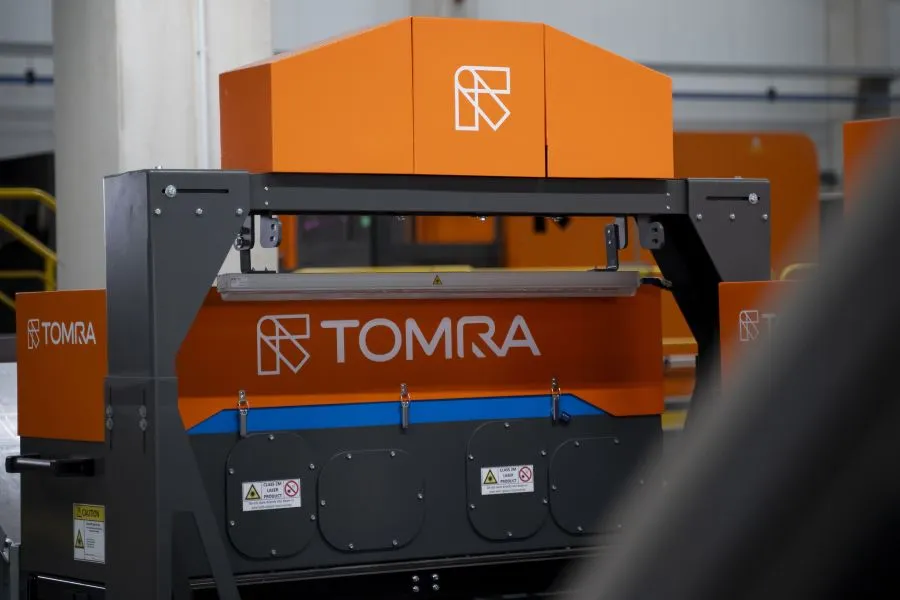 Autosort is a multifunctional sorting system that can be integrated into new and existing plants.
“The most significant trend in the industry is the expansion of advanced deep learning applications. Deep learning represents a major leap forward by mimicking human visual recognition and judgment,” Te Winkel tells us.
“Deep learning is a powerful extension of proven sensor-based sorting — such as near-infrared and color-sensor systems — rather than a replacement. It adds value through advanced visual classification that conventional sensors cannot achieve alone, particularly when material differences are visual rather than chemical or spectral.”
Te Winkel highlights Tomra’s GainNext AI ecosystem as a prime example of how AI can enhance PET recycling.
“Our GainNext AI ecosystem solves previously impossible tasks such as distinguishing between food-grade and non-food-grade PET. This distinction is critical for high-yield, bottle-to-bottle circularity because it allows facilities to separate items with the same material composition based on their previous use, specific packaging shapes, or other visual cues.”
Tomra’s GainNext system, when combined with their Autosort technology, can eliminate hard-to-detect contaminants, such as opaque white packaging, textiles, and foils, from PET bottle streams.
“This ensures that PET is not merely downcycled but is recovered for the most demanding high-end applications, such as food-grade packaging and high-quality textiles,” he adds.
Data-driven optimization
Tomra Local Control was recently launched as the company moved toward a model of continuous, data-driven optimization where decisions are made based on live material composition trends.
“The shift from reactive to proactive management allows for a much more stable output, which is the primary requirement for bottle-to-bottle applications,” explains Te Winkel.
“The launch is a prime example of this shift. It provides a centralized, intuitive interface that allows operators to manage multiple sorters simultaneously and react faster to changing conditions on the plant floor.”
“This immediate access to data ensures that sorting remains stable and efficient even when the input material is highly variable. Instead of individual machines operating in silos, the entire sorting line can be adjusted as a single, cohesive system to maximize total yield.”
Complementing Tomra Local Control, the PolyPerception Waste Analyzer acts as an automated, continuous quality auditor.
“By using cameras for real-time material analysis at strategic points in the sorting circuit, it provides instant visibility into material loss and purity levels. This data is vital for proving that less than 5% of the input material consists of non-food-grade PET.”
Smart waste management
Besides enhancing materials solutions, AI and data-driven methods can also transform waste management.
Greyparrot’s Mitra notes that one of the biggest hurdles in recycling is the lack of visibility. He explains that for decades, traditional waste audits involved manual workers counting and categorizing waste by hand, which can be slow, inaccurate, and expensive.
.jpg) Greyparrot’s AI can identify contamination and recognize recyclable materials by analyzing waste as it moves through a facility.“AI replaces that snapshot with continuous monitoring. Greyparrot installs AI camera systems called Analyzers directly over conveyor belts in global sorting facilities to identify and classify every single item into 111 waste categories in real time,” he explains.
Greyparrot’s AI can identify contamination and recognize recyclable materials by analyzing waste as it moves through a facility.“AI replaces that snapshot with continuous monitoring. Greyparrot installs AI camera systems called Analyzers directly over conveyor belts in global sorting facilities to identify and classify every single item into 111 waste categories in real time,” he explains.
“Using AI computer vision, Analyzers recognize everything from a specific brand of a water bottle using Deepnest.ai to the material type of a crumpled piece of packaging waste.”
He says that this continuous monitoring can provide insights that were previously unavailable.
“Recycling has always been about mechanical muscle, huge machines physically moving plastic and metal. But the industry has been missing the agility that comes with digitization. By leveraging AI, we now see the emergence of a ‘data layer’ that sits on top of that machinery.”
Mitra shares the example that at one recycling facility using Greyparrot’s AI technology, it was discovered that 93% of the material in the residue line, which is typically sent to landfill, was recyclable.
“Only about 7% of that stream was truly non-recyclable. The remaining material was material that could potentially have been recovered, including plastics and fibers that had slipped through earlier sorting stages. That kind of insight is only possible with real-time waste intelligence.”
Industry outlook
Looking into the future, Mitra says AI-driven analytics will become the “industry standard, bringing the same level of precision and agility to recycling that we see in modern manufacturing.” Moreover, brands will start designing packaging based on real-world recovery data and be able to prove their sustainability credentials.
Martínez calls for collaboration among all industry stakeholders. “We are in the early stages of a circular transition, where everyone’s successes will be instrumental to move forward, derisk solutions, establish new ecosystems, and help transition.”
“There is no silver bullet to solve the plastic waste problem, and a cohort of solutions will need to operate in parallel. Further technification will be deployed and developed, particularly with the help of AI and robotics, already changing the way waste is handled and managed for circularity.”
“Digitalization will be natural going forward, and widely implemented, to complement the physical processes and assist them in doing better and more efficiently,” he concludes.