

Aimplas to research bioplastic from agricultural waste for packaging


Key takeaways
- Aimplas leads the Biovalsa project to convert rice straw and citrus pruning into bio-based plastics for packaging.
- The project aims to cut costs by replacing enzyme-heavy, chemical treatments with alternative processes that recover cellulose, hemicellulose, and lignin.
- Recovered fractions enable production of PLA and PBS bioplastics, while lignin’s antimicrobial properties boost functionality for biodegradable packaging applications.
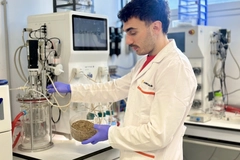 Image credit: Aimplas.
Aimplas has pioneered the Biovalsa project to develop bio-based plastics for packaging applications using rice straw and citrus pruning. Biovalsa involves a new treatment expected to reduce the high cost of transforming agricultural waste of this type into bioplastic.
The Spanish University Institute of Food Engineering at the Polytechnic University of Valencia, Bioban, Viromiim, and Prime Biopolymers are also part of the Aimplas-led project funded by the Valencian Innovation Agency IVACE+i and the European Regional Development Fund.
“Every year, the Valencian agricultural sector generates around 800,000 tons of plant waste, such as rice straw and citrus pruning waste. Currently, the methods for recovering this biomass are costly, as they require commercial enzymes that can represent up to 40% of the cost of the process, which limits its industrial viability,” says Aimplas.
The project is currently in its first year of development, and some progress has already been made in separating the components of rice straw using alternative methods that do not involve toxic substances.
The partners are now testing different strains of bacteria and microorganisms capable of breaking down cellulose and hemicellulose to generate the lactic and succinic acids necessary for the production of bioplastics, which are also being tested.
Material transformation
Biovalsa aims to replace conventional agricultural waste treatments by allowing the three fractions (cellulose, hemicellulose, and lignin) that make up the lignocellulosic biomass to be recovered for the bioplastics industry, avoiding the use of costly chemical compounds.
The research partners are using cellulose to produce lactic acid, a key compound for the production of Polylactic Acid (PLA) — the most widely used type of bioplastic.
Additionally, the project uses hemicellulose to yield succinic acid for the production of polybutylene succinate (PBS), a biopolymer with greater flexibility and heat resistance.
Finally, lignin has antimicrobial properties that make it suitable for recovery and additive use to prevent the proliferation of microorganisms. These properties increase its market value, and according to Aimplas, boost its application areas.
As part of Biovalsa, Bioban will contribute its genomic analysis capabilities to identify suitable bacterial strains to be used for waste treatments. Viromii will study the economic viability of new processes to develop bioplastics.
As an end customer, Prime Biopolymers will be responsible for producing the biomaterials and analyzing the applicability of the materials obtained during the project.
Aimplas is also leading the Bioprocess project to enhance the mechanical and barrier properties of bioplastics, which can be used to create films for food and cosmetics packaging.
The research center is part of an upcycling project transforming non-recyclable plastics into circular packaging.