


Empack 2026 live: Fuji Packaging navigates PPWR and monomaterial challenges


Key takeaways
- Fuji Packaging’s flow packers balance material challenges and offer a range of packaging solutions for various sectors.
- Fuji is adapting to the EU’s PPWR mandate with sealing techniques and mono PE and PP solutions.
- Increased automation and robotics are reshaping mid-sized packaging companies, improving production efficiency.
The EU’s Packaging and Packaging Waste Regulation (PPWR) mandate on minimum free space requires a new approach to sealing, with greater focus on time, temperature, and product protection, says Peter Matel, general manager at Fuji Packaging Benelux.
At Empack 2026 in Gorinchem, Netherlands (April 14–16), Matel tells Packaging Insights that switching to monomaterial PE and PP solutions, although aligned with regulations, can affect supply change and product flow.
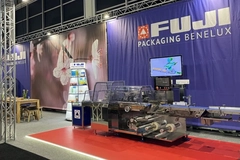
Fuji Packaging is presenting its range of flow pack machines for products like candy bars, fresh meat, sliced meat and cheese, dairy products, pet food, and pharmaceutical solutions.
We sit down with Matel at the tradeshow to discuss Fuji Packaging’s response to EU legislation, monomaterial challenges, and the increase in automation for mid-sized companies.

Minimizing free space
According to Matel, PPWR’s requirements on minimum space, in combination with lower energy consumption, are the biggest factors influencing flow packaging machines at the moment.
“The PPWR is focusing on not only less plastic, but also a minimum amount of free space in a pack, and that demands something from a packaging line.”
“Packing a product, which used to be packed with a certain volume around it, and then changing that to a minimum of foil, with less space in the pack, asks for a different approach to the protection of the product and also on sealing capabilities,” he adds.
Justification for making a bigger foil than needed is important, says Matel, as wrong decisions can lead to unintended outcomes.
“To make a product in a bigger foil than needed, there has to be an explanation as to why that is needed. If it needs a certain amount of gas for an MAP pack, to have a certain shelf life, and maybe you want to make the pack smaller, then it contains less gas, which means you shorten the shelf life, resulting in more food waste.”
Switching to monomaterials
Peter Matel, general manager at Fuji Packaging Benelux.Effective sealing capabilities hinge on knowledge of sealing pressure, time, and temperature, Matel explains, with shifting material choices demanding more.
“The new foil trends in the market are more focused on mono-PP and mono-PE. This asks for a better seal time, temperature, and pressure. If you can manage those three parameters, you can actually close every foil in the market there is.”
However, Matel notes that switching to mono-PP and mono-PE structures can create a tension between the perceived benefits of a monomaterial solution, such as speed and cost efficiency, and product production. It can also hinder supply chain agility.
“This is not only the case for a flow packer but in general for packaging machinery, as constant foil quality is one of the main things,” he adds.
“When a manufacturer has been working with foils for a long period of time and then, all of a sudden, there is demand from a retailer to change to a mono-PP, the complete supply chain for foil is switched to laminates. That means a new supplier, finding the right supplier, and with the right foil capabilities.”
Moving beyond costs
Matel suggests that choosing the correct flow packer with the right foil capabilities should not only be determined by cost.
“It’s easy to just look at price, because Fuji’s flow packer with a proper foil could run, for example, 120 packs a minute, while another mono-PP from a different supplier could only run 85.”
 New foil trends focus on mono-PP and mono-PE, requiring improved seal time, temperature, and pressure, says Matel.Moreover, while switching to mono-PP could be more cost-efficient, it could also create a smaller sealing window, which could lead to inconsistent seals, increased risk of defective packaging, and reduced operational flexibility.
“However, with a good machine, even within a small sealing window, it can close a pack properly. It’s important to really understand the packaging in the market, then understand the technology, to make sure to create the best space to move around,” he says.
“The biggest challenge in these environmental discussions is that changing to a mono foil, or even a more paper-based foil, immediately affects the product flow and speeds you can run in your process.”
Streamlining with automation
Another trend Matel identifies as important for flow packaging and sealing manufacturers is the drive to have “more independence from people.”
He adds: “Every company is focusing on more automation and a lot of robotics. In the Netherlands, there are a lot of nice companies that are building fully automated robot lines. We also now see that it’s not only the top companies in the market, but also mid-range companies are stepping into robotics.”
Matel notes that close collaboration with robotics companies is vital for a successful pivot to automated machinery, especially for production lines with high capacity, like the bakery industry.
“Going from that bulk situation, with two to three shifts a day, that process is not easily stopped. At that point, it’s most important that you work together with a company that understands robotics and fishing, because it’s a combination of those two. If the fishing works correctly, everything is picked up in the right order, and there is a smooth, persistent flow.”
The future of flow packaging
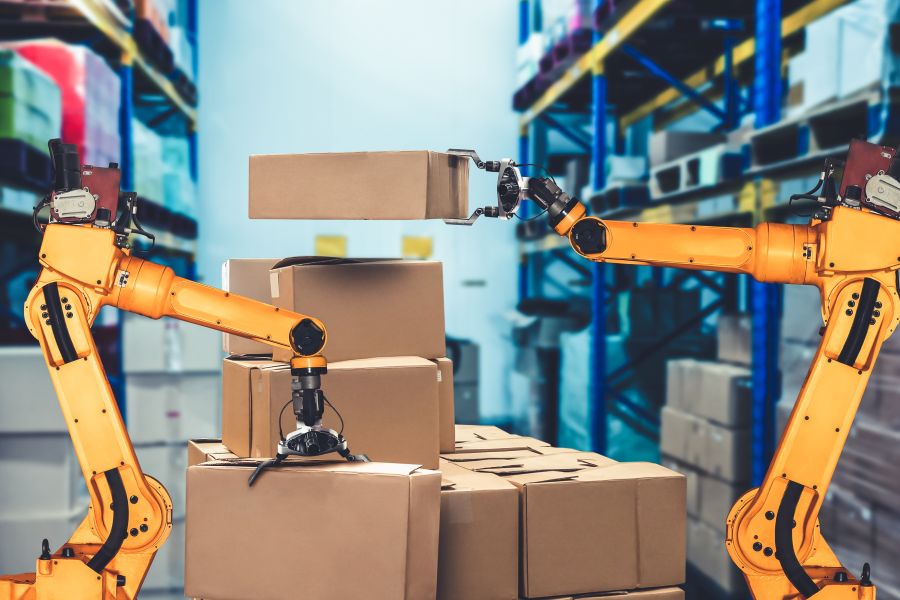 Over the next five years, Matel predicts that more “people-independent” solutions will be a focus for the market.Regarding AI integration into packaging lines, Matel is noticing more demand from customers to send in data from the packaging line to their software platform.
“Companies want to know everything about our machine. The number of packs produced, the number of packs rejected, the time of day, the sealing, and the temperatures.”
Over the next five years, Matel predicts that more “people-independent” solutions, like self-guided vehicles, will be a focus for the market. “It’s also getting more difficult to find people with a knowledge level at the production line, like operators; it is really hard to keep at a good level.”
He adds that mono-PP and mono-PE solutions are still a grey area for retailers, though the next five years will see an increase in workable options.
“Monomaterial PP and PE are still a little bit confusing for customers to find out what to work with. Within the next five years, there will be so much to choose from. Fuji Packaging now has the first paper foils to test. It’s a transparent paper foil, something completely new.”