


Volatile market and rising costs stall green steel progress, LeadIT flags


Key takeaways
- Rising steel, electricity, and hydrogen costs slow down European green steel projects.
- Despite challenges, key projects like Stegra in Sweden and Electra’s demonstration plant show promise for 2026.
- The packaging industry must assess the impact of a green steel premium on final product pricing, LeadIT warns.
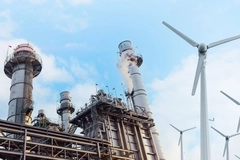
The rising prices of steel, electricity, and green hydrogen, alongside unstable market conditions, have led to a slowdown in European green steel projects, according to the Stockholm Environment Institute.
Packaging Insights speaks with Perez Yeptho and Aaron Maltais, researchers at the institute and the authors of the recently published LeadIT report “2025: a year in review for green steel,” about the report’s findings and its implications for the packaging industry.
“European companies especially have lifted a number of issues: global steel prices and market conditions for steel have weakened,” they explain.
“Electricity remains expensive and green hydrogen is not available at the cost and scale many projects had assumed, with some firms pausing hydrogen procurement deals because bids came in far above expectations.”

“A combination of weak domestic demand and import pressure is pointed to as making large decarbonization investments harder to justify even where public support was offered.”
Packaging industry implications
Despite the unfavorable global economic situation, LeadIT’s report highlights progress on several important green steel projects in 2026, including the commissioning of the Stegra project in Boden, Sweden, as well as SSAB’s Oxelösund mini-mill conversion in the Scandinavian country.
The report also points to Electra’s demonstration plant in the US and the Fortescue Pilbara Demonstration Project in Australia as important developments for the green steel industry.
“The first large-scale plants are expected to come online in the coming years, but they represent only a tiny share of total steel production,” say Yeptho and Maltais.
“But as volumes ramp up over the coming decade, they are ‘available’ to those sectors able to bear the green premium.”
“An interesting question for the packing sector could be to think about what effect a green steel premium of 20–35% would have on the price of final consumer-facing products. Is it a 0.1%, 1%, or 10% price increase?”
Yeptho further argues that it would be important for the packaging industry to determine whether these costs can be passed through the value chain so that the buyers of packaging products are willing to cover the green premium.
Report methodology
The LeadIT report examines close to 160 steel projects, which are defined as “green” because they aim to avoid carbon emissions at the source rather than rely on carbon capture.
The document details: “In practice, the tracker prioritizes projects that phase out coal-based BF–BOF production and replace it with routes powered by renewable electricity or hydrogen produced from renewable energy (green hydrogen), or both.”
Yeptho and Maltais add: “In our report, we communicate what companies and analysts are saying about green steel, and we do not research this question directly.”
“When thinking about what companies say, it is worth noting that some of the points made are about wanting more market protection, which can be in these actors’ interests, independent of the green steel question. One should avoid uncritically adopting the narrative we report on as the full picture.”