

Smart labels drive consumer engagement and product visibility


Key takeaways
- Smart labeling technologies like QR codes and RFID enhance consumer interaction and enable real-time product traceability, say industry experts.
- Digital labels offer the potential to reduce food waste by improving inventory management and shelf life tracking.
- As regulatory pressures rise, smart labels are set to become essential for product transparency and sustainability compliance.
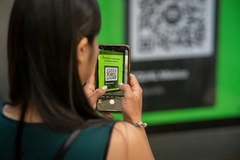
Smart labels are transforming packaging beyond its traditional role of protection. Driven by growing consumer demand for transparency and the industry’s move to traceable products, label innovations are reshaping how products are perceived by consumers and tracked along the supply chain.
Packaging Insights speaks to Avery Dennison, Polytag, and UPM Adhesive Materials about using smart labels, like QR codes and RFID, to enhance consumer engagement and reduce food waste.
“The label used to be the last word a brand had with a shopper. Now, it’s potentially the first conversation,” says Mathieu de Backer, vice president, Intelligent Label Innovation, at Avery Dennison.
“QR and RFID give brands two complementary channels. RFID handles the operational layer with speed and accuracy. QR handles the consumer layer, enabling content-rich interactivity. The packaging becomes a digital identity, not just a wrapper.”
In addition, Leo Jin, director of markets, APAC, at UPM Adhesive Materials, tells us that smart labeling brings a conceptual change by placing more information on a label “than physical space would ever allow.”
Brand communication
Polytag’s CEO, Alice Rackley, says that QR codes are changing how brands can communicate with consumers.
“Using GS1-compliant QR codes and resolvers, brands can deliver location-aware, multi-language content tailored to where and how a product is scanned, ensuring engagement and technical consistency,” says Rackley.
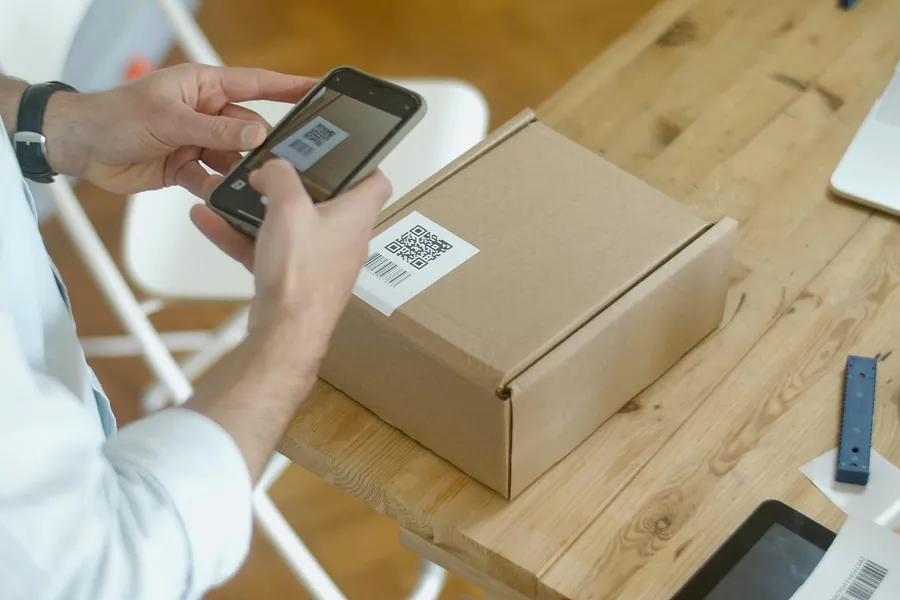 Rackley says QR codes enable brands to deliver location-aware, multilingual content.She adds that QR codes can give brands direct control, rather than relying on third-party platforms. “Every scan represents a highly engaged, high-intent interaction at the product level, effectively creating a marketing channel that scales automatically with sales volume.”
Fighting food waste with transparency
Research commissioned by Avery Dennison reveals that food waste accounts for around a third of retail revenue and is projected to reach US$540 billion a year.
“When every item carries a unique digital identity from the point of manufacture, you stop guessing and start knowing. You understand what stock you have, where it is, and what condition it’s in,” says De Backer.
“In grocery, most of that loss happens in blind spots, meaning in transit, in the back of the store, in the chiller. Item-level digital identification closes those gaps.”
Some products do not lend themselves well to RFID labeling, says De Backer. For example, cold, wet, densely stacked meat cases have “historically defeated RFID.”
He adds: “Avery Dennison designed the AD IdentiFresh inlay series specifically for those conditions, so daily inventory and expiry checks that used to take hours can be done in minutes with accuracy.”
Real-time inventory traceability
Jin highlights how RFID eliminates the need for manual stock counts and provides real-time insights.
“Every item movement is tracked automatically, giving businesses a live picture of their inventory at all times. This prevents the familiar problem of stock sitting forgotten in a back corner until it ages past its useful life,” he tells Packaging Insights.
 Jin highlights how RFID labels eliminate the need for manual stock counts and provides real-time insights (Image credit: UPM Adhesive Materials).Moreover, he explains that stock traceability acts as a deterrent against theft, since any unauthorized movement is recorded. “The result is leaner, more accurate inventory with less waste on every front.”
Rackley points out that batch-level traceability is also “critical” for targeted product recalls and compliance. It supports better stock rotation, prevention of out-of-date sales through embedded date codes, and a reduction in food waste, she says.
“Polytag’s approach is designed to work within existing infrastructure. Through partnerships with hardware providers such as Datalogic and full compatibility with checkout systems, our QR codes can be scanned across the entire value chain, from production lines to retail environments.”
Avery Dennison’s Optica portfolio is a range of supply chain solutions designed for apparel factories to gain real-time, end-to-end visibility using RFID smart labels and atma.io, Avery Dennison’s cloud-based connected product platform.
De Backer adds: “RFID gives you item-level truth. Thanks to warehouse sensors, or an operative with a handheld reader, you can count thousands of tagged items in seconds, find the ones that are misshelved, expiring, or missing, and act before the loss is locked in.”
Labels that “build trust”
Rackley notes that interactive labels provide useful information to consumers at the point of decision-making, and in a format that is accessible, relevant, and personalized.
She adds: “Through a single QR code, brands can deliver rich, product-level information like ingredients, allergens, user instructions, warranty registration, customer support, or even guidance on recycling, reuse, and repair. This helps consumers make more informed purchasing decisions and builds trust in the brand.”
Similarly, Jin explains that smart labeling technologies can drive consumer engagement. “These technologies open the door to storytelling. A label can link to a behind-the-scenes video, or an augmented reality experience. Perhaps most importantly, they build trust.”
De Backer corroborates this, highlighting that consumer concern over product origin and materials is growing.
“Around 71% of global consumers say they care about brands being transparent regarding materials used and the environmental impact of manufacturing. An interactive label is the most direct way to deliver that proof, on the product itself, at the moment of decision.”
.webp) De Backer predicts RFID and AI will converge for optimization, while NFC chips will drive greater consumer engagement.For instance, a QR code on a coffee pack can link to information about the farm, or a code on a bottle can confirm authenticity, which can be useful in spirits, beauty, and pharma, where counterfeits are a risk, he adds.
De Backer predicts RFID and AI will converge for optimization, while NFC chips will drive greater consumer engagement.For instance, a QR code on a coffee pack can link to information about the farm, or a code on a bottle can confirm authenticity, which can be useful in spirits, beauty, and pharma, where counterfeits are a risk, he adds.
However, De Backer notes that smart labeling design must be implemented efficiently.
“A QR code needs to be findable, scannable, and lead somewhere genuinely worth the tap. A broken link or a dull landing page wastes the moment,” he adds, urging collaboration across marketing, merchandising, finance, and supply chain teams to mitigate this risk.
Labeling the future
For Jin, the future of smart labels is rooted in tightening global regulations that demand product information, such as the EU’s Digital Product Passport.
He adds: “In the near future, smart labels may serve as the primary identifier for individual products — a development that regulators in several markets are already moving toward.”
“Traceability requirements are tightening globally, which means advanced labeling could soon shift from a competitive advantage to a legal baseline. At the same time, sustainability regulations are pushing the industry to ensure that label materials themselves are compatible with recycling streams.”
Rackley adds that digital labels provide a “future-ready foundation” for initiatives like Digital Product Passports and other regulations.
She says: “With regulatory frameworks incoming, brands need solutions that ensure accurate, compliant on-pack data while remaining scalable and interoperable across markets.”
De Backer predicts two shifts in the smart labeling space — the convergence of RFID with AI for enhanced optimization and the rise of NFC chips for further consumer engagement.
“RFID generates a clean, structured stream of real-world data. Feed that into machine learning, and you move from reporting what happened to predicting what’s about to happen — demand spikes, bottlenecks, spoilage risk,” he says.
“The second shift is consumer-facing. Flexible NFC chips will let many more everyday packs carry a tap-to-engage experience at a cost that makes sense for fast-moving goods. Combine that with QR for universal access, RFID for operational accuracy, and Bluetooth Low Energy for sensing, and the humble label becomes the most valuable square inch on the product.”