



Actega and Living Ink launch algae-based ink for carbon-negative printing


Key takeaways
- Actega and Living Ink Technologies have unveiled a sustainable, high-performance ink made from carbon-negative algae pigment.
- The algae biomass waste is refined and purified through a pyrolysis process.
- The ink has been integrated into Waiakea Hawaiian Volcanic Beverages’ label printing, supporting their circular economy goals.
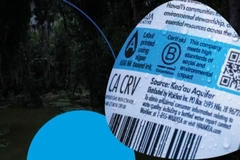
Actega and Living Ink Technologies have introduced ACTExact UV Black Algae Ink. The algae-based solution is said to reduce emissions through renewable, bio-based pigment technology.
The ink adopts Living Ink Technologies’ Algae Black pigment and replaces petroleum-derived carbon black with a carbon-negative pigment developed from recycled algae biomass. According to the companies, the algae biomass waste is pyrolyzed, refined, and purified into a high-performance black pigment.
Dr. Scott Fulbright, CEO and co-founder at Living Ink Technologies, says: “Our long‑term collaboration with Actega demonstrates how industry leaders can unite innovation and impact to deliver scalable, sustainable solutions.”
Lowering environmental impact
ACTExact UV Black Algae Ink was engineered to be fully compatible with conventional UV flexographic printing systems and can reportedly be used as an alternative to conventional solutions without any changes to equipment, workflows, or operator training.
The algae are reportedly converted into a “high-purity black pigment that delivers deep, rich coloration” through a carbon-negative process of pyrolysis and refinement.
ACTExact UV Black Algae Ink has been integrated into Waiākea’s label printing, led by NextGen Label Group. The project supports the brand to replace its previous black ink entirely with the eco-friendly alternative.
The partnership aims to strengthen Waiākea’s circular economy goals, supporting responsible material selection and measurable climate impact.
Ryan Emmons, CEO and co-founder at Waiākea Hawaiian Volcanic Beverages, says: “Algae Black is proof that innovation and responsibility can scale together. We’ve spent over a decade working on a more sustainable packaging alternative, and partnering with Actega helped us make it commercially viable.”