


BMT enhances bottle design with data-driven prototyping


Key takeaways
- BMT’s Smart prototyping combines virtual simulation, 3D-printed molds, and lab-scale testing for faster, data-driven bottle development.
- The platform helps manufacturers validate designs early, reducing costly re-work and accelerating market launches.
- Smart prototyping can empower teams to optimize material selection, geometry, and performance with real-time insights.
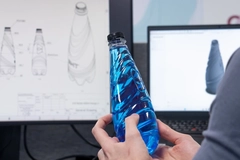
Blow Moulding Technologies (BMT) is supporting bottle manufacturers and brands with its Smart prototyping platform, which delivers data-driven validation to reduce development risks.
The prototyping platform combines virtual simulation, 3D-printed molds, and lab-scale stretch blow molding testing to accelerate and de-risk bottle development and deliver insight.
The technology company says that in today’s fast-paced FMCG and beverage markets, packaging teams are under increasing pressure to move faster, explore new formats and materials, while meeting sustainability targets.
“While rapid prototyping has become standard practice, speed alone is no longer enough. Designs must be validated for performance, processability, and material efficiency before significant investment is made.”
Smart is said to surpass conventional rapid prototyping to ensure brands avoid six-figure tooling costs, shorten development cycles, and commit to tooling with confidence.

Yannis Salomeia, CEO and co-founder at BMT, adds: “In today’s market, manufacturers need more than speed — they need confidence.”
“Smart prototyping empowers teams to replace guesswork with evidence. By testing assumptions early, visualizing concepts before they’re built, and aligning stakeholders around real data, manufacturers can reduce risk, eliminate costly rework, and accelerate their time to market. It’s not just about moving faster — it’s about moving forward with clarity and conviction.”
Prototyping methodology
The Smart platform is in line with BMT’s “measure, digitize, execute” methodology, which it describes as focused on generating high-quality data rather than relying solely on trial-and-error testing.
The platform provides such data by capturing real-time insight into temperature, pressure, and material behavior. The process is said to help manufacturers optimize preform geometry, material selection, and processing parameters early in the development cycle and before mass production quality data. This means they do not need to rely solely on trial-and-error testing.
BMT explains that early visibility on temperature, pressure, and material behavior is increasingly critical as brands pursue lightweighting, increased recycled PET content, and distinctive packaging, and as bottle designs become more complex.
These trends can amplify risk when decisions are made late in the production process, according to the company.
Jude Cameron, project lead at BMT, adds: “The enhancements reinforce our mission to deliver actionable insight, not just speed. Smart prototyping allows manufacturers to ‘show, not tell,’ turning ideas into testable models that expose feasibility and usability early in the process.”
“By learning fast and iterating quickly, teams can progress from concept to validated design in a matter of days, reducing uncertainty, focusing investment on what truly works, and building higher quality products from the outset.”
BMT indicates that Fortune 500 manufacturers have validated bottle designs, achieving up to 20% weight reduction within five days, accomplishing early production representative proof of performance before committing to tooling.
Data-driven validation can enable teams to avoid up to £150,000 (US$201,096) in tooling rework, reducing late-stage design changes and accelerating product launches by as much as 70%, according to the company.
Unconventional formats
BMT’s Smart prototyping further allows manufacturers to trial and refine formats, such as asymmetric thick-walled bottles and those with non-traditional shapes.
For producers dealing with such “difficult” formats, committing to tooling too early can be particularly high-risk, according to the company.
“Design novelty, barrier requirements, and process sensitivity all need to be validated before scale-up. By combining data-rich lab trials and 3D-printed molds, BMT enables teams to validate feasibility, performance, and processability early — accelerating development while avoiding costly dead ends.”
BMT adds that as packaging innovation accelerates, traditional “tool-first” development approaches are becoming “increasingly risky and expensive.”
“Decisions made on incomplete information lead to hundreds of thousands of pounds in costly rework.”