



Industry groups sue California over “arbitrary” packaging label ban


Key takeaways
- A coalition of packaging and food groups is challenging California’s SB 343 over free speech concerns and its impact on recycling efforts.
- SB 343 restricts the use of recycling symbols and environmental claims unless packaging meets strict recyclability criteria.
- The lawsuit seeks to block the law’s enforcement, arguing it will confuse consumers and reduce recycling efforts.

A coalition of packaging manufacturers, dairy producers, and farmers is suing California, US, over its Truth in Recycling (SB 343) law, alleging that it undermines recycling and violates the First Amendment of guaranteed free speech.
SB 343, enacted in 2021, prohibits the use of the chasing arrows on packaging unless it meets four recyclability criteria set out by the state, which include consumer access, sortation, packaging design, and chemical safety.
Packaging can only feature the chasing arrow symbol if it meets these criteria. The law aims to eliminate misleading labels and ensure only truly recyclable items are marketed as such.
“Consumers deserve accurate and useful information related to how to properly handle the end of life of a product or packaging,” states the law.

However, industry groups such as the Flexible Packaging Association, the American Forest & Paper Association, and Californians for Affordable Packaging are challenging the law, calling it an “unconstitutional restriction on free speech that will reduce recycling, confuse consumers, and increase cost pressures for California families.”
SB 343 not only regulates the chasing arrow symbol, but also prohibits the use of language on packaging such as “environmentally safe,” “ecologically friendly,” and “earth friendly.”
The industry coalition is seeking a preliminary injunction to block enforcement of the law, which applies to products and packaging manufactured from October 4 this year.
Avoiding consumer confusion
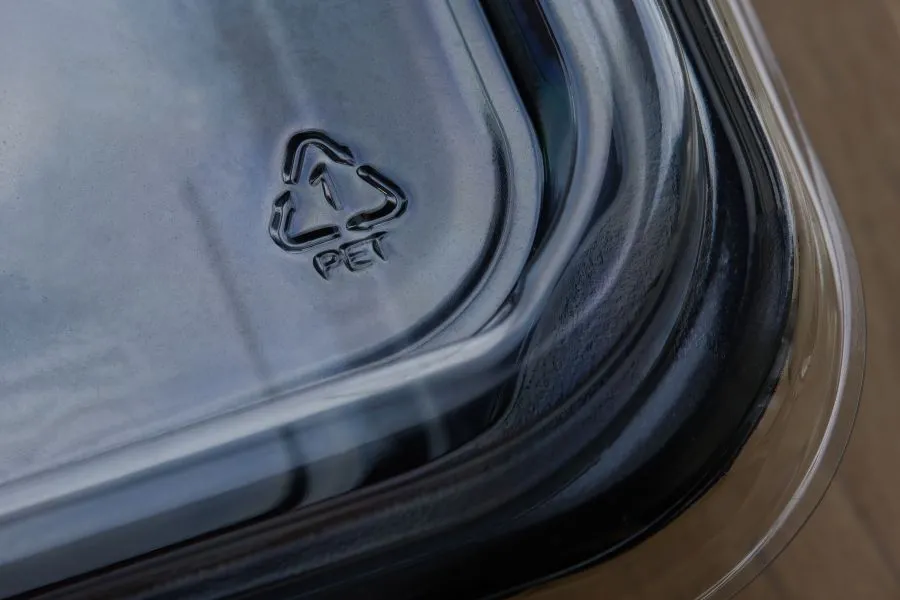 California's label law prohibits the use of the chasing arrows on packaging unless it meets certain recyclability criteria.The industry coalition and SB 343 each identify the importance of accurate communication of recycling information to consumers. But they diverge in their approaches to how that information should be presented.
The Western Growers Association — one of the suing groups — argues that SB 343 “cuts off that communication” to consumers, suggesting that if recycling guidance is removed from packaging, consumers lose the information they need to be able to correctly recycle, creating consumer confusion.
Meanwhile, the SB 343 states that marketing claims, where explicit or implied, should be evidenced by “competent and reliable” data to “prevent deceiving or misleading consumers about the environmental impact of plastic products.”
The Western Growers Association also notes that if companies cannot label recyclable packaging as recyclable, it is “far more likely to end up in a landfill.” However, the law does not outright ban recyclability claims, rather, it prohibits them unless the product meets the state’s specific recyclability criteria.
“A product or packaging that displays a chasing arrows symbol, a chasing arrows symbol surrounding a resin identification code, or any other symbol or statement indicating the product or packaging is recyclable … is deemed to be a deceptive or misleading claim … unless the product or packaging is considered recyclable in the state pursuant to subdivision,” according to SB 343.
“Government-imposed censorship”
Types of plastic approved by SB 343 include PET, high density PE/low density PE, and PP — as long as they also meet the recyclable criteria set out by the state.
.webp) The lawsuit claims SB 343 acts as "government-imposed censorship" by limiting producers' ability to inform consumers about packaging recyclability.These criteria stipulate that the material type and form be collected for recycling, serving at least 60% of California’s population, and be sorted into designated recycling streams by large-scale transfer or processing facilities that serve at least 60% of statewide recycling programs.
The lawsuit claims SB 343 acts as "government-imposed censorship" by limiting producers' ability to inform consumers about packaging recyclability.These criteria stipulate that the material type and form be collected for recycling, serving at least 60% of California’s population, and be sorted into designated recycling streams by large-scale transfer or processing facilities that serve at least 60% of statewide recycling programs.
However, the lawsuit argues that SB 343 operates as “government-imposed censorship,” by restricting the ability of producers from informing consumers when their packaging is recyclable unless the material meets “rigid” and “arbitrary” regulatory criteria.
“SB 343 bars producers from using widely recognized recycling symbols and statements, even when factually accurate, unless the packaging meets state-imposed recyclability criteria that do not reflect real-world recycling capabilities or local program variation,” says the Western Growers Association.
In terms of recyclability, SB 343 also mandates that packaging must be designed for recyclability — a necessary feature for the success of recycling streams. Therefore, it must not include inks, adhesives, labels, or components that prevent it from being recycled.
Lastly, SB 343 states that packaging must not contain intentionally added chemicals like PFAS, which have been found harmful to human and environmental health.