
Xaar advances accessible packaging with digital inkjet braille printing tech


Key takeaways
- Xaar highlights digital inkjet as an effective solution for accessible packaging, enabling high-quality braille and tactile features.
- The solution allows short runs and regional design changes in regulated markets.
- Xaar is expanding the role of digital inkjet in analogue-dominated production environments.

Xaar, an inkjet printing technology group, has published a whitepaper exploring how digital inkjet technology can enable effective braille printing for accessible packaging, as legislation, brand expectations, and consumer needs increasingly align.
Packaging Insights sits down with Tom Mooney, product manager, Versatex Printbar at Xaar, to discuss how printing technologies can support accessible packaging, which has become an “essential part of the brand experience.”
“Pharmaceutical packaging is increasingly required to combine accessibility, compliance, and premium branding, often within the same production run,” he says.
Mooney shares that the Xaar Versatex Printbar enables converters to apply high build varnish, braille, and “high-opacity whites digitally, alongside variable data, without slowing production or introducing additional finishing steps.”
“Ultra High Viscosity Technology allows the use of functional and decorative fluids that deliver tactile clarity and durability, while TF Technology, which is our ink recirculation technology, ensures reliable performance throughout long production runs.”
“This combination allows pharmaceutical brands to meet accessibility requirements while maintaining consistent quality and traceability. At the same time, digital inkjet supports shorter runs, frequent design changes, and regional variations, which are becoming more common in regulated markets.”
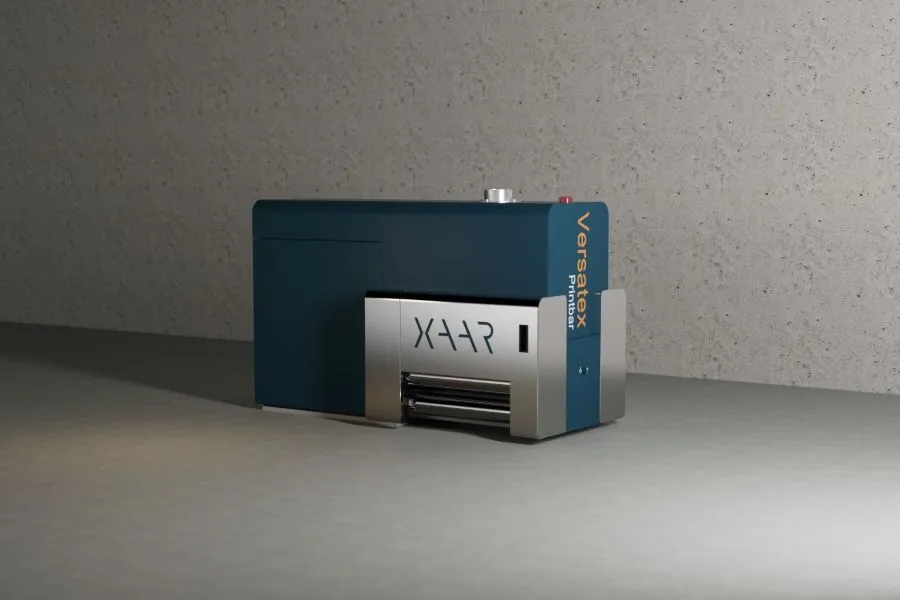 Versatex is said to feature high laydown, speed and reliability.Precision and consistency
The development of accessible packaging supports inclusive healthcare by enabling more people to understand and identify the products they are using. Mooney emphasizes that precision and consistency are critical when implementing tactile features such as braille and doming.
“The Versatex Printbar was designed specifically to make digital adoption practical for converters. Its compact, modular design allows it to be installed inline on established analogue presses or offline on the finishing line without disrupting existing layouts or workflows,” he explains.
“This means converters can add digital capabilities such as embellishment, braille, or variable data without the need for major mechanical changes or full press replacement.”
Mooney says that Versatex combines high laydown capability, advanced print modes, and robust inkjet engineering.
“The latest evolution of Versatex includes a dedicated braille mode that delivers higher build at increased speeds, resulting in more clearly defined braille dots with consistent height and spacing.”
Consistent packaging results
Mooney says that digital inkjet does not only complement analogue processes, it is also becoming an “essential and dependable part of modern packaging production.”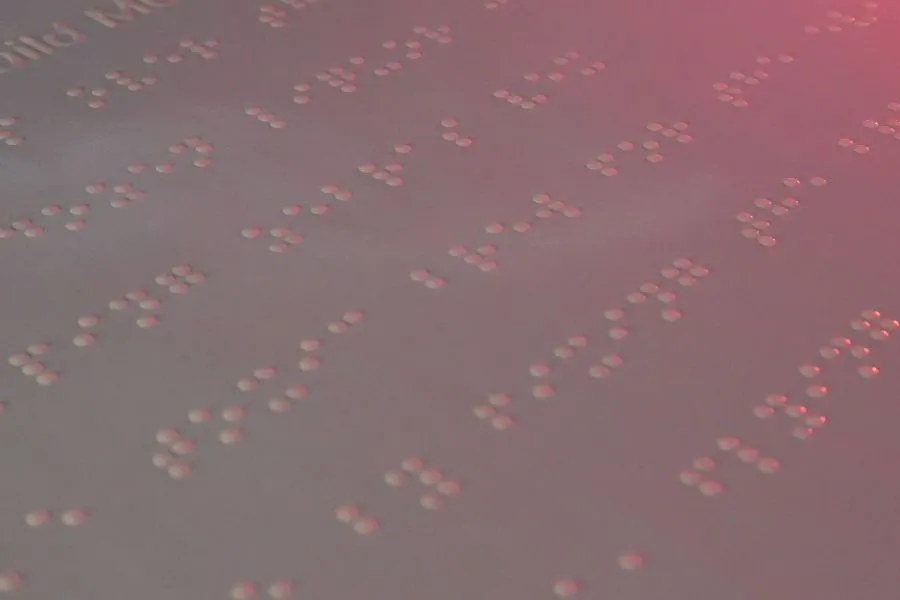 High build varnish delivered through inkjet provides the accuracy and consistency needed.
He notes that, as legislation around accessibility continues to evolve and demand for premium and functional packaging grows, Xaar is working closely with converters, original equipment manufacturers, and ink partners to refine print modes, fluid compatibility, and system integration.
“Versatex now supports both left-to-right and right-to-left press directions, which is particularly important for finishing lines where space and configuration can be restrictive. This modular approach reduces development time, lowers integration costs, and enables converters to adopt digital inkjet in a controlled and scalable way.”
“Powered by Nitrox printheads, Ultra High Viscosity Technology and Xaar’s High Laydown Technology, Versatex can jet highly viscous and pigmented fluids while achieving builds in excess of 200µm in a single pass,” Mooney adds.
“TF Technology ensures continuous ink recirculation at high speed, while SureFlow maintains long-term nozzle stability. Together, these technologies enable tactile features that are not only readable but also durable enough for real-world packaging applications, with consistent results across runs, substrates, and production speeds.”