


Netherlands backs AI-enabled plastic recycling to tackle packaging waste


Key takeaways
- The Dutch government has funded an AI-enhanced solvent-based recycling project led by TU/e and startup Exergy.
- The project focuses on recycling complex multilayer plastic packaging that cannot be processed mechanically.
- AI and digital-twin tools aim to optimize solvent choice, energy use, and process efficiency to boost plastic circularity.
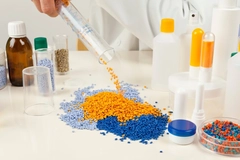
The Dutch Ministry of Climate and Green Growth (RVO) has funded a project by Eindhoven University of Technology (TU/e), Netherlands, and the start-up Exergy to develop “AI-enhanced” solvent-based plastic recycling.
The RVO project “AI-Strap: Accelerating Circular Plastics with Solvent-Based Recycling Intelligence” aims to tackle complex waste streams such as multilayer plastic packaging. This type of packaging cannot be recycled with current technologies.
“Multilayer plastics present a major challenge for recycling,” says project lead Željko Tomović of the TU/e Polymer Performance Materials group.
For example, the thin plastic protecting produce from rotting is “extremely” hard to recycle, as it consists of multiple layers of different polymers.

“Mechanical recycling is limited by polymer incompatibility. Solvent-based recycling offers a promising route to produce high-quality recyclates, but current implementations rely on static process design and control that do not account for feedstock variability, inefficient solvent use, and high energy demand,” continues Tomović.
Therefore, AI is used to make the recycling process adaptive and scalable.
The Polymer Performance Materials group will develop and validate an AI-enhanced, solvent-based recycling process, while Exergy will develop digital-twin and machine-learning tools to predict process outcomes and dynamically reconfigure operating conditions in real-time.
Identifying “the best” solvents
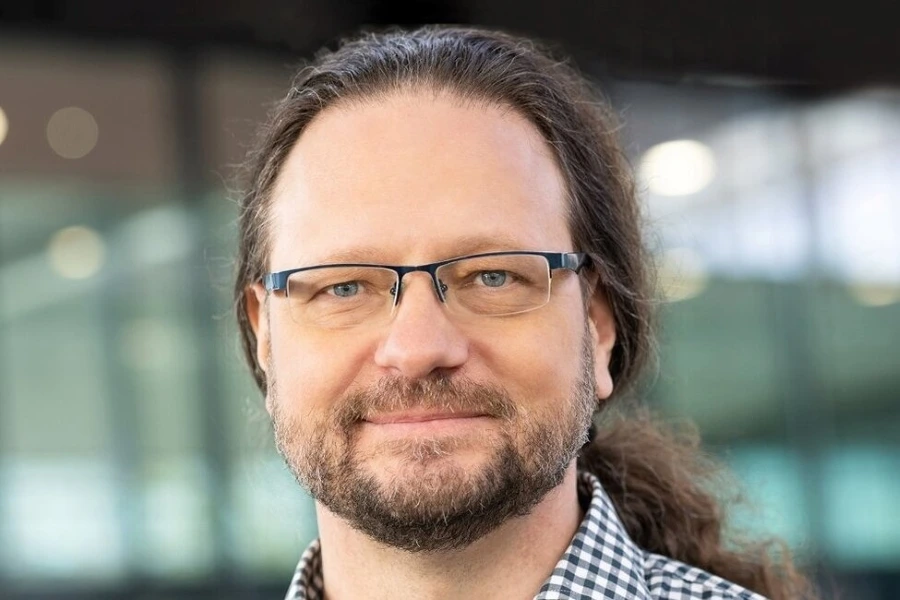 Željko Tomović, project lead and part of the TU/e Polymer Performance Materials group (Image credit: TU/e).Exergy, a start-up founded by TU/e alumnus Jose Luis Trigueros Soto, utilizes AI to optimize processes in the chemical industry, enhancing efficiency and reducing its environmental impact.
“The goal is to end up with a tool that not only identifies the best solvents for a given waste stream, but also determines optimal process parameters for variable feedstock compositions,” Tomović adds.
“Through the integration of machine learning with polymer science, we want to drive innovation, reduce plastic waste, and advance the transition toward a more circular and sustainable plastics ecosystem in the Netherlands and Europe.”
According to the TU/e, only 46% of plastic waste in the Netherlands is recycled. Approximately 40% of the country’s plastic waste originates from the packaging industry.
The non-recycled PP and PE waste poses a threat to the environment when it ends up in landfills or marine ecosystems, the TU/e adds.
Recently, the European Commission implemented new measures to boost the EU’s plastic recycling sector and limit imports of cheap virgin polymers.