



EU producers demand greater support in Industrial Accelerator Act to boost metal sector


Key takeaways
- The European Commission has proposed the Industrial Accelerator Act to boost EU manufacturing, low-carbon technologies, and introduce Made in EU procurement rules.
- Industry group Applia argues the policy must also support downstream sectors like metal packaging to protect the full metals ecosystem.
- Producers warn that high energy costs, regulatory burdens, and fragmented rules could undermine the Act’s goals without stronger industrial support.
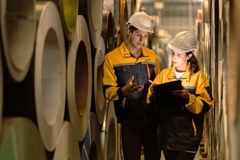
The European Commission (EC) has formally proposed the Industrial Accelerator Act (IAA) to create jobs, while increasing the production and demand for low-carbon technologies and materials made or sourced in the EU, such as metals. However, producers of metal products argue that the act should do more to support the entire metal value chain if it is to meet its goals.
The IAA would introduce “targeted and proportionate” Made in EU and low-carbon requirements for public procurement and public support schemes for sectors impacting the packaging industry, including steel, aluminum, and net-zero technologies.
The act would further require EU member states to adopt a single digital permitting process to speed up and simplify manufacturing projects. It aims to establish manufacturing as 20% of the union’s GDP by 2035.

Packaging Insights speaks to Paolo Falcioni, director general at Applia, a trade association for Europe’s home appliance manufacturers — an industry heavily reliant on steel and aluminum supply chains, to find out more about how the act can support the EU metal packaging industry.
“The Made in Europe concept has the potential to strengthen industrial resilience, enhance consumer trust, and reward companies that invest in European production, skills, and sustainability,” Falcioni tells us.
“However, greater clarity is needed regarding its scope and the modalities of its implementation. In particular, careful consideration should be given to establishing clear, robust, and legally sound criteria.”
Downstream industries’ recognition
 Paolo Falcioni, director general at Applia.The EC says Made in EU requirements will give investors confidence and predictability, leading to improved innovation and establishing “clean steel as a core part of the EU’s industrial future.”
Applia argues that if the EU treats materials like steel and aluminium as strategic, it must treat downstream industries that transform them, including metal packaging producers, as strategic as well.
Falcioni adds: “Made in Europe can strengthen resilience and reward investment in European production, but it will only deliver if Europe also makes it easier to manufacture here, through simpler and more predictable rules and the right conditions to stay competitive.”
The association says that the downstreaming industries should be recognized for their role in maintaining demand for European metals, sustaining “a dense network of suppliers and recyclers, and turning raw materials into high-value, innovative products that households rely on every day.”
“Protecting upstream production while neglecting downstream manufacturing would hollow out the very ecosystem Europe seeks to strengthen,” asserts Applia.
Matching political ambition
Applia says the proposed Made in EU requirements for metals could also be beneficial for downstream industry players.
“The concept of Made in EU can make a tangible difference. It has the potential to strengthen industrial resilience, reinforce consumer trust, and reward companies that invest in European production, skills, and sustainability.”
.webp) Applia says industries that transform “strategic” metals should also be classified as strategic.“But Made in EU only works if it is also made easier to manufacture in Europe. A political ambition must be matched by an enabling regulatory and economic environment.”
Applia says industries that transform “strategic” metals should also be classified as strategic.“But Made in EU only works if it is also made easier to manufacture in Europe. A political ambition must be matched by an enabling regulatory and economic environment.”
The association argues that the Made in EU label and requirements will not be enough to boost competitiveness if manufacturers face high energy costs, fragmented rules, excessive administrative burdens, or slower innovation cycles.
“Strategic autonomy requires coherence: trade policy, energy policy, circular-economy legislation, and industrial funding must align to ensure that producing in Europe is not only desirable in principle, but viable in practice.”
A LeadIT report for 2025 identified the rising prices of steel, electricity, and green hydrogen, as well as the unstable market conditions, as the causes behind the slowdown of European green steel projects.
Another goal of the IAA is to streamline and digitalize the permitting procedures for industrial projects. It will introduce a single digital “one-stop-shop” with clear time limits and the principle of tacit approval at intermediate stages of the permit-granting process for energy-intensive decarbonization projects.
Next, the IAA will be negotiated by the European Parliament and the Council of the EU.