




France misses plastic reduction targets, non-profit urges stronger municipal action


Key takeaways
- Zero Waste France urges municipalities to use existing powers to accelerate single-use plastic reduction ahead of local elections.
- National legislation sets ambitious targets, but weak monitoring and delays have left municipalities without clear benchmarks.
- Leading cities are moving faster through procurement reform, public catering changes, and reuse-focused initiatives.
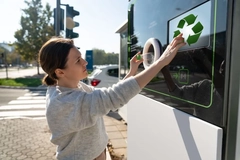
Zero Waste France has urged municipalities to use their regional powers to curb single-use plastic ahead of local elections in March. The NGO suggests that local authorities are well placed to accelerate progress through their proximity to residents, regulatory powers, and capacity to promote initiatives such as DRS.
As a result, municipalities are positioned as a “decisive lever to transform the fight against single-use plastic into a daily reality,” while national legislation aims to eliminate all single-use plastic packaging by 2040.
Packaging Insights speaks to Noémie Brouillard, project manager at Zero Waste France, about local action on single-use plastics, as France’s national legislation struggles to translate into concrete results.
“At the municipal level, we are observing a two-speed landscape. A few cities, such as Paris and the Lyon metropolitan area, have begun to reduce single-use plastics significantly by redesigning school catering, tightening procurement rules, removing disposable items from events, and expanding access to drinking water,” says Brouillard.
However, she adds that the majority of municipalities are stuck at basic compliance, while some are behind on legal obligations.
“Delays in eliminating plastics from public catering or in installing water fountains in public buildings are still very common. The gap between pioneers and the rest of the country continues to grow.”
National vs. municipal ambition
Brouillard explains that France’s national framework for reducing single-use plastic does enable “ambition” for local authorities but is hindered by poor monitoring. As a result, municipalities are left without clear benchmarks, while national legislation continues to fall short of its own targets.
“France is nowhere near meeting its own objectives. National legislation requires a 20% reduction in single-use plastic packaging by 2025, compared with 2018 levels. Instead, packaging tonnages have risen by around 3% since 2018,” says Brouillard.
 France is “nowhere near” reaching its single-use plastic reduction targets, says Brouillard.According to Zero Waste France, the country uses roughly 5 million metric tons of plastic per year, with 1.1% of household packaging reusable in 2022, “far from the 10% target for 2027.”
“The [national] framework provides clear opportunities, but it does not automatically drive ambitious action.”
“On the positive side, the Anti-Waste for a Circular Economy law and EU rules give municipalities legal backing to accelerate the transition away from single-use plastics. Nothing in the framework prevents cities from going further; several measures are explicitly designed as minimum floors, not ceilings.”
However, Brouillard suggests that there are still “real limitations,” as repeated delays and weakened bans have slowed the overall system and sent mixed signals to local authorities.
Municipal agency
Brouillard states that municipalities can “lead by example” by enacting single-use plastic policies already mandated in current local and national frameworks.
For example, municipalities can remove all single-use plastics from municipal meetings, receptions, and internal operations. They can also equip staff with reusable bottles, cups, and containers, while adopting a cross-departmental “exemplarity plan” with clear reduction and reuse targets.
Brouillard says: “These measures are already being implemented by leading municipalities and can (and should) be adopted by any city willing to prioritize reduction and reuse.”
Other measures include transforming school catering and early childhood services, and investing in more public water fountains and temporary water points, especially during events.
A Zero Waste Europe report from 2024 also highlights the role of local authorities in education and raising public awareness to reduce single-use waste and switch to reuse.
“Municipalities can set up information campaigns and educational initiatives in a variety of formats: visual aids (posters, banners, signage), information stands at public events, or practical workshops to learn how to adopt eco-responsible actions.”
Reuse over reduce?
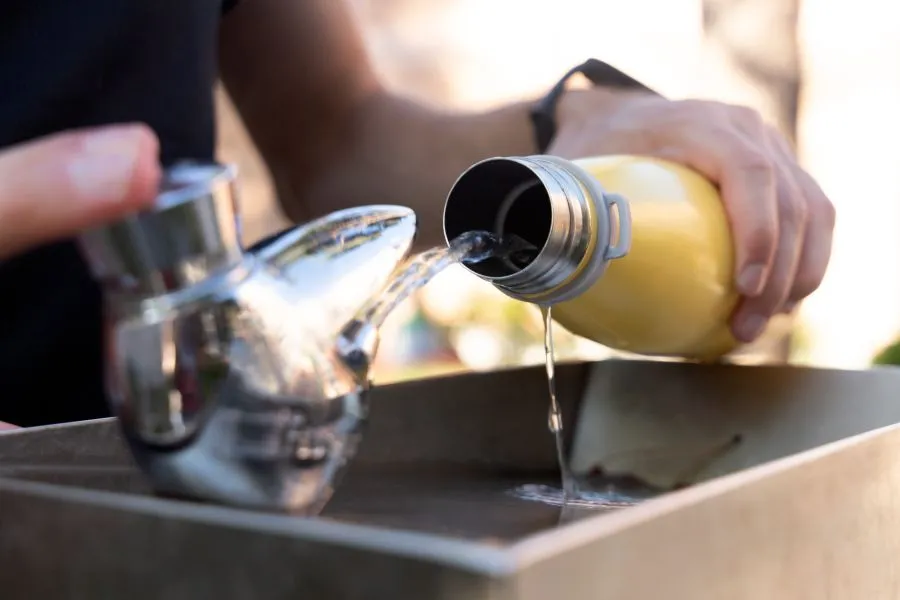 Brouillard says municipalities can “lead by example” by enforcing existing single-use plastic alternatives, like water fountains.Investing in reuse solutions is another way to reduce reliance on single-use plastic, says Brouillard. Municipalities can prioritize reused or refurbished equipment whenever possible and support local reuse ecosystems where they exist.
“The debate still focuses heavily on substitution (replacing plastic with other single-use materials) rather than on reduction and reuse, which are essential to meeting national targets,” she says.
The Zero Waste Europe report also champions reuse. It urges local authorities to adopt an integrated approach by initiating reuse associations and then networking these players with services involved in the circular economy and waste prevention, to create synergies.
“Local authorities can also provide specific subsidies or calls for projects to support these initiatives. Making premises or equipment available to associations can greatly facilitate their activities,” suggests the report.
Last month, Michael Sadowski, executive director and board chair at The Circulate Initiative, spoke to Packaging Insights about the importance of regional and national regulations to address the global issue as international efforts like the UN Global Plastic Treaty Negotiations and COP30 have failed to secure binding global legislation to combat plastic pollution.