




GCR Plastic Solutions and Rigk trial advanced recycling for post-consumer packaging


Key takeaways
- GCR Plastic Solutions and Rigk have partnered on advanced industrial recycling trials to process post-consumer packaging from the PAMIRA system and the GVÖ scheme.
- The trials focus on hot washing, advanced sorting, and extrusion technologies.
- The project emphasizes traceability, analytical control, and contamination elimination to improve the reliability and transparency of recycling solutions.
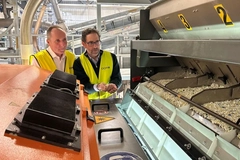
GCR Plastic Solutions and German collective EPR system provider Rigk are conducting an advanced industrial recycling trial for post-consumer packaging from the German Packaging Material Recovery for Agriculture (PAMIRA) system and the sector-specific GVÖ scheme.
Rigk operates take back and recycling solutions for industrial, commercial, and agricultural packaging, including PAMIRA, the sector-specific system for used plant protection products and liquid fertilizer packaging.
The trials were operated by GCR Plastic Solutions. The mechanical recycling plant forms part of a €100 million (US$116 million) investment program developed to respond to the requirements of the upcoming EU Packaging and Packaging Waste Regulation (PPWR).
The trials incorporated the latest technologies in hot washing, advanced sorting systems, and extrusion, including reinforcement boosters and high-efficiency deodorisation units.

They aim to ensure reintroduction of the recycled material into the production cycle, preventing the risk of undesirable interaction with residual chemical substances that may have been contained in the original packaging streams.
Santiago Sans, industrial and innovation director at GCR, says: “This project represents a decisive step in demonstrating that complex industrial streams, when properly managed at source, can be transformed into high-value recycled raw material with full analytical control and traceability. Our objective is to offer major European converters technically reliable and consistent material.”
Compliance and purity in recycling
According to the companies, these advanced treatments were key for meeting the technical and regulatory requirements, such as the PPWR, and for addressing the increasing responsibility placed on packaging producers in managing complex post-consumer industrial packaging streams.
The project was also supported by GCR’s Innovation Division, a specialized technical unit equipped with a laboratory infrastructure that is said to be unique in its integrated approach to circular materials. The division is capable of advanced material characterization, including mechanical testing, rheology — the study of deformation of matter — and contaminant analysis.
It also simulates customers’ production processes at a pilot scale. This allows validation of material purity and compliance, as well as industrial performance under application-specific conditions.
The companies highlight that GCR’s facilities are equipped with gas and liquid phase chromatography, enabling in-depth analytical control of the recycled pellets.
Markus Dambeck, chairman of the management at Rigk, says: “For Rigk, it is essential to work with partners capable of meeting demanding quality and verification standards. These trials enable us to move toward increasingly robust and transparent recycling solutions for industry.”
The project aims to eliminate contamination and volatile compounds. According to their test results, the volatile substances have been successfully removed, preventing cross-contamination and achieving high purity levels.
Through this initiative, the two organizations aim to raise industrial recycling standards in Europe, demonstrating that the combination of “traceability at source, rigorous processes and strict analytical validation is key to building strong and credible circular value chains.”
”The objective of the initiative was to provide security, confidence, and reliability to the European industrial packaging sector by confirming that these complex streams could be reintegrated into the production cycle with robust technical, analytical, and traceability assurance, in line with the objectives of the PPWR,” say the companies.