


Hong Kong tobacco packaging plan raises counterfeit concerns


Key takeaways
- Hong Kong plans to introduce standardized tobacco packaging and a duty stamp system by Q2 2027.
- Retailers, particularly newspaper hawkers, warn that uniform packaging will make it harder to distinguish genuine cigarettes from increasingly sophisticated counterfeits.
- The government says duty stamps will include physical and digital anti-counterfeiting features, while retailers are calling for smartphone-based verification tools.

The government of the Hong Kong SAR plans to introduce standardized tobacco packaging alongside a duty stamp system. However, the proposal has drawn concern from independent vendors.
The Health Bureau has announced that the government tentatively plans to implement the uniform packaging design for conventional smoking products and the duty stamp system simultaneously in the second quarter of 2027.
“The uniform packaging design and the duty stamp serve distinct purposes. The former aims to reduce the attractiveness of tobacco products, while the latter strengthens efforts to combat ‘cheap-whites’ through duty stamps,” states the bureau.
Cheap Whites, also known as Illicit Whites, are cigarettes produced by legitimate businesses and sold without all applicable duties paid.
Identifying illicit smoking products
The Health Bureau stated that the uniform packaging design itself is not intended to distinguish duty-paid cigarettes or “cheap-whites.” However, Hong Kong newspaper hawkers, who rely heavily on legal cigarette sales for income, fear uniform packaging will make it harder to distinguish genuine products from counterfeits.
Lam Cheung-fu, chairman of the Hong Kong Newspaper Hawker Association, says: “Counterfeit cigarettes are already highly sophisticated. Once full health warning packaging is implemented, all products will look identical. Whether it’s hawkers or consumers, it will be extremely difficult to distinguish genuine products from fakes with the naked eye.”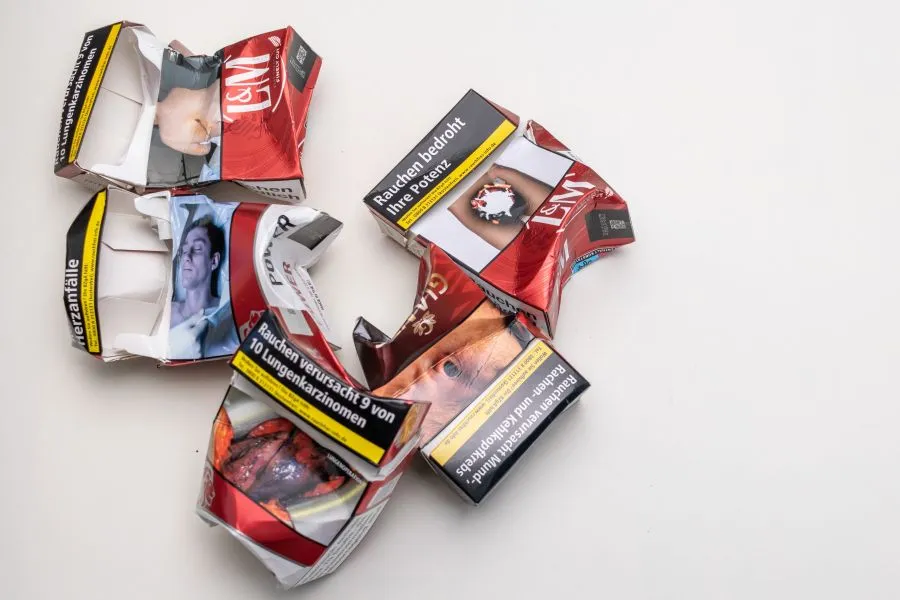 The government is set to implement clear health warnings and ban promotional messages on tobacco packaging.
He also argues that based on the current timeline, it is not feasible to meet the target of the second quarter of 2027.
“The 12-month period is not only for the industry to clear existing stock, but also a necessary transition phase for businesses to become familiar with the new system and for customs authorities to provide guidance and education to retailers,” says Lam.
Call for smartphone-based verification tools
The Health Bureau says the duty stamps for conventional smoking products will feature physical and digital anti-counterfeiting technologies.
“Physical anti-counterfeiting features are referenced from technologies commonly used in banknotes, and are readily discernible to the naked eye. Therefore, members of the public and retailers can swiftly and conveniently verify the authenticity of the stamps,” states the bureau.
“At present, physical anti-counterfeiting technologies in the market are sufficiently mature to effectively prevent forgery of the stamps. On the other hand, digital anti-counterfeiting features are intended to assist frontline Customs officers in law enforcement.”
The Hong Kong Newspaper Hawker Association has recommended developing digital applications to assist verification of the duty stamps so hawkers can scan labels using smartphones, rather than relying on a few dedicated devices per district.