




Investigation underway as Norway misses recycling targets, European regulator finds


Key takeaways
- The ESA has issued formal notice after Norway misses key municipal waste and plastic recycling targets.
- Low capture rates for plastic, biowaste, and textiles highlight gaps in separate collection systems and national coordination.
- The authority urges regulatory action, improved infrastructure, and public awareness to avoid penalties and meet 2025–2035 goals.

The European Free Trade Association Surveillance Authority (ESA) has issued a letter of formal notice to Norway for failing to meet its key waste collection and recycling targets, highlighting faults in the country’s collection and separation system.
In the letter, the ESA notes that while 50% of municipal waste should have been prepared for reuse and recycling by 2020, it only reached 41.7% in 2023. Moreover, the country needed to recycle 50% of plastic packaging by 2025, but in 2024 the figure was 34%.
“The ESA therefore concludes that by not taking the necessary measures designed to achieve the target for municipal waste, Norway has failed to fulfil its obligations under Article 11(2)(a) of the Waste Framework Directive,” says the authority.
The letter of formal notice follows an ESA Early Warning Report in 2024, which found Norway risks missing its 2025 targets, laid down in the Waste Framework Directive, the Packaging and Packaging Waste Directive (now the EU’s Packaging and Packaging Waste Regulation) and the Landfill of Waste Directive.
“Norway must now take the necessary measures to ensure compliance. In doing so, it can draw on the country-specific recommendations set out in ESA’s Early Warning Report. This will also be important to ensure compliance with the amended EEA waste legislation targets for 2025, 2030 and 2035,” notes the ESA.
The letter also raises concern over the collection and recycling of electrical equipment. Norway was required to collect the waste from at least 65% of the electrical and electronic equipment placed on the market by 2019, but the collection rate was just 7.8% in 2023.
Collecting plastic packaging
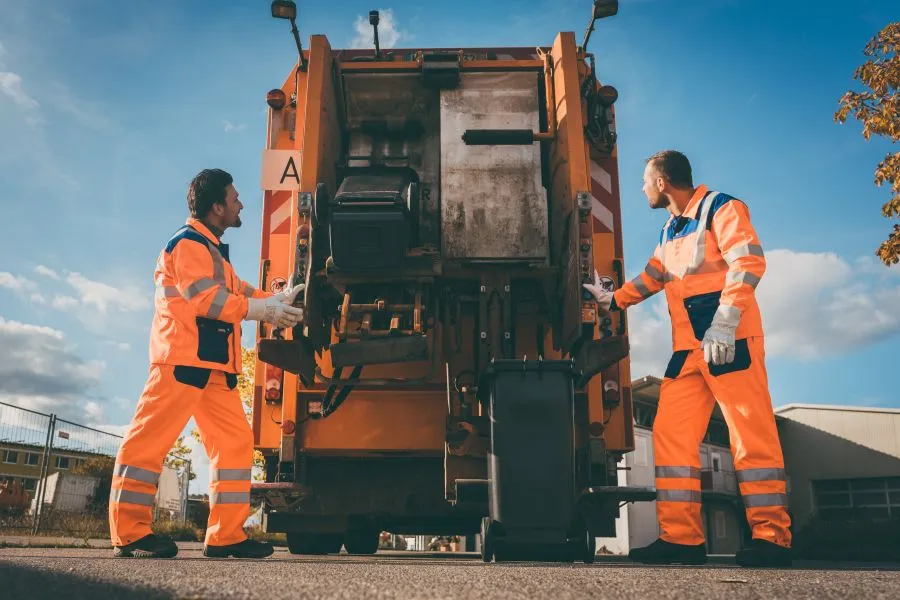 The report says low capture rates for plastic, biowaste, and textiles drove Norway’s failure to meet the 2025 target.The 2024 Early Warning Report identified Norway’s waste management shortfalls, highlighting the failure to separate plastic packaging and biowaste. It notes that while the country’s recycling rate remained stable between 2018 and 2022, it only increased by 0.3%.
Moreover, the report argues that the low capture rates for separate collection of bio-waste (42%), plastic (34%), and textiles (20%) were the main reasons Norway missed the 2025 target.
Despite good collection and recycling infrastructure, the report explains that for plastic, the low capture rates can be explained by a “lack of mandatory separate collection at national level, resulting in various different systems for collection of municipal solid waste streams across the country.”
For bio-waste, the report identifies a lack of separate collection for food waste for some parts of the population.
Improving recycling systems
The ESA calls on Norway to act on its recommendations to avoid further investigation and possible penalties.
The report stresses the need to improve separate collection systems for plastic, biowaste, and textiles. It also advocates for awareness campaigns tailored to different target groups like tourists, pupils, and citizens, to “enhance public participation in separate collection.”
 The ESA recommends advanced fee modulation for packaging to incentivize improved recyclability, sortability, and recycled content.Finally, the ESA recommends the country introduce an advanced fee modulation for packaging waste to incentivize producers to improve the “recyclability, sortability, and recycled content of packaging.”
The letter of formal notice is ESA’s first step in a formal infringement procedure. Norway now has two months to respond and address these shortcomings or risk further legal action.
ESA is also investigating Liechtenstein for failing to meet its recycling targets for wooden packaging waste, citing an inefficient waste separation system and a lack of proper infrastructure for recycling wood packaging.