

Interpack 2026 live: Korozo to spotlight recyclable and monomaterial flexible packaging


Key takeaways
- Korozo will highlight its KoroRCY MDO-PE laminating film, which enables recyclable formats across multiple applications while maintaining product safety and functionality.
- Regulatory pressure and rising consumer demand are accelerating the shift toward measurable, data-driven sustainability.
- Tighter regulations and heightened consumer demand for circular solutions are increasing pressure on the packaging supply chain.
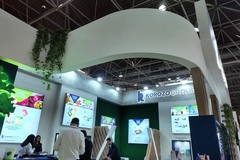
Korozo will showcase its recyclable and monomaterial flexible packaging solutions at Interpack 2026 (May 7–13) in Düsseldorf, Germany, highlighting the importance of circularity and high-performance products.
The flexible packaging company, based in Istanbul, Türkiye, says that packaging stakeholders seeking to respond effectively to contemporary pressures should ensure environmental sustainability is ingrained in all processes, practices, and products.
“It is no longer good enough to claim sustainability credentials. They must be demonstrated, measured, and qualified,” Korozo tells us.
Packaging Insights sits down with Selin Bahar Mesulam, chief marketing and growth officer, and Dr. Betül Türel Erbay, chief innovation and sustainability officer at Korozo Group, to discuss the trends driving the evolution of the flexible packaging industry and the company’s attendance at the trade show.

Selin Bahar Mesulam says: “At Interpack 2026, we are championing a transformative vision for the flexible packaging industry, ushering in a circular future with recyclable, high-performance solutions that redefine sustainability across the global supply chain.”
“Our priority is accelerating the widespread adoption of recyclable monomaterials, empowering brands and retailers to embrace single-polymer formats. We are imagining a world where packaging seamlessly returns to nature, eliminates waste, and fuels regeneration.”
Korozo’s Interpack booth
Korozo will present its functional and sustainable packaging at Interpack.
“At our booth, we will offer thermoforming films and flow packaging for meat, cheese, and other dairy applications, where there are strict requirements related to product safety and consumer health,” highlights Selin Bahar Mesulam. “We will be presenting our stand-up pouches for snacks, personal care, and automotive markets, where usability and function remain the most important factors.”
“At the heart of our showcase is the KoroRCY MDO-PE laminating film, a proprietary solution unlocking possibilities from stand-up pouches and flow wraps to thermoformed trays and lidding films.”
 Selin Bahar Mesulam, chief marketing and growth officer at Korozo Group.Selin Bahar Mesulam notes that the flexible packaging industry is growing across “established and emerging” economies.
“This pushes us to innovate with monomaterial constructions for different packaging types and applications, such as stand-up pouches, high-barrier thermoforming films, and flow packaging made using our proprietary KoroRCY MDO-PE laminating film.”
“Korozo’s high-barrier, thermoforming films and stand-up pouches are examples of solutions developed to provide functional options while offering recyclability and promoting circularity. These were previously competing factors that we have successfully merged.”
Dr. Betül Türel Erbay adds: “As global mandates like the EU’s Packaging and Packaging Waste Regulation (PPWR) ignite urgency, with KoroRCY, we aim to captivate Interpack visitors and position us at the forefront of environmental impact reduction and supply chain evolution.”
“We envision packaging that minimizes impact on the planet while elevating everyday experiences and strengthening consumer connection. The future will belong to solutions that bring together design, regulation, infrastructure, and data not as separate elements, but as one unified system driving circularity and long-term value.”
Selin Bahar Mesulam says that, as Europe and North America are strategic growth markets for Korozo, having the ability to present its complete portfolio of packaging solutions to a global audience is the “perfect opportunity” to reinforce its position as a go-to partner for “future-ready and future-proof” flexible packaging solutions, wherever brands are located.
Sustainability through innovation
Selin Bahar Mesulam tells us that the flexible packaging industry is making strides in improving its environmental sustainability credentials. She adds that Korozo is making tangible steps with its focus on material science.
“By defining monomaterial solutions ourselves and extruding MDO-PE in-house, we can control the characteristics of sustainable flexible packaging and ensure optimum performance for product protection and sustainability,” she explains.
“This is enabling the move away from rigid plastics to more efficient flexible packaging solutions. Brands can do this and take a fresh approach to traditional flexible packaging and embrace sustainability without compromising on performance.”
She spots the same trend in high-volume markets, such as bags for personal care. “The more than 500 million PE wicketted bags we produce each year suit the increased demand for sustainability, whether using virgin PE or as much as 70% post-industrial recycled (PIR) or post-consumer recycled (PCR) content.”
Dr. Betül Türel Erbay emphasizes that sustainability is no longer only defined by targets. “It is defined by how effectively those targets are translated into real-world solutions.”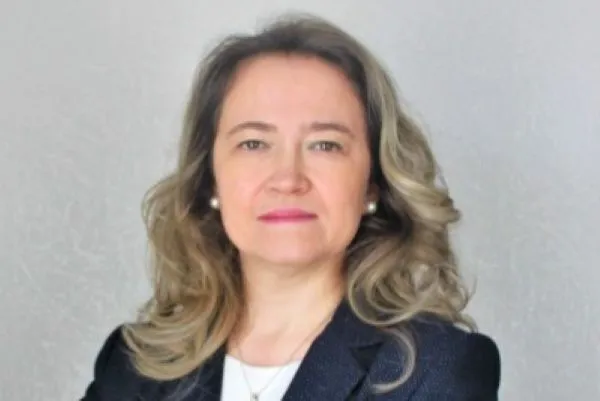 Dr. Betül Türel Erbay, chief innovation and sustainability officer at Korozo Group.
“At the same time, clear goals and measurable commitments remain critical, as they shape our business, guide our transformation, and define our long-term growth as a responsible and forward-looking flexible packaging manufacturer. Innovation must align with infrastructure. Otherwise, even the most sustainable design will fail in practice.”
Korozo says all its offerings will be recycle-ready and recyclable by 2030, and all of its plants will be using fully renewable energy by 2032. Currently, 64% of its products are recyclable. “This is all leading to the ultimate goal of Korozo achieving net zero by 2053,” adds Dr. Betül Türel Erbay.
Market & regulatory differences
Selin Bahar Mesulam says Europe is currently the largest market for Korozo “by some margin”, with more than 80% of its products distributed across the continent, from Scandinavia to Spain, the UK to Germany.
“Flexible packaging in Europe is expected to grow steadily over the next five years, and this provides huge commercial value to our business. The focus on sustainable and resource-efficient packaging in markets such as Germany and the UK is creating huge demand for monomaterials that can be easily recovered and recycled through existing waste streams.”
She continues: “North America is a strategic growth region for Korozo as it combines a large and steadily growing flexible packaging market. Our aim is to create a US$50 million business in the region and we are already on that path, due to our existing market position and investments.”
Dr. Betül Türel Erbay adds that the implementation of the EU’s PPWR in August this year means the continent’s entire flexible packaging value chain is focused on requirements like reducing packaging waste by 15% by 2040 and ensuring all packaging is recyclable in an economically viable way by 2030.
“EPR initiatives, such as that now active in the UK, are also driving the shift toward ‘low’ and ‘no’ impact solutions, recyclability, and efficient material use.”
“EPRs are a global consideration, with schemes in South Africa and Australia being notable examples that demonstrate their importance for the globally connected flexible packaging industry.”
Dr. Betül Türel Erbay notes that while Canada and the US are among the countries lacking federal laws for EPR, widespread adoption at provincial- and state-level makes them equally important for brands and retailers to ensure regulatory compliance.
“Companies that fail to adapt will not only face regulatory pressure but also increasing cost disadvantages through EPR mechanisms.”
Selin Bahar Mesulam adds: “Digital Product Passports are soon to become mandatory across Europe, and our sustainable solutions, efficient production, and recyclable packaging structures are perfect to demonstrate a product’s origin, sustainability credentials, and overall lifecycle impact on the environment.
“In the near future, data will become as important as the material itself because without traceability, sustainability claims cannot exist.”