



Latin America’s plastic circularity faces policy and funding gaps, finds study

Key takeaways
- Plastic production, consumption, and waste continue to rise despite new circular economy frameworks across the region.
- Chile, Uruguay, Ecuador, Colombia, and Costa Rica lead policy efforts, but infrastructure and funding gaps persist.
- Regulatory blind spots on microplastics, hazardous additives, and petrochemical plastic reduction threaten progress.
While several countries in Latin America have introduced plastic circular economy frameworks, weak infrastructure, limited funding, and regulatory gaps persist, and risk undermining progress, a recent regional study finds.
The research, published in Environmental Management, concludes that, overall, plastic production, consumption, and waste are increasing in the region, while waste management and sustainable trade remain “insufficient.”
“Across Latin America, the circular economy for plastics has gained momentum through national strategies, roadmaps, and regulatory frameworks,” Felipe Romero and Miguel Ángel González, authors of the study, tell Packaging Insights.
“Chile, Uruguay, Ecuador, Colombia, and Costa Rica stand out for taking relevant steps. These include supporting research and innovation in recycled materials, introducing design and circular metrics for plastic products, and promoting circular business models focused on supply chains and resource recovery.”
There are also notable efforts from these countries to strengthen waste collection and sorting, as well as improve the social conditions of recyclers, according to the research.
However, shortcomings include financial gaps, regulatory weaknesses surrounding microplastics and hazardous additives, and “most critically, insufficient attention to reducing the production of problematic petrochemical plastics.”
“Underdeveloped” solutions
 Latin America’s circular plastic economy is hindered by weak regulations on microplastics and additives.The study assesses the effectiveness of a circular economy for plastics in Latin America in three ways. Firstly, it analyzes plastic production, consumption, generation, mismanagement, and trade of plastic waste in the region.
Romero and González add: “Innovative strategies to promote sustainable consumption behaviours remain underdeveloped, and recycling systems often struggle both to increase rates and to improve material quality. Additionally, around half of the region has not yet adopted government initiatives on plastic circularity.”
Secondly, the research scrutinizes government-led initiatives using official policy documents.
Lastly, it conducted a strengths, weaknesses, opportunities, and threats analysis of the current landscape of circular product design and business models.
Fragmented policies
The study suggests that while governments are supporting recycled materials and polymer research, policy gaps persist regarding microplastics and chemical additives, which can harm environmental and human health.
Moreover, Romero and González explain that initiatives addressing plastic pollution have “weak linkages” to broader environmental concerns, such as climate change and biodiversity loss.
“Plastic pollution is still too often addressed in isolation from climate change and biodiversity loss. There is a lack of clear national frameworks to monitor how circularity contributes to emissions reduction, and assessing impacts on biodiversity remains methodologically challenging,” say the authors.
“This fragmented approach misses opportunities to better coordinate government initiatives, avoid policy trade-offs, and maximize co-benefits. It also overlooks the strong links between environmental degradation and human health, particularly exposure to microplastics and associated chemicals.”
The future of circularity in Latin America
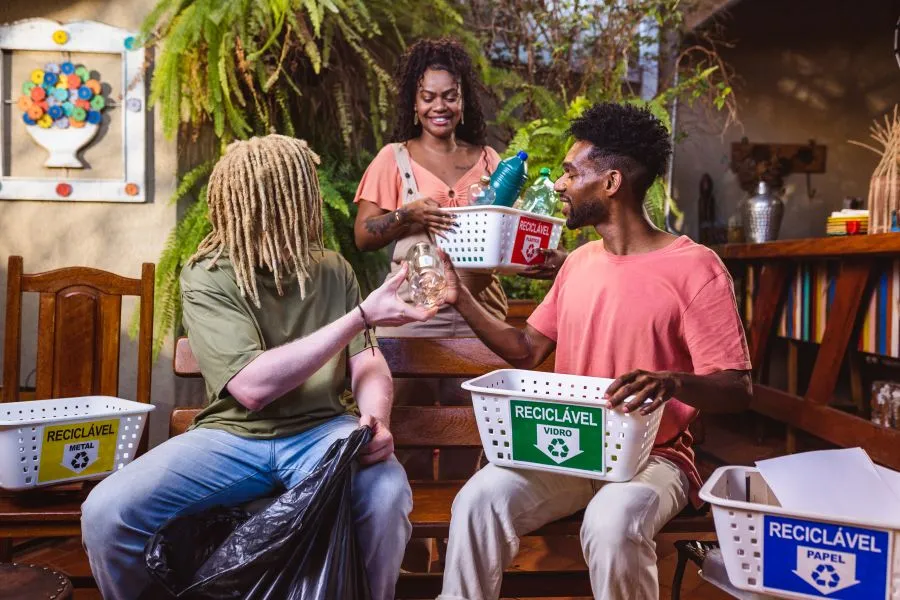 Romero and González see Latin America's plastic circularity future in global insights and local action.The authors explain how their research “sheds light” on the transition toward a circular economy for plastics through assessment of circular packaging design, circular business models — “which remain underexplored in the Global South” — and the triple planetary crisis, which the authors argue needs “more attention” in debates worldwide.
The future of plastic circularity in Latin America, according to Romero and González, rests on drawing more on global experiences while expanding action beyond national plans to the local level.
They conclude: “Regional and international cooperation is increasingly feasible, supported by growing evidence and policy tools to guide the plastics sector towards decarbonization and circularity.”
“Creating inclusive spaces for dialogue across the value chain is essential to ensure that the transition is not only environmentally effective but also economically viable.”