



Polysmart Packaging to build Nigeria’s largest plastic recycling facility with US$60M investment


Key takeaways
- Polysmart Packaging is investing US$60 million to build Nigeria’s largest plastic recycling facility.
- The facility is set to process up to 100,000 tons of mixed plastics annually, according to the company.
- The facility will produce food-grade rPET and non-food-grade PE and PP.
Polysmart Packaging has announced a US$60 million expansion plan to build the largest plastic recycling facility in Nigeria. The first phase is due to be commissioned at the end of March 2026, and the final phase in July 2026.
The facility will focus on producing high-quality, food-grade rPET resin and flakes that conform to the European Food Safety Authority and the US Food and Drug Administration regulations. The facility will also produce non-food-grade high-density PE, low-density PE, and PP materials.
Wasiu Abolaji Balogun, managing director and CEO at Polysmart Packaging, says: “This is a transformative moment for Nigeria’s green economy. The investment is not just in machinery and infrastructure. It’s an investment in the human capital of Nigeria.”

“We anticipate generating thousands of new direct and indirect jobs across the waste collection, sorting, technical, and operational segments of the value chain, providing dignified and sustainable livelihoods for our people.”
Driving circular economy
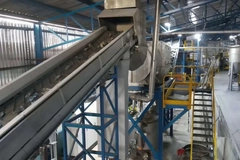
The new facility is said to feature “world-class technologies” such as Sorema Plastic Recycling System, Tomra Sorting Solution, and two units of Erema Vacunite 2621T V-LeaN SSP to process multiple polymer streams.
The plant will be constructed with an input capacity of 100,000 tons of mixed plastics, increasing the region’s overall recycling capacity and diverting plastic waste from landfills and waterways. According to the company, the expanded facilities will enable the recovery and recycling of over 5.5 billion PET bottles annually.
Polysmart Packaging is also set to enhance the production of certified food-grade rPET locally, providing raw material for the local F&B industry. This move aims to reduce reliance on foreign exchange for virgin plastic imports.
Polysmart will be delivering carbon savings of up to 170,000 tons as per the new plant capacity by scaling food-grade and non-food-grade recycling capacity. This expansion aims to solidify Nigeria’s position as a regional hub for sustainable manufacturing and green technology.