


US city secures public-private funding to upgrade curbside recycling system


Key takeaways
- Providence, US, has secured public-private funding to upgrade curbside recycling with high-capacity collection carts.
- The investors aim to raise the city’s recycling rate, currently the lowest in the state of Rhode Island.
- The initiative combines infrastructure upgrades with resident education campaigns to increase recycling participation and support circular economy goals.
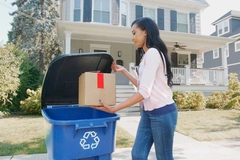
Providence, US, has received US$7.4 million in investment to provide high-capacity recycling collection carts, aiming to improve its curbside collection system and boost recycling rates.
The funding comes from private and public entities, including Closed Loop Partners, the American Beverage Association, The Recycling Partnership, and the US Environmental Protection Agency’s (EPA) Solid Waste Infrastructure for Recycling (SWIFR) Grant Program.
“Since the start of my administration, we have focused on making Providence cleaner, greener, and more efficient,” says Mayor Brett Smiley. “That’s why we are investing in new trash and recycling carts, along with education and enforcement strategies to change behavior and get the city’s recycling program back on track.”
“By combining these investments with targeted outreach, we are helping Providence neighbors manage waste more effectively, improve recycling rates, and enhance quality of life while supporting long-term sustainability.”

The circular-economy-focused investment firm Closed Loop Partners has committed to contribute over $5 million to the project, with financing from its Catalytic Capital & Private Credit group.
Ron Gonen, founder and CEO at Closed Loop Partners, adds: “Strategic capital and collaboration across the value chain are critical to building a resilient circular economy in cities across the US.”
“The joint funding made possible by this partnership, and bolstered by commitments from the federal government, is a key step toward catalyzing more capital to circular solutions and laying the groundwork for waste-free cities.”
“We are proud to support Providence, a city that is leading the way toward strengthening the infrastructure, education, and partnerships needed to keep more of our valuable materials in circulation.”
Public-private partnership
The project’s beverage strategy is backed by the American Beverage Association’s Every Bottle Back Initiative, in partnership with the state of Rhode Island’s beverage companies.
Meanwhile, the project’s infrastructure strategy is supported by Amazon, The Coca-Cola Company, Colgate-Palmolive, Danone North America, Kenvue, Keurig Dr Pepper, P&G, PepsiCo, Primo Brands, Starbucks, Unilever, the Venn Foundation, and the Walmart Foundation.
Providence has also secured two grants, including US$625,000 from The Recycling Partnership, funded through the Every Bottle Back Initiative, and an additional US$1.8 million from the EPA’s SWIFR grant program to support improvements in post-consumer materials management and infrastructure.
Jointly, the investors aim to improve Providence’s recycling rate of 2.4%, which is currently the lowest in Rhode Island.
Keefe Harrison, founder and CEO at The Recycling Partnership, says: “Strong partnerships are essential to building recycling systems that actually work for communities.”
“This effort goes beyond delivering carts. It brings funding, tools, education, and hands-on implementation together to turn infrastructure into real progress. By working closely with Providence city leaders and trusted partners, we are helping design solutions that meet residents where they are and deliver lasting, measurable results for the community.”
Resident engagement
According to Closed Loop Partners, the infrastructure improvements are paired with “robust” resident engagement.
The citizen engagement initiative includes a city-wide recycling education campaign, including by mail, neighborhood outreach, and clear on-cart guidance to help residents understand what belongs in the recycling cart and why it matters.
Peg Sweeney, executive director at the Rhode Island Beverage Association, comments: “This investment reflects our commitment to working hand-in-hand with communities to support good policy and programs that increase the collection of valuable recyclables, including our industry’s aluminum cans and plastic bottles.”
“Then we can ensure they are remade as intended and don’t end up in waterways and green spaces, or wasted in landfills.”
Recently, Richmond, US, launched a solid waste reduction initiative funded by revenue from the city’s plastic bag tax.