

US city conducts waste disposal studies funded by plastic bag tax


Key takeaways
- Richmond, US, has launched a waste reduction initiative funded by plastic bag tax revenue, starting with waste-characterization studies for future policy action.
- The city will assess participation gaps and equity issues, focusing on recycling, composting, and waste programs.
- Smart waste technologies may be tested, including tracking tools, sensors, and contamination-detecting lids.
Richmond, US, has launched a solid waste reduction initiative funded by revenue from the city’s plastic bag tax. The effort plans to include detailed waste-characterization studies and a review of how residents discard materials, laying the groundwork for targeted policy action.
A central part of the studies involves examining disparities in participation and access, as well as identifying strategies to make recycling and waste-reducing programs more convenient and equitable for Richmond.
Torrence Robinson, the deputy director of operations and maintenance at the Department of Public Works, says: “What we’ll be doing is bringing those initiatives to our regional partners, [which] will make them aware. This could be a wider spread initiative, but again, this is really the beginning stages.”

Robinson notes that the first phase of the initiative will serve as “more of a prototype using a smaller sample size.” The first phase will be funded internally, with no additional cost to taxpayers.
Disposable plastic bag tax
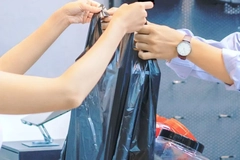
Starting this year, retailers in Richmond must collect a US$0.05 tax on each disposable plastic bag they provide, aligning the city with other Virginia localities. The plastic bag tax is managed by the Richmond Office of Sustainability.
Currently, the tax does not apply to restaurants, food banks, farmers markets, or clothing stores, and it exempts durable plastic bags designed for multiple reuse.
In addition, the measure excludes plastic bags used solely to wrap, contain, or package ice cream, meat, fish, poultry, produce, unwrapped bulk food items, or other perishable foods to prevent damage or contamination, as well as bags used for dry cleaning or prescription drugs.
Packages of multiple plastic bags intended for use as garbage, pet waste, or leaf removal bags are also exempt.
Tech-supported analysis
The initiative, funded by plastic bag tax, will look into how residents are disposing of materials in multifamily dwellings and evaluate whether residents are using drop off sites.
The pilot program may also incorporate smart technology at the household level, according to Robinson. This involves tools that keep track of waste types placed in trash cans, apps that tell residents when to recycle or set out trash, sensors that detect when cans are full, and smart lids that identify contamination.
Officials are looking into expanding the application of the studies findings to the broader city population over the next two years.
“We expect those type[s] of gains or to get some information like that. Something else that could be gathered is [that] we need to advertise more about our composting. What we do with composting now — to get more people involved, to get more participants,” says Robinson.