



Next-gen glass circularity: Why system change matters

Key takeaways
- System-level improvements in collection, DRS harmonization, and digital traceability are essential to scale glass packaging circularity.
- Glass is a fully circular benchmark material, with lightweighting and low-carbon innovations reducing emissions and energy use.
- Smarter design and digital tools can close remaining gaps by improving recyclability, sorting efficiency, and consumer participation.
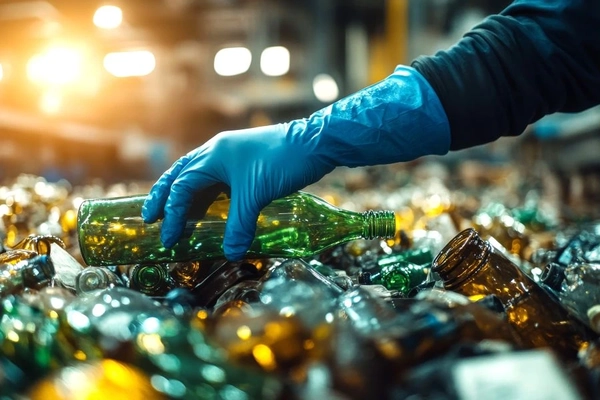
Systemic change is crucial to accelerate glass packaging circularity, according to industry experts. We sit down with Ardagh Glass Packaging, Vetropack Group, and Innova Market Insights to explore the latest drivers and trends in circular glass packaging.
“The most significant progress in glass circularity will come from system changes — improving collection infrastructure, harmonizing DRS, and leveraging digital tools for traceability,” Guido Stebner, chief technology officer at Vetropack Group, tells Packaging Insights.
“Material innovations like lightweight, strengthened glass, and smart packaging design will continue to play a vital role, but without systemic improvements, circularity cannot scale effectively.”
Annelene Ikemann, sustainability director at Ardagh Glass Packaging-Europe, tells us that while glass is already fully circular, the melting process is energy-intensive. “Significant innovations are already successfully producing lower-carbon glass bottles and jars on a commercial scale.”
Next-generation solutions, such as Vetropack’s Rezon bottles, combine thermal strengthening with innovative forming techniques, according to Stebner.
“These bottles are up to 30% lighter than conventional returnable glass yet offer superior resistance to mechanical stress and pressure, enabling more refill cycles and reducing transport emissions. This balance ensures sustainability without compromising safety or product integrity,” he tells us.
A benchmark material
When discussing how to further improve glass packaging circularity, Stebner notes that glass is already truly recyclable.
 Vetropack’s Rezon bottles (Image credit: Vetropack).
“As a natural material, it can be recycled indefinitely without any loss of quality, allowing it to be remade into new bottles and jars time and time again.”
“This makes glass one of the most sustainable packaging materials and a perfect fit for a circular economy. By increasing collection and recycling rates and using higher proportions of recycled glass in production, we can reduce energy consumption and CO2 emissions, ensuring that glass remains a responsible and endlessly reusable packaging solution.”
According to data from Innova Market Insights, consumers view glass as a sustainable material for F&B packaging, with 34% of global consumers considering it to be very sustainable. In addition, 65% of consumers separate glass packaging in their household for recycling purposes.
Furthermore, Ikemann praises glass as the “benchmark material” in terms of circularity.
Tackling circularity gaps
Ikemann asserts that color plays a critical role in glass circularity.
“Historically, the color mix of glass bottles and jars collected for recycling was a limiting factor, but with recent advancements in color separation technology, high recycled content levels can be achieved across the color spectrum.”
She adds that weight optimization is equally important. “Lightweighting reduces material and energy use, but designs must still align with filling, handling, and recycling systems.”
“Closures should be easily removable and compatible with existing recycling processes, while labels and adhesives need to wash off cleanly to avoid contamination in cullet streams.”.webp) Recycled glass cullet — Ardagh Glass Packaging’s primary raw material when producing glass bottles and jars (Image credit: SGÅ).
Recycled glass cullet — Ardagh Glass Packaging’s primary raw material when producing glass bottles and jars (Image credit: SGÅ).
“Circular design isn’t about restricting creativity, but about making informed choices that support recyclability at scale.”
But while DRS are expanding, gaps remain in collection infrastructure and consumer convenience, notes Stebner.
“Limited access to return points and inconsistent regional systems hinder participation. Vetropack supports initiatives to close these gaps through collaboration with industry partners (The European Container Glass Federation — FEVE) and digital engagement campaigns that encourage recycling behavior and improve collection rates,” says Stebner.
In October, FEVE released a report detailing its decarbonization initiatives, marking the first comprehensive research of its kind in the sector. The report emphasizes the need for collaborative action throughout the industry, especially in achieving a more circular, climate-neutral glass packaging sector.
We also recently spoke to FEVE about how the EU’s Packaging and Packaging Waste Regulation (PPWR) could negatively impact the glass manufacturing industry.
Digital tools for tracing and sorting
Digital identifiers such as data matrix codes enable precise traceability throughout the production and reuse cycle, according to Stebner. The glass manufacturer applies these codes to bottles to capture detailed manufacturing data, supporting targeted recalls and quality assurance.
“Combined with consumer-facing digital campaigns, these tools enhance sorting accuracy and foster closed-loop recycling by linking physical packaging to digital ecosystems.”