



Geopolitical tensions could fuel shift to aluminum packaging, says Meadow CEO

Key takeaways
- Victor Ljungberg, co-founder and CEO at Meadow, discusses the shift from plastics to aluminum due to rising costs, not just sustainability.
- The geopolitical crisis, particularly the closure of the Strait of Hormuz, underscores the fragility of global supply chains and boosts demand for circular solutions.
- Meadow leverages strong industry partnerships with Novelis and Ball Corporation to offer localized, cost-effective aluminum packaging alternatives

The Strait of Hormuz crisis has revealed the critical role of circular materials like aluminum, as well as localized supply chains, says Victor Ljungberg, co-founder and CEO at Meadow.
He argues that the packaging industry is at an “inflection point” in which the reason to move away from plastics is not just sustainability, but also cost-effectiveness.
The Middle East is a key aluminum smelting hub, accounting for roughly 9% of global production, according to data from the International Aluminium Institute.
In March, Reuters reported that aluminum prices had surged to four-year highs as Iranian airstrikes on two major Middle East producers disrupted supply.
Ljungberg says that, like the plastics and glass industry, cost pressures have increased for the aluminum industry due to the conflict.
Packaging Insights sits down with Ljungberg to discuss aluminum’s position in an increasingly volatile market, as well as manufacturers’ push for circular solutions amid increasing EPR regulations.
How are recent US-Iran tensions affecting aluminum supply chains, and what impact does that have on your sourcing and costs?
Ljungberg: While aluminum is a reasonably abundant metal, the US-Iran war has disrupted existing supply chains, creating some challenges for manufacturers.
However, Meadow’s sourcing strategy is deliberately oriented away from concentrated, geopolitically exposed primary supply. For example, we are partners with Novelis — the world leaders in aluminum recycling — and through our partnership with Ball Corporation, we are able to leverage their production network to offer localized solutions.
Of course, the industry is in a period of genuine volatility, and everyone who works with aluminum will be incurring heightened costs — it is how you are able to best mitigate these that matters most, and Meadow remains well-positioned despite the ongoing crisis.
Do you expect ongoing geopolitical disruptions to accelerate a shift toward recycled or more localized aluminum supply?
 Optimizing recycled materials is now both environmentally and strategically beneficial, says Ljungberg.Ljungberg: The closure of the Strait of Hormuz has had monumental impacts across supply chains globally, and its effect on manufacturing and packaging has been no different. Oil prices have risen sharply since the start of the conflict, increasing cost pressures across energy-intensive industries.
Even with an open and fully operational Strait of Hormuz, the shockwaves on raw material pricing will not only persist, but more importantly, this crisis has displayed how fragile global supply chains can be, and just how quickly costs can rise. These problems may disappear temporarily, but they have highlighted the importance of recycled materials and localized production.
We have reached the point where optimizing recycled materials is not just environmentally beneficial, but rather strategically beneficial from a business perspective, as it now offers a safer, more cost-effective alternative to virgin material.
While the shift was ongoing before the current geopolitical disruptions, we have seen an increasing number of companies seeking out more sustainable packaging since the introduction of EPR schemes. This has further reinforced the role of recycling and localized supply chains.
What makes aluminum packaging a compelling alternative to plastic today, beyond sustainability claims?
Ljungberg: We are at an inflection point for packaging, where the strongest argument for moving away from plastics is not actually sustainability, but in fact cost-effectiveness.
When you factor in the full cost of plastic packaging, the picture looks very different from what it did five years ago. Regulatory compliance costs are rising sharply across the UK, EU, and US, with EPR schemes meaning that plastic packaging carries an increasing financial liability, not just a reputational one.
Brands are paying more to use plastic than they realize when you account for the levies, the compliance burden, and the reputational remediation that comes with it.
Aluminum, by contrast, has genuine economic logic behind it. It is infinitely recyclable without any degradation in quality, which means it holds residual value in a way that plastic simply does not — it offers a fundamentally different commercial model.
The effect of EPR schemes has been significant — three out of five US companies approaching us now say they are motivated by a need to mitigate the financial risk of EPR. Brands are recognizing the financial benefits of going sustainable, and this is acting as a major driver in the packaging shift.
Where do you see the biggest barriers to scaling aluminum packaging across food, beverage, and personal care?
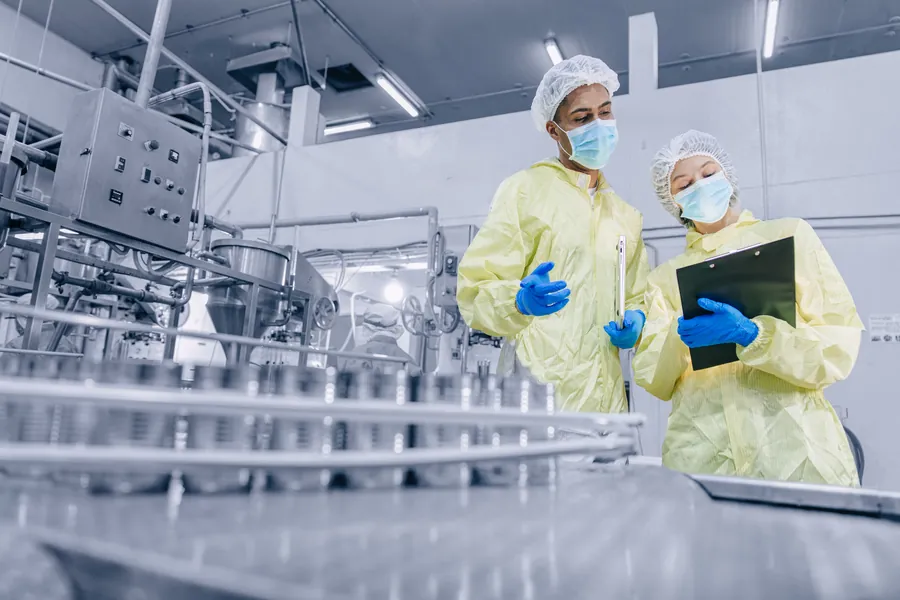 Meadow's data shows that aluminum excels in consumer satisfaction, but requires brands to invest in education and, at times, reformulation.Ljungberg: Despite being a cost saver for companies in the long term, the transition to aluminum often means facing some higher transitional costs in the short term. Retooling production lines, redesigning formats, and qualifying new suppliers all require upfront investment. For smaller brands in particular, this can feel like a significant barrier, even when the long-term commercial case is clear.
There is also a consumer familiarity factor that should not be underestimated. In food, especially, texture, sealability, and the tactile experience of packaging all influence purchasing behavior. All our data indicates that aluminum performs extremely well in terms of consumer satisfaction, but it requires brands to invest in education and sometimes reformulation to get there.
At Meadow, a large part of what we do is help brands navigate exactly that transition, bringing down those upfront costs through our partnerships with Novelis and Ball Corporation.
How is Meadow differentiating its offering in an increasingly competitive aluminum packaging market?
Ljungberg: Meadow’s approach to industry partnerships gives it a unique industrial capacity for a packaging startup.
Our partnerships with Novelis, the world leader in aluminum recycling, and Ball Corporation, one of the largest aluminum packaging manufacturers on the planet, mean that we are not asking customers to take a leap of faith on unproven infrastructure. We are plugging them into supply chains and production networks that already operate at a global scale.
But supply chain innovation alone is not our only advantage — at the heart of what we offer is the Meadow Kapsul, a pre-fill packaging system that works across product categories in a way that has simply not existed before.
The can itself is one of the most familiar, trusted, and widely recycled containers on the planet - we took that foundation and transformed the can end, enabling the system to work across food, beverage, and personal care without asking consumers to change their behavior.
The Meadow Kapsul stems from the beverage industry that has regional closed-loop infrastructures. That makes the container much more resilient to external macro influences.