


EBC25 live: Industry explores positive trends in global bioplastic production despite regulatory hurdles


Key takeaways
- Global bioplastic production is set to nearly double by 2030, driven by rising demand, innovation and stronger roles for bioPP, bioPE, PHA and PLA.
- Packaging remains the dominant growth sector, but adoption varies by region due to regulatory inconsistencies and infrastructure gaps.
- Australia highlights major hurdles including fragmented regulations, limited composting capacity and labeling challenges affecting end-of-life management.
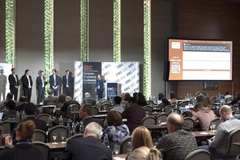
The global production of bioplastics is rising amid regulatory adoption barriers, according to presenters at this year’s European Bioplastics Conference 2025 (EBC25) in Berlin, Germany.
At the event, hosted by European Bioplastics (EUBP), the non-profit association is presenting its report Bioplastics Market Development Update 2025, which finds that global bio-based plastics production capacity is projected to double from 2.31 million metric tons in 2025 to approximately 4.69 million metric tons by 2030.
EUBP says its new data “confirms the continued global expansion of bio-based plastics production and their growing role in the transition to a sustainable, circular economy.”
Packaging Insights attended the panel “Market Pulse and Industry Update: Global Trends and Insights.” Pia Skoczinski, senior expert for technology and markets at nova-Institute, and Hasso von Pogrell, managing director at EUBP, discussed the report findings and implications.

Also at the panel, Rowan Williams, president at the Australasian Bioplastics Association, Vikram Bhanushali, president at the Indian Compostable Polymer Association, and Susan Zhu, the global marketing director of the Chinese Zhongke Guosheng (Hangzhou) Technology, discussed the adoption of bioplastics in their countries.
Bioplastic capacity expected to increase
The 2025 market data report, compiled by the EUBP and the nova-Institute, reveals an increased consumption of bioplastics that reflects a rising market demand and innovation in material performance and applications.
 Hasso von Pogrell, managing director at EUBP.“The steady rise in bio-based plastics production highlights our industry’s role in supporting a
more sustainable, circular economy,” says Von Pogrell.
“With increasing consumer and regulatory focus on low-impact materials, bioplastics are positioned to expand across diverse sectors and contribute to Europe’s evolving bioeconomy.”
Bio-based plastics are currently just 0.5% of the 431 million metric tons of plastics produced annually in the world, EUBP points out.
“Bioplastic alternatives exist for almost every conventional plastic material and corresponding application. Due to a strong global development of bio-based and biodegradable polymers, such as polyhydroxyalkanoates (PHA) and polylactic acid (PLA), bioPP, as well as a steady growth of bioPE, the production capacities will continue to increase significantly within the next five years.”
In Europe (EU 27+3), the growth mainly lies in large additional bioPP, bioPE, and PHA capacities expected by the EUBP.
Growth barriers in Australia
At the panel, Williams presented the Australasian Bioplastics Association’s certificates for Compostable and Soil Biodegradable Bioplastics in Australia. However, he also highlighted issues in market acceptance and barriers to growth.
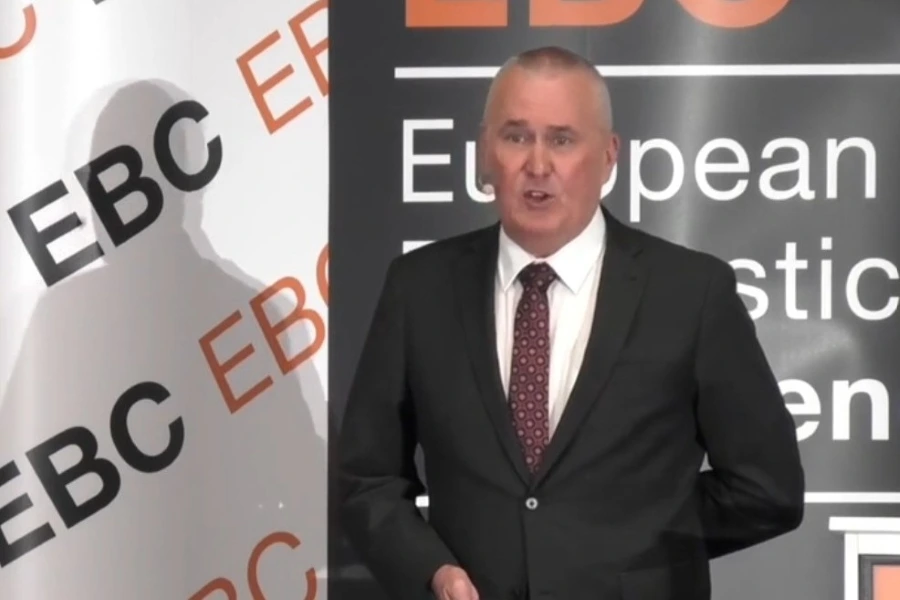 Rowan Williams, president at the Australasian Bioplastics Association.“The federal government released the National Plastics Plan in 2021 to increase plastic recycling, find alternatives to unnecessary plastics, and reduce the impact of plastic on the environment. The delivery of voluntary targets is managed by the Australian Packaging Covenant Organisation,” he explains.
“The key actions within the plan for certified compostable bioplastics are prevention, working with the industry to phase out particularly problematic plastic materials, and to phase out plastic packaging products with additive fragmentable technology that do not meet relevant compostable standards.”
Williams argues that the key barriers to growth in Australia concern the “jurisdictional inconsistency” between the country’s federal, state, and local Government. This is said to result in regulatory overlap, with laws often duplicating or in conflict, creating compliance burdens for businesses, among other issues related to administrative complexity, higher costs, and fragmented policy approaches.
He says these jurisdictional barriers also lead to end-of-life issues when it comes to bioplastics. Williamse points to “insufficient commercial composting facilities and the need for better labeling to reduce contamination.”
“Certified compostable bioplastics are predominant in organics recycling programs. Foodservice waste is prevalent and problematic for organics recycling due to many factors.”
“Certified compostable packaging, such as freezer and pantry food packaging, ready meal trays, and fiber-based packaging, is becoming possible and can eliminate PFAS contamination in these packaging formats.”
Williams says the Australian bioplastic market is growing for applications that replace packaging that cannot be reused or recycled.