


McDonald’s faces allegations of non-compliance with EU law in the Netherlands


Key takeaways
- The Fair Resource Foundation has alleged McDonald’s Netherlands is failing to meet SUPD dine-in reuse requirements by continuing to offer single-use, plastic-lined cups on site.
- McDonald’s maintains full regulatory compliance, arguing that high levels of takeaway orders justify its packaging choices and that a combined reuse–recycling model is more effective.
- The dispute comes as the Netherlands reviews its SUPD rules, with potential exemptions and policy changes raising concerns about weakened enforcement for HoReCa operators.
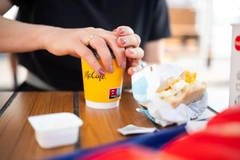
The Fair Resource Foundation has alleged that McDonald’s Netherlands is using single-use paper cups with plastic coatings for on-site consumption, rather than reusable packaging, as required by EU’s Single Use Plastic Directive (SUPD).
However, McDonald’s asserts that it complies with all SUPD-related rules and that the Fair Resource Foundation’s critique is based on an assumption that all dine-in orders are consumed on-site.
Packaging Insights speaks with Chloe Schwizgebel, project coordinator at The Fair Resource Foundation, and a McDonald’s Netherlands spokesperson, about the investigation and the impact of the SUPD for fast food restaurants.
The Fair Resource Foundation, a non-profit organization that advocates for the equitable use of resources, claims that the fast-food chain furthermore charges customers €0.15 (US$0.17) per single-use cup, even though the charge is only applied to take-away packaging, not dine-in.

The SUPD prohibited the offer of disposable cups and containers made of plastic and imposed a surcharge on single-use items. In the Netherlands, as of January 2024, the legislation requires restaurants to offer reusable cups and containers for on-site consumption.
The Fair Resource Foundation, says: “We call on Thierry Aartsen, state secretary for Infrastructure and Water Management, to ensure clear and consistent legislation for all sectors, and proper enforcement. Only then can the transition from single-use to reuse truly be achieved.”
The Fair Resource Foundation reports that since the summer of 2024, McDonald’s has reintroduced single-use items with plastic coatings for beverages consumed on-site. As a result, the NGO has filed an enforcement request to the Dutch authorities.
The McDonald’s Netherlands spokesperson tells us: “At McDonald’s, we act within the applicable rules and make an active contribution to a more sustainable and circular economy. The investigation mentions issues that are not directly related to the rules, but mainly concern how the Fair Resource Foundation believes McDonald’s should organize its reuse system.”
Reusable vs. single-use cups
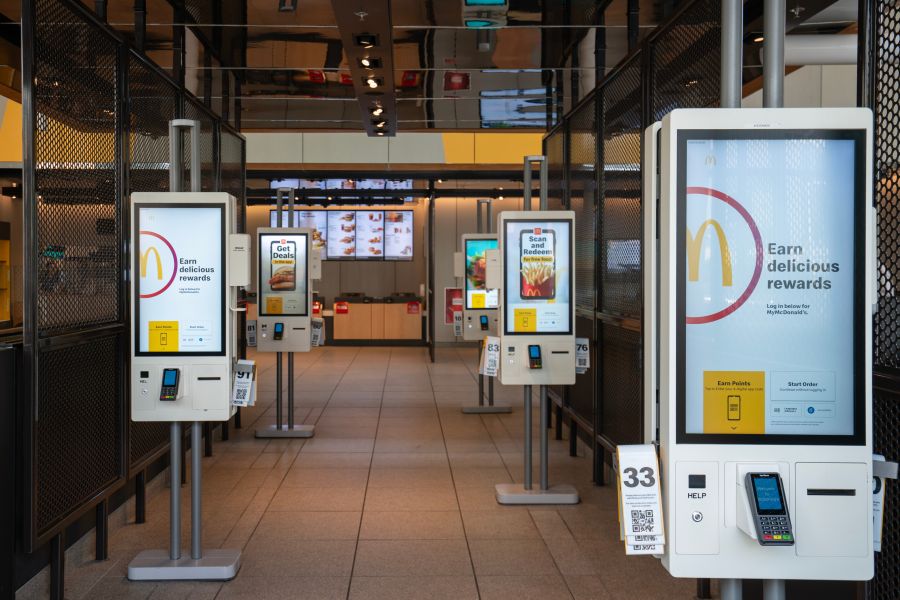 The Fair Resource Foundation visited 14 McDonald’s restaurants in the Netherlands to investigate the fast food giant’s reuse system.The Fair Resource Foundation visited 14 McDonald’s restaurants in the Netherlands to investigate the fast food giant’s reuse system.
The authors found that dine-in consumers can choose a single-use cup, despite EU regulations, alongside reusable cups, which are labeled as “take-away.” At McDonald’s self-service kiosk, the first option presented for dine-in beverages is a single-use cup.
Schwizgebel says: “We assessed McDonald’s reuse system through restaurant visits (communication in store, ordering process, return opportunities) and compared them with the good practices and learning of effective systems that we know from our expertise and our work with Zero Waste Europe as part of work on reuse systems in Europe.”
The investigation also reveals that reusable and single-use cups look similar, despite differing return processes, with identical paper-based single-use lids on all cups. In one incident, the authors ordered two McFlurries, one in single-use packaging and one in reusable packaging. Both came in single-use packaging.
The McDonald’s spokesperson responds: “We would like to emphasize that much of the Fair Resource Foundation’s research is based on the idea that guests who order in the restaurant always consume their order on site.”
However, the spokesperson argues that this is not the case. “At many locations, there are guests who pick up their order or consume it outside, for example while walking through the city.”
The spokesperson says that in these situations, the SUPD rules for takeaway apply, in which guests have the choice between single-use or reusable packaging. McDonald’s Netherlands also states that it communicates its packaging options to consumers. The fast food chain asserts that the photos used by the Fair Resource Foundation in its research “clearly indicate ‘takeaway’ on the single-use packaging,” highlighting the correct method of use to consumers.
“After the introduction of reusable cups, we [McDonald’s] actively communicated the possibilities for reuse, how it works, and why we are doing this.”
Reuse opinions
The Fair Resource Foundation co-founded and organized the Mission Reuse project, which has developed a reuse guide for the Dutch ministry and a blueprint for reuse in close environments.
It also analysed McDonald’s Nederland Impact Report for 2024-2025 to assess its rationale and vision of its sustainable packaging.
“We also did a review of news outlets in the Netherlands and McDonald’s position on reuse in them. Through this analysis, it became apparent to us that they clearly question the concept of reuse as a solution,” says Schwizgebel.
The authors argue that McDonald’s is “deliberately” designing a confusing and complicated reuse system and then blaming the concept of reuse for its ineffectiveness to curb plastic pollution.
This “threatens” the Dutch circular industry, says the Fair Resource Foundation, by undermining “forward-thinking” Dutch reuse companies.
The McDonald’s spokesperson says: “We do not endorse the approach that reusable is always the best and most environmentally friendly solution in every situation. Based on our own data, we see that the best option is a combination of reuse and recyclable materials, whereby the entrepreneur can choose what works best in his or her restaurant.”
Policy recommendations
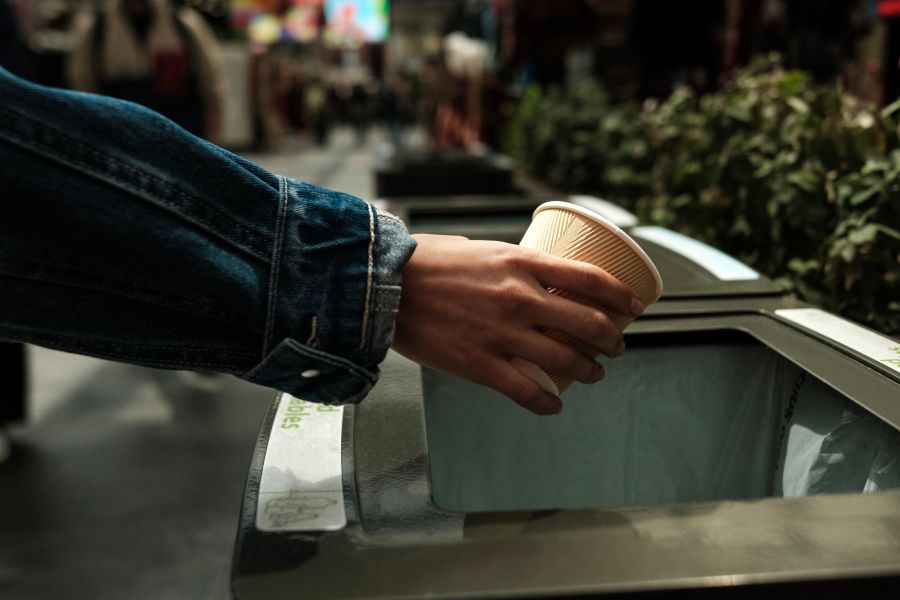 The McDonald’s spokesperson says the company favors a waste management approach that combines reuse systems with recyclable materials.Schwizgebel says the EU Single-Use Plastic Directive, which bans the use of disposable products that include plastic, is generally “good,” but is critical of proposed exemptions.
Currently, the Netherlands is reviewing its implementation of the SUPD. The current surcharge on single-use takeaway packaging is set to be abolished on January 1, 2026. However, restaurants must still offer reusable options for dine-in customers.
In addition, several parliamentary motions propose new exemptions to the dine-in reuse obligation for HoReCa, though none have yet overturned the core rules.
“We think exemptions to this obligation should be avoided as they confuse consumers and employees in the HoReCa sector. They also mitigate the potential for scaling up reuse systems needed to reach their full potential. For example, McDonald's France has a 33.9 average reuse rate on cups, compared to 3.3 in the Netherlands, ” says Schwizgebel.
She also advocates for stronger control and enforcement from public authorities to “ensure a level playing field, otherwise HoReCa’s respecting the reuse obligation on single-use plastics is wrong.”
“We also think that practical support and guidance for the HoReCa from the reuse sector or from the government are essential.”
McDonald’s asserts that it has been a “leader” in recycling for many years and communicates its waste management strategies to the Dutch authorities.
The spokesperson concludes: “We collect a large proportion of single-use packaging ourselves, separate it, and dispose of it in nine different waste streams. McDonald's has been a leader in recycling for many years and wants to remain so. We actively share our packaging data with the Ministry of Infrastructure and Water Management so that they can formulate better policies.”