
Norner spotlights PCR from fish farming waste for personal care packaging

Key takeaways
- Norner researches fish farming waste for high-quality PCR material in beauty packaging.
- Challenges of using PCR in beauty packaging include color variations, odor, and reduced performance.
- Advances in polymer engineering and technology support recyclable, sustainable, and functional beauty packaging.
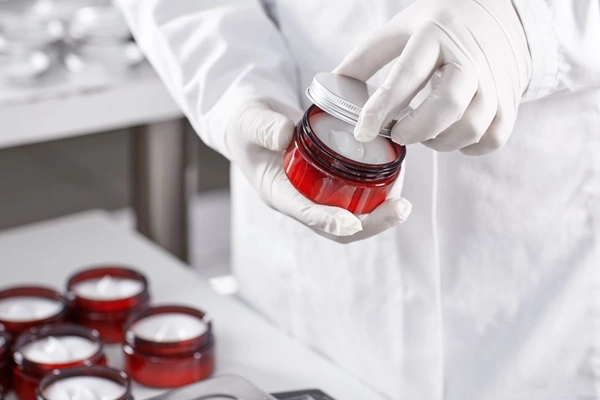
PCR material is high on brand owners’ agendas, but sourcing high‑quality, locally available PCR remains a major challenge, according to Norner, a Norway-based R&D company for the packaging industry.
Packaging Insights speaks to Tomasz Czulek, senior business development manager at Norner, to find out more about how the polymer company sources and researches recyclate to create PCR suitable for packaging applications.
“One of our most demanding projects explored an unconventional PCR source: discarded high-density PE (HDPE) pipes from the fish farming industry,” he says.
“Many brands still rely on imported materials due to limited local feedstock. One customer set out to change this by using locally sourced PCR for liquid soap bottles, despite the lack of suitable bottle‑grade material.”
With the escalating Iran war contributing to a sharp rise in oil and energy prices, an increasing number of packaging producers are considering a switch to recycled materials.
Fish farming for PCR
Norner indicates that its research into the use of fish farming plastic waste confirms that locally- and non-bottle-sourced PCR can meet the processing and quality requirements for liquid soap packaging.
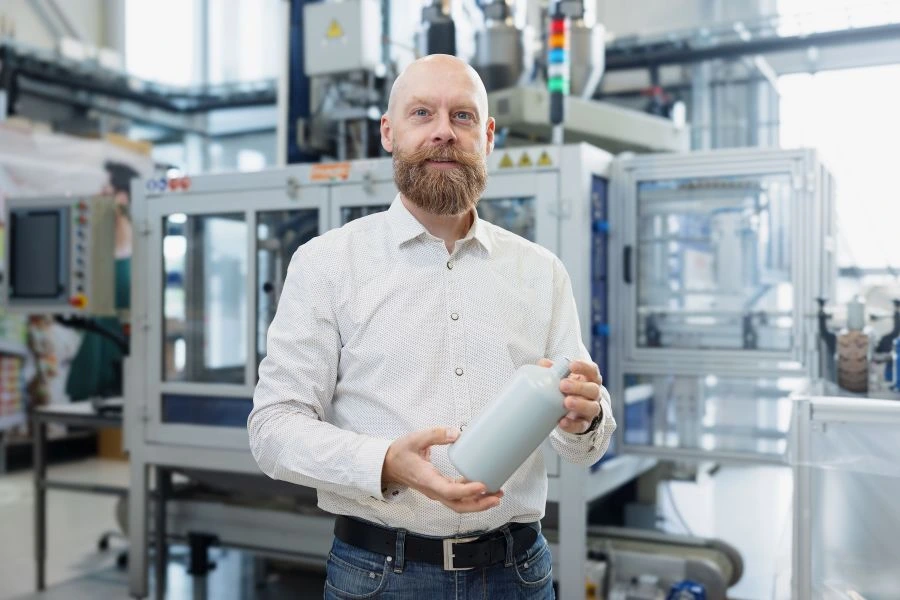 Tomasz Czulek, senior business development manager at Norner (Image credit: Norner).“This project demonstrates how scientific modeling, advanced testing, and industrial validation can turn unconventional waste streams into high‑value, locally sourced PCR solutions without compromising performance or quality,” says Czulek.
He explains that Norner’s role in the project to develop liquid soap packaging from fish farming plastic waste was to apply material science to bridge the gap between pipe‑grade HDPE and bottle-grade material.
“HDPE has fundamentally different properties from bottle‑grade materials, making it unsuitable for standard blow-molding without significant modification.”
“Using theoretical modeling, rheological analysis, and advanced compounding, we precisely adjusted the material’s behavior to match virgin blow-molding HDPE. The solution was validated on our blow-molding line and through extensive laboratory testing.”
Rising demand for recyclability
Czulek says that the EU Packaging and Packaging Waste Regulation is accelerating the shift toward recyclable packaging and higher use of recycled materials in the beauty sector.
At the same time, cosmetics remain a highly competitive category, where packaging must meet demanding expectations around aesthetics, functionality, and product performance, according to the expert.
“As PCR content is introduced, brands face challenges such as color limitations, odor, contamination, reduced mechanical performance, and safety concerns. Addressing these issues is essential to preserve a premium look and strong shelf appeal,” says Czulek.
He spots the move toward recyclable flexible packaging as a key trend in beauty packaging, particularly monomaterial PE or PP structures increasingly combined with PCR. “Brands are now pushing recycled content beyond rigid packaging into flexible formats, one of the most technically demanding applications.”
“Across these developments, the central challenge is balancing sustainability ambitions with performance, aesthetics, and brand identity. This is where Norner works closely with customers, helping them navigate PCR quality, recyclability requirements, and next-generation recycling solutions without compromising product appeal or functionality.”
Ensuring aesthetics and functionality
The largest tension point in cosmetic packaging lies between premium aesthetics and the inherent limitations of recycled materials, according to Czulek.
“Packaging is central to brand value, with consumers expecting perfect color, high clarity, consistent performance, and a flawless shelf appearance. At the same time, sustainability targets are pushing brands toward higher recycled content and greater recyclability, introducing variability in material behavior.”
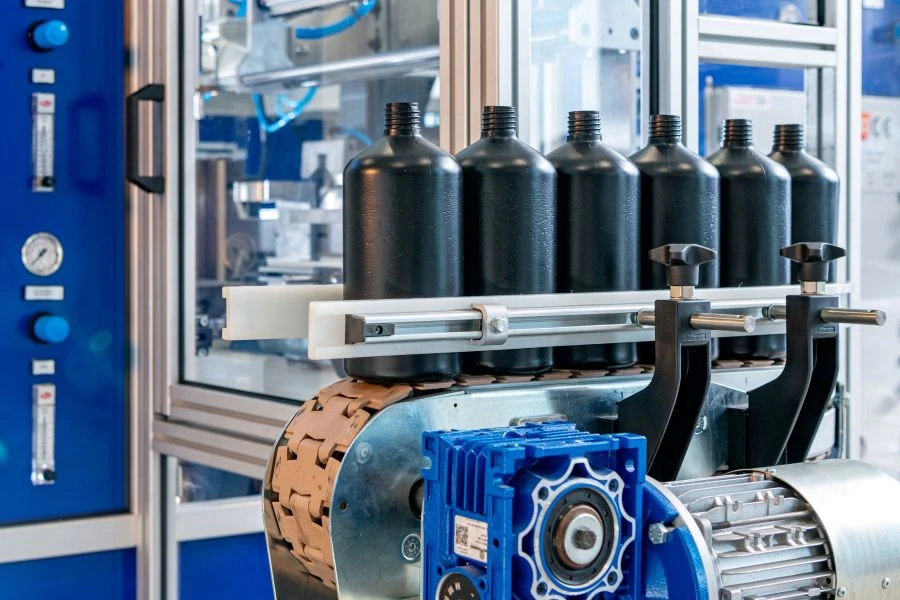 Norner’s liquid soap packaging from fish farming plastic waste (Image credit: Norner).The use of PCR materials can lead to challenges such as color variation, odor, contamination, and reduced mechanical performance becoming more visible. Czhulek says these are not minor technical issues, but directly affect consumer perception, brand trust, and shelf impact. He explains that brands want credible sustainability claims but cannot afford packaging that looks or feels compromised.
“Functionality adds further complexity. Cosmetic packaging must protect sensitive formulations, meet strict safety standards, and deliver a premium user experience, often requiring additional material modification, testing, and validation — increasing complexity and cost.”
Czulek argues that the solution is not to trade one requirement against another, but to engineer aesthetics, functionality, sustainability, and cost together. “That said, we observe that several less exclusive brands are already implementing PCR levels well beyond the 10% threshold set for 2030.”
“Moreover, many more brands could likely adopt at least 10% PCR without compromising aesthetics, some even leveraging the natural variations of PCR materials as a distinctive design feature or embracing their inherent material character.”
Beauty packaging technology
Technology is reshaping the beauty packaging landscape by turning sustainability from ambition into execution.
“Advances in polymer engineering, biomaterials, material formulation, additives, and odor removal solutions for recycled materials, and advanced recycling technologies evolve fast,” says Czulek.
The Norner expert says this enables fully recyclable monomaterial structures, higher use of PCR plastics, and lightweighting without compromising performance or aesthetics.
“At the same time, technology enhances functionality, personalization, and brand storytelling, elevating the consumer experience.”
“Together, these innovations show that beauty packaging sustainability is no longer about simple material substitution, but about holistic, system-level design enabled by technology,” Czulek concludes.