


March in review: Iran war disrupts supply chains, regulation updates & Aicomp Summit 2026


Key takeaways
- The Iran war disrupts supply chains, causing oil price hikes and plastic bag shortages.
- UK probes glass imports, while the US imposes anti-dumping duties on Chinese packaging.
- Aicomp Summit 2026 emphasizes digitalization for efficiency and regulatory compliance in packaging.
Last month, the Iran war affected the packaging industry, leading to rising oil prices, a move toward recycled materials, and plastic bag shortages.
Meanwhile, the UK launched investigations into glass container imports from China and Türkiye, and the US imposed anti-dumping duties on PP corrugated boxes from China.
The Aicomp Summit 2026 took place in Austria. We attended the event and explored how facilitating efficiency and regulatory compliance emerged as key benefits of the packaging industry’s accelerating digitalization.
We look back at the biggest stories in March.
Glass deemed safest material as NGO calls for single-use alternatives
Glass is well regarded for its safe and circular qualities, yet the material is often “punished” for its heavy weight, said Zero Waste Europe. Moreover, the environmental NGO argued that moving away from packaging that can contain harmful chemicals, like PFAS, should not rely on replacing one material with another. We spoke to Dorota Napierska, toxic-free circular-economy policy officer at Zero Waste Europe, about glass as a safer alternative to single-use plastic packaging. Aicomp highlighted product configuration solutions at the summit.
UK probes glass container imports from China and Türkiye over unfair trade practices
The UK Trade Remedies Authority (TRA) launched two investigations into glass container imports from China and Türkiye that examine whether unfair competition and trading practices are harming the UK glass industry. Currently, the organization is conducting an anti-subsidy investigation into glass packaging imports, such as jars and flasks, from Türkiye, and an anti-dumping investigation into imports from China. We sat down with Jessica Blakely and Carmen Suarez, chief executives at the TRA, to find out more.
South Korea eases courier packaging rules and encourages plastic cuts
South Korea proposed revisions to its packaging regulations for courier shipments, introducing more flexible requirements for parcels containing fragile products and easing standards for companies using automated equipment or recycled and paper packaging materials. The move follows the introduction of Disposable Packaging Methods and Standards in April 2024, which aims to cut packaging waste from parcel deliveries.
Lack of clarity over UK pEPR legislation “paralyzing” for brands, warns Aquapak
As EPR regulations come into effect around the world, Aquapak Polymers, a UK-based manufacturer of flexible plastics, warned that unclear definitions stifle innovation, leading brands to absorb costs and pass them onto consumers. The company argued that the UK’s packaging EPR (pEPR) lacks clarity due to changes in definitions and shifts in guidance. Packaging Insights spoke with Dr. John Williams, chief technology officer at Aquapak, about the cost of EPR regulations for everyday consumers, highlighting how brands are absorbing those costs rather than innovating with circular materials.
Singapore to launch national DRS for beverage containers in April
The Beverage Container Return Scheme (BCRS) will launch Singapore’s DRS for metal cans and plastic bottles this month. The scheme will cover more than one billion beverage containers used annually, allowing the scheme operator to recover over 16,000 metric tons of material per year. We spoke to the BCRS to hear more about the DRS’s setup and how the scheme operator plans to encourage citizen participation.
Aicomp Summit 2026 review: Human-centric AI, digitalization & compliance shape packaging future
Facilitating efficiency and regulatory compliance emerged as key benefits of the packaging industry’s accelerating digitalization at the Aicomp Summit in Vienna, Austria, last month. Event speakers also highlighted the importance of keeping the human element at the center of the industry’s digital transformation to stay ahead of the competition. T.CON talked to us about digital manufacturing for corrugated packaging.
US imposes anti-dumping duties on PP corrugated boxes from China, straining exports
The US Department of Commerce officially issued anti-dumping and countervailing duty orders on PP corrugated boxes from China. Industry associations expect the measures to increase overhead costs for Chinese plastic product exporters. In response to the trade protection measures, the China Plastics Processing Industry Association stated that measures such as conducting anti-dumping and countervailing investigations increased the difficulty and cost of China’s plastic product exports.
Rising oil and plastic prices push packagers toward recycled materials
The escalating war in Iran and the wider Middle East contributed to a sharp rise in oil and energy prices, as attacks on energy infrastructure and disruptions around the Strait of Hormuz have unsettled global supply routes and tightened markets. We sat down with Marcel Alberts, founder at Healix, a Netherlands-based clean-tech recycling start-up, to explore how rising oil prices impact Europe’s packaging supply chains.
Unilever meets own plastic reduction goals, but Greenpeace questions real impact
Unilever’s plastic packaging targets are falling short in addressing the full scale of plastic production, according to Greenpeace, despite the company’s 2025 Annual Report hinting at a shift toward paper-based solutions. Unilever’s report provided an update on its plastic packaging targets, like recycled content and reusability, as well as an updated assessment of the environmental impact of its production processes. However, Greenpeace USA’s global plastics campaign lead Graham Forbes told Packaging Insights: “Switching from virgin plastic to another problematic material like paper is just shifting the burden elsewhere.”
Investigation underway as Norway misses recycling targets, European regulator finds
The European Free Trade Association Surveillance Authority (ESA) issued a letter of formal notice to Norway for failing to meet its key waste collection and recycling targets, highlighting faults in the country’s collection and separation system. In the letter, the ESA noted that while 50% of municipal waste should have been prepared for reuse and recycling by 2020, it only reached 41.7% in 2023. Moreover, the country needed to recycle 50% of plastic packaging by 2025, but in 2024, the figure was 34%. We took a closer look at the case.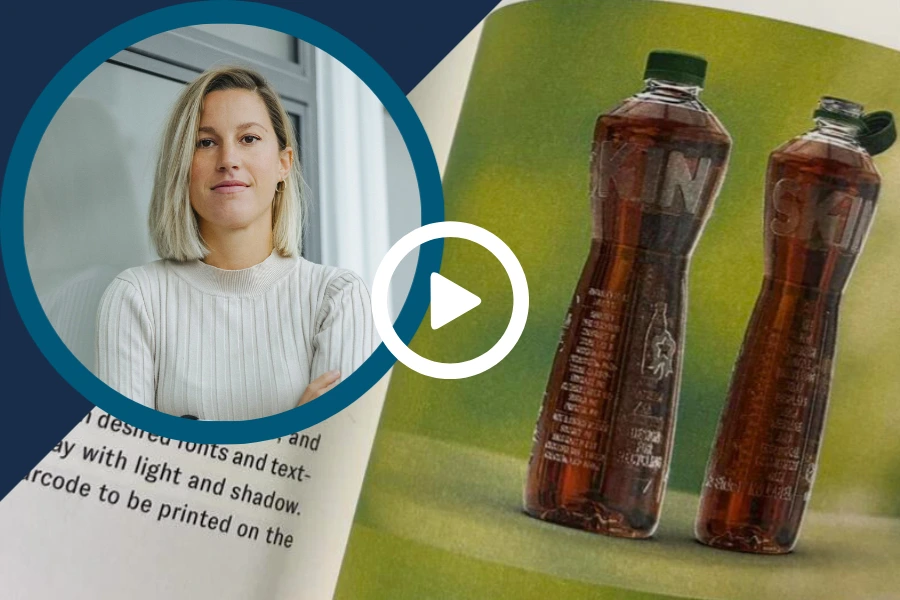 Milk Studio spoke to us about balancing regulatory compliance and design trends.
Hong Kong tobacco packaging plan raises counterfeit concerns
The government of the Hong Kong SAR announced plans to introduce standardized tobacco packaging alongside a duty stamp system. However, the proposal has drawn concern from independent vendors. The Health Bureau said that the government tentatively plans to implement the uniform packaging design for conventional smoking products and the duty stamp system simultaneously in the second quarter of 2027.
Industry groups sue California over “arbitrary” packaging label ban
A coalition of packaging manufacturers, dairy producers, and farmers is suing California, US, over its Truth in Recycling (SB 343) law, alleging that it undermines recycling and violates the First Amendment of guaranteed free speech. SB 343 prohibits the use of the chasing arrows on packaging unless it meets four recyclability criteria set out by the state, which include consumer access, sortation, packaging design, and chemical safety.
Middle East conflict causes plastic bag shortages in South Korea
The ongoing Iran war and broader geopolitical tensions in the Middle East triggered a shortage of naphtha feedstock in South Korea, impacting the stability of the nation’s plastic packaging industry. Naphtha is used to produce first-generation plastic products like ethylene and propylene, which can then be polymerized to create synthetic resin materials. South Korea is a major importer of Middle Eastern naphtha, with much of it shipped through the Strait of Hormuz, currently disrupted due to the ongoing conflict involving Iran, the US, and other actors.