


Interpack 2026: EU PPWR drives monomaterial flexibles innovations


Key takeaways
- Monomaterial flexible packaging is splitting along PP and PE paths, with European brands favoring PP.
- PPWR’s 2030 recyclability deadline is forcing converters to commit to single-polymer structures across all applications.
- Toppan’s retort-grade mono-PP film signals that aluminum foil replacement is now technically within reach.
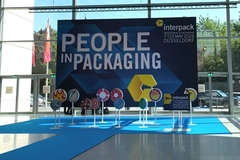
Monomaterial flexible packaging crossed a threshold at Interpack 2026. Suppliers showed single-polymer structures capable of replacing multi-layer laminates in the industry’s most technically demanding applications. The driver is the EU’s Packaging and Packaging Waste Regulation (PPWR), which requires all packaging on the European market to be recyclable at scale by 2030.
The flexibles industry has split along two polymer paths; PP and PE. European brand owners are leaning toward PP while North American converters are signaling a stronger interest in PE. The split is reshaping film-line capital planning across the supply chain.
Live on the showroom floor, Packaging Insights talks with experts from Brückner Maschinenbau, Profol, Taghleef, Toppan, and the World Packaging Organization about the latest in monomaterial innovation.

Thin films, thick ambitions
Brückner Maschinenbau spotlights its biaxially oriented PE (BOPE) films at five microns, a thickness previously seen only in technical applications like capacitors. The thin gauge is engineered for paper lamination, where brand owners want minimum plastic content to qualify for paper recycling streams.
“The big brand owners, but also retailers, are aiming for more paper-based packaging,” Sebastian Ruhland, Brückner Maschinenbau’s director of product management, tells us. “Paper has issues in terms of barrier, in terms of sealability, and in terms of moisture resistance.”
“To overcome this, a quite simple solution is to laminate it with very thin biaxially oriented films.”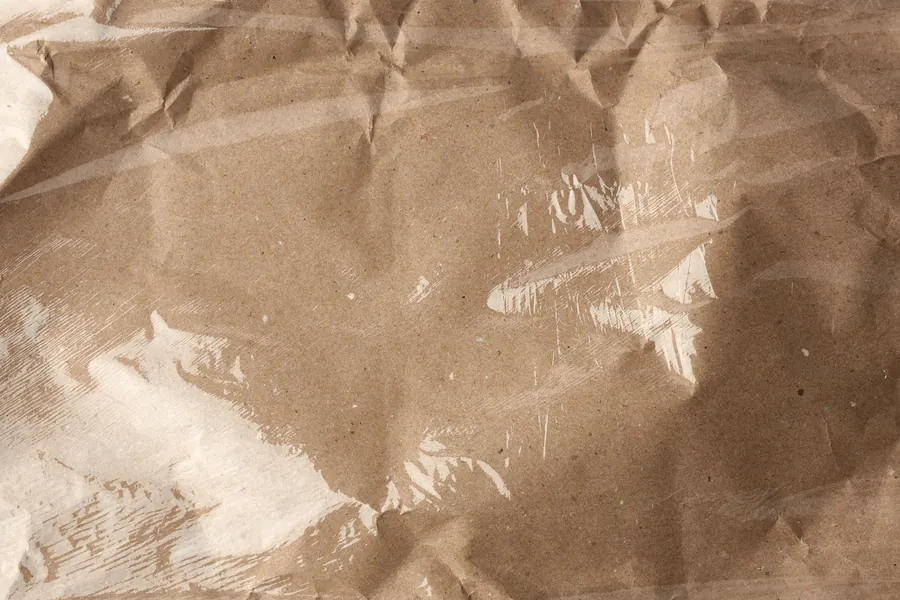 Brückner Maschinenbau’s BOPE films provide brand owners with minimum plastic content to qualify for paper recycling streams.
The company is also working on other PE innovations. Brückner Maschinenbau has developed an inline-coated BOPE-HD (high-density) structure using a polyvinyl alcohol (PVOH) coating supplied by Henkel. It is applied between the machine-direction and transverse-direction stretching stages.
The coating drops the oxygen transmission rate from the uncoated film to around 10. Metallization takes it below one. Ruhland states that blown-film lines cannot replicate the performance.
“This is the unique thing we can do on a tenter frame,” he adds. “It’s the enabler for PE monomaterial.”
The technical bet rides on regulatory uncertainty. PPWR will require recycling at scale by 2030, defined as reaching 70% of the European population. PE flexible recycling has not hit that threshold yet.
“If it shifts to PE, we have a solution,” Ruhland says. “It’s a question of time and effort.”
One polymer, one package
Profol comes at the monomaterial question from the sealing-layer side. The company makes semi-finished films supplied to converters, printers, and laminators. Udo Steinhauer, Profol’s director of business development, marketing, and sustainability, describes the design philosophy as single-polymer compatibility across the full packaging structure.
“All our solutions are designed in a way that monomaterials will be possible — a PP lidding on a PP cup, and a PP sealing film in a PP pouch,” he says. “That’s the spirit.”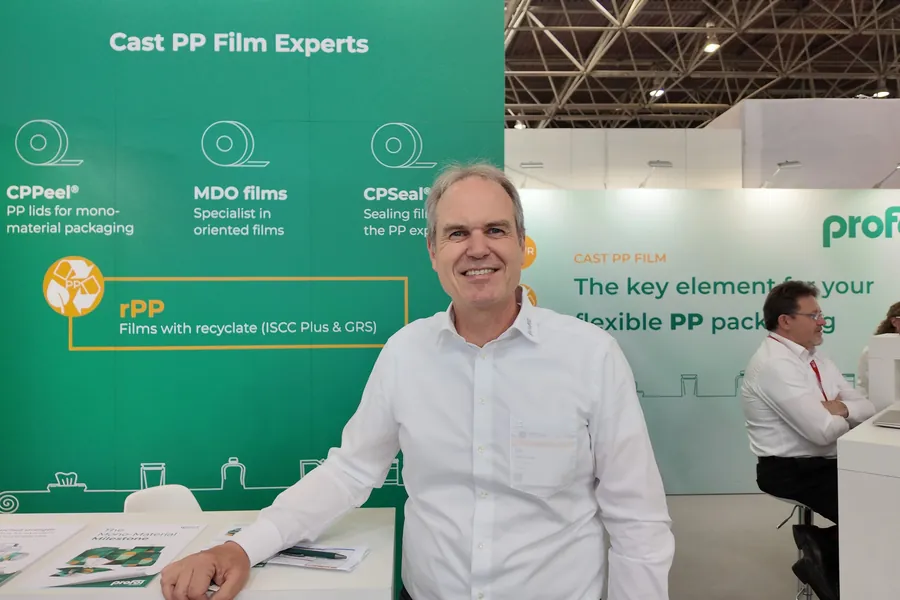 Udo Steinhauer, Profol’s director of business development, marketing, and sustainability.
Steinhauer underscores monomaterial adoption as the most important sustainability trend in flexible packaging, regardless of polymer choice.
“It doesn’t really matter which type of polymer it is, but it has to be one polymer in one packaging, which then allows the sorting units to sort per polymer,” he explains.
He also flags uncertainty about PPWR implementation at the national level as a brake on faster adoption.
“A lot of customers would like to be ready once PPWR comes into place,” Steinhauer says. “However, there is still a big uncertainty around how the PPWR will look in the end.”
“The industry is looking for more precision.”
Steinhauer was direct about a tension in the broader paperization trend. Many paper packaging formats, he says, are fiber-reinforced plastics that are difficult to recycle.
“Most of the paper solutions you find here are not paper,” he attests. “They are always combined with a functional, plastic coating.”
“Why not use a thermoplastic material that is extremely asy to recycle and needs much less in quantity?”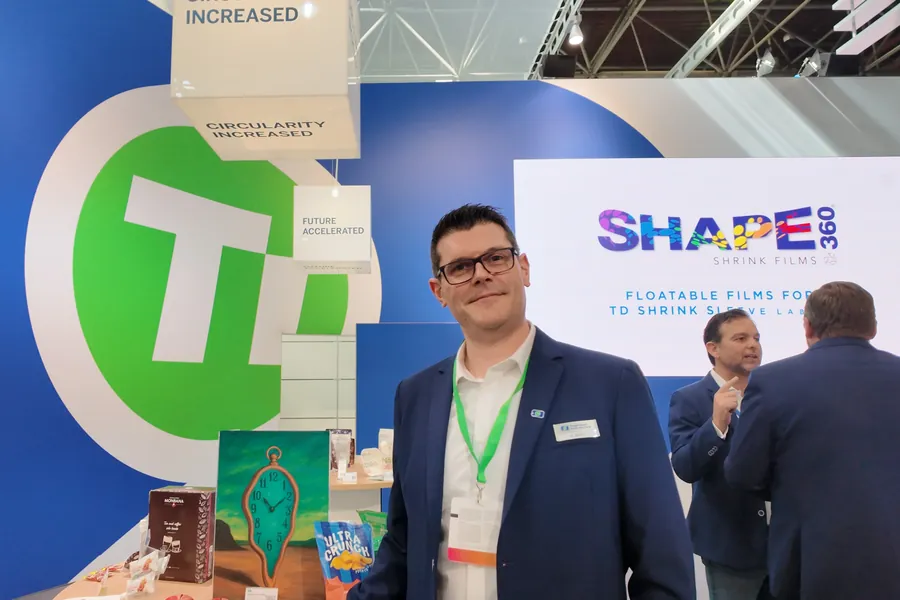 Daniel Borin, Taghleef’s senior product manager for flexible packaging EU.
Steinhauer’s point cuts against prevailing narratives, but reflects a real industry debate about whether minimum-plastic paper hybrids are functionally distinct from optimized monomaterial flexibles.
Beyond traditional segments
Taghleef Industries used Interpack to showcase its monomaterial biaxially oriented PP (BOPP) solutions entering coffee, dairy, and cosmetics applications. These are segments where PP has not historically been the material of choice. The company identified five drivers shaping flexible packaging investment, with recyclability and thinning at the top.
Daniel Borin, Taghleef’s senior product manager for flexible packaging EU, tells us that the company’s portfolio now ranges from four to 12 microns, with different functionalities including stiffness, barrier protection, and sealability.
“The further trend that we see related to flexible packaging is to grow thinner and thinner to reduce plastic consumption, and to reduce packaging weight,” he adds.
The company is also expanding its compostable Nativia line beyond its industrial-compostable PLA base into new home-compostable grades. Taghleef frames recyclability and compostability as parallel PPWR-compliant end-of-life paths rather than competing ones.
High-retort without aluminum
Toppan exhibited a technically ambitious mono-PP structure qualified for high-retort conditions. The solution targets ready-meals and the wet pet food sector.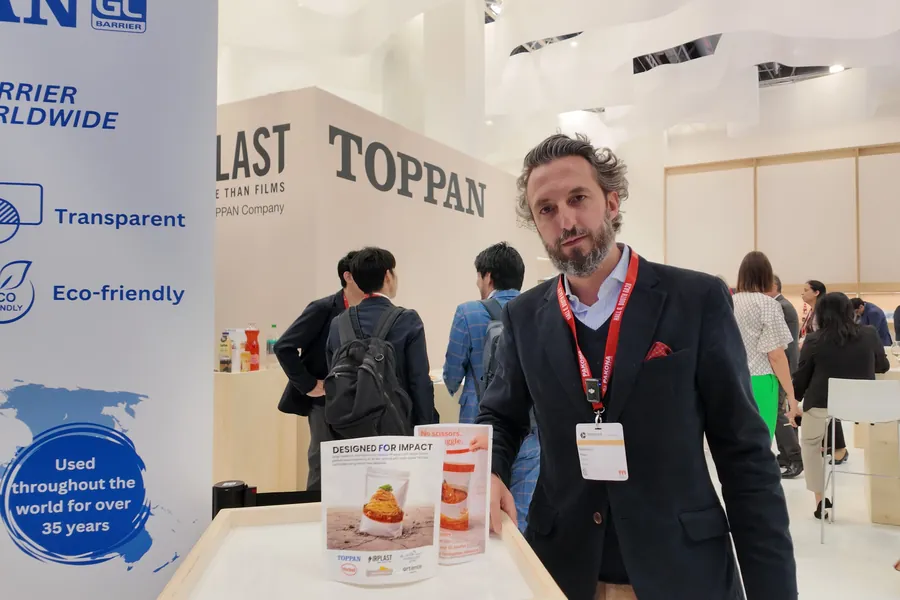 Sebastian Ritter, Toppan’s manager of new business and sustainability for EMEA.
Toppan’s manager of new business and sustainability for EMEA, Sebastian Ritter, says that the film withstands sterilization temperatures up to 131 degrees Celsius for 30 minutes. Conditions that have historically required aluminum-foil-based laminates.
“We are targeting the ready-meal food industry, but also the wet pet food industry, because we know that their retort conditions are the most technically demanding and challenging ones,” Ritter reveals.
The film uses a silicon oxide (SiOx) deposition on a BOPP base. The company evaluated aluminum oxide alternatives before settling on silicon oxide for compatibility.
“The challenging thing was actually to decide, will it be SiOx, or will it be aluminum oxide?” Ritter asks. “How is that compatible with the base material?”
“Over the years, we managed to add a SiOx deposition onto a BOPP frame.”
Toppan launched the film two years ago. It now produces the film at a new facility in Most, Czechia. The company also acquired BOPP film manufacturer Irplast in Italy and is collaborating with Henkel on solvent-based adhesives, Hiper Cast on the cast PP layer, and Toyo Ink on water-based inks.
Ritter emphasizes that the central goal was aluminum-foil replacement, not industry disruption.
“Our idea was to create a film that is suitable for the food industry, that is microwave-safe, and that is metal-detector friendly, while providing the same barrier properties as aluminum,” he says.
He also identified pharmaceutical and medical packaging as the next frontier. The sector is currently exempt from PPWR, but Ritter says he expects the exemption will not last indefinitely, and Toppan is already engaging with medical and pharmaceutical companies in Ireland, Italy, and Germany. Nerida Kelton, VP of sustainability and safe food at the WPO.
“It’s not forever,” he says. “Preparing is half the job.”
EPR goes global
Nerida Kelton, VP of sustainability and safe food at the World Packaging Organisation (WPO), says that the monomaterial momentum is reinforced by regulations that are spreading well beyond Europe.
“Not only with PPWR — EPR regulations are everywhere and in every corner of the world,” Kelton underscores.
She frames monomaterial adoption as a logical response to current and future recycling infrastructure realities.
“Rather than having layers or composite packs, you can change your packaging to be one material that’s recyclable, and that’s easier for the recycling end stream,” Kelton concludes. “You have to design to recycle; you can no longer guess.”