



Neste commissions refining facility to scale chemical recycling


Key takeaways
- Neste Corporation has commissioned a new facility at its refinery in Finland following a €111 million (US$121 million) investment.
- The site can process 150,000 tons of liquefied waste plastic annually, including multi-layer, mixed, and contaminated plastic streams unsuitable for mechanical recycling.
- The company urges the European Commission to revise recycled content rules under the EU Packaging and Packaging Waste Regulation to include refineries.
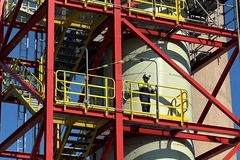
Neste Corporation, a Finland-based energy and refining company, has commissioned a new facility to scale up its chemical recycling capabilities at its existing refinery in Porvoo, Finland, enabling the production of feedstock for the plastics and chemicals industry.
The facility upgrade follows a €111 million (US$121 million) investment. It is equipped to process oils derived from challenging waste plastic streams, like multilayer packaging, mixed plastic waste, and contaminated plastic.
Jori Sahlsten, executive vice president of Oil Products at Neste, says: “The commissioning proves that we can process liquified waste plastic (LWP) at an industrial scale. This demonstrates Neste’s capability to develop advanced technology, set safety standards, and create supply chains for challenging new raw materials.”

Altering calculation rules for competitiveness
The facility has an annual processing capability of up to 150,000 tons of liquefied waste plastic — reportedly the world’s largest LWP upgrading facility.
Maiju Helin, director of polymers and chemicals at Neste, says: “We enable the scale-up of chemical recycling by upgrading liquefied plastic waste. The plastic originates from low-quality waste streams not suitable for mechanical recycling and destined for incineration or landfills.”
“Thanks to our new facility, hard-to-recycle plastic waste can be upgraded to meet the feedstock quality requirements of companies manufacturing high-quality plastics.”
However, Helin argues that the European Commission’s current recycled content calculation rules threaten to “limit the ability of refineries to serve the EU’s recycled content targets.”
“For Europe’s competitiveness sake, we need to ensure the calculation rules are amended to include refineries in the context of the EU Packaging and Packaging Waste Regulation,” she adds.
Recycled content
At the upgraded facility, Neste will process LWP alongside crude oil. It will apply a mass balance approach to attribute the recycled raw materials used in its Neste RE product.
“With the use of recycled Neste RE, a reduction of over 70% in virgin fossil resource consumption (abiotic depletion) and a reduction of over 35% GHG emissions can be achieved when plastic waste is chemically recycled instead of incinerated and then used to replace fossil feedstock in plastics manufacturing,” says the company.
Types of LWP include pyrolysis oil. According to Neste, the new facility allows Neste to “close the quality gap” between crude liquefied plastic waste and the raw materials required by the petrochemical industry.