




Fragmented global policies push plastic circularity toward national action plans

Key takeaways
- Global climate conferences are failing to deliver binding commitments on plastic production, leaving fragmented national and regional policies as the focus.
- Michael Sadowski discusses the complexity companies face with diverse regulations across borders and the need for a unified plastics treaty.
- Emerging markets are seeing limited investment in plastic waste solutions but are beginning to implement policies that could accelerate circularity models.
As global conferences like the UN Global Plastic Treaty Negotiations and COP30 have so far failed to secure binding international legislation to combat plastic pollution, The Circulate Initiative highlights the importance of regional and national regulations to address the global issue.
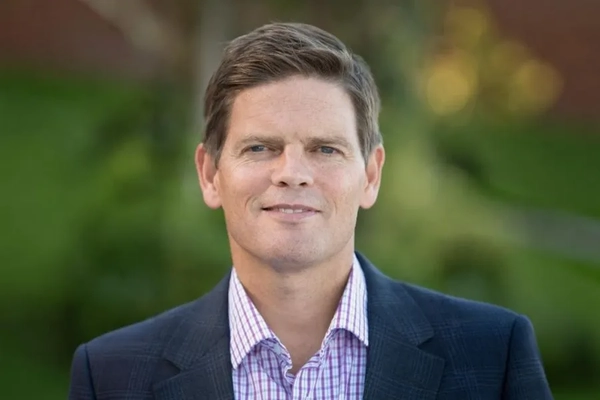
Packaging Insights sits down with Michael Sadowski, executive director and board chair at The Circulate Initiative, to discuss how a fragmented policy environment creates a complex and burdensome industry landscape for companies working across borders.
Sadowski discusses the pitfalls of international climate conferences and how these obstacles hinder the progress of harmonizing plastic circularity efforts.
What does global policy fragmentation mean for plastic circularity in 2026?
Sadowski: A fragmented policy environment creates operational complexity and administrative burden for companies working across borders. For example, companies need to track and comply with the rapidly expanding regulatory environment across many countries. This is why there has been such strong support from the Business Coalition for a UN Global Plastic Treaty.
How can emerging markets take advantage of fragmented policies?
Sadowski: From tracking private sector investment in solutions to plastic waste globally, we know that investment in emerging markets, where the plastic pollution crisis is most acute, is woefully low. Our Plastics Circularity Investment Tracker shows that the vast majority of investment (85% between 2018 and 2024) went to North America and Europe, while Africa, to name one emerging market region, received only 0.2% of investment.
The lack of waste management infrastructure in many emerging markets means that plastic waste is often mismanaged, for example through open dumps and burning. Open burning of plastic waste is 15 times more GHG intensive than sanitary landfills and open dumps. In Brazil, less than 5% of plastic waste is openly burned, yet this accounts for 42% of all GHG emissions from managing plastic waste at end-of-life in the country.
We are seeing emerging markets implementing policies that are driving investment in solutions to plastic waste. For example, India has roughly 320,000 metric tons of PET recycling capacity currently, and this is expected to more than double to 690,000 metric tons by the end of 2025.
 Companies favor harmonized rules, but national policies are driving action in their absence, says Sadowski.This also could be an opportunity for emerging markets to leapfrog the “take-make-waste” economic model that developed economies have crafted over decades, similar to how countries skipped land-based telephone infrastructure to jump to mobile phones. Such countries could instead seek to build circular models such as reuse and refill from the start.
How effective are global forums like COP30 in addressing plastic waste?
Sadowski: The challenge we see with the COP process is similar to what we observe with the UN Global Plastic Treaty negotiations. Gaining consensus among nearly 200 countries is incredibly challenging, particularly when national interests are grounded in fossil fuel production. Recent economic and trade dynamics have added to this complexity. Plastic pollution and climate change are interconnected crises.
The last 10 years have been the warmest on record, and we are on pace to exceed 1.5 degrees of temperature increase above the pre-industrial average — a figure that signatories to the Paris Agreement agreed to try to stay within. At the same time, roughly 20 million metric tons of plastic waste leaks into the environment every year. The life cycle of plastics, from production through consumption to end of life, contributes roughly 4% of global GHG emissions
COP30 failed to take action that will drive decarbonization across all sectors of the economy, including plastics. Countries did not agree to a plan to phase out production of fossil fuels, which is akin to the UN Global Plastic Treaty failing to agree to phase down production of primary plastics.
We are encouraged by the many countries that stood up for a strong plastics treaty for key elements discussed at COP30, including a transition away from fossil fuels, and are hopeful for constructive paths forward, whether that be through the INC process or other means, for example a coalition of ambitious countries.
How can countries move ahead with their own plastics policies?
Sadowski: In the absence of a global plastics treaty, regional, national, and local policies are even more important to drive solutions to plastic waste. Countries, for example, are enacting policies as they see the environmental, economic, and human health costs of plastic pollution.
Across the world, we are seeing a proliferation of policies that seek to address plastic waste, including EPR, recycled content mandates, and material bans.
Harmonized regulations are preferred for companies operating across multiple countries, as more than 300 signatories to the Business Coalition for a UN Global Plastic Treaty have advocated. In the absence of this, countries are setting necessary policies that are driving action and investment.
We are encouraged that more than 80 countries backed host-country Brazil’s proposal for a formal roadmap to phase out fossil fuels. However, the lack of such a roadmap in the final text is disappointing, but not particularly surprising given the interests of fossil-fuel-producing countries and companies. Reducing primary fossil fuel and plastic production is essential to combating the twin crises of climate change and plastic pollution.
In the absence of this roadmap, we must take hope in the growing number of countries that are taking action to address climate and plastic pollution.