



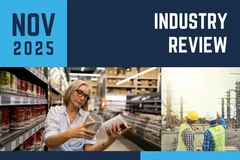
November in review: Sealed Air’s US$10.3B buyout, UK pEPR shake-up, high-profile lawsuits


Key takeaways
- Policy and legal shifts: The UK advances pEPR amendments, the EU delays CLP rules to 2028, and multiple lawsuits emerge.
- Industry innovation accelerates: McDonald’s Japan rolls out rPET strawless lids, brands adopt accessible and connected packaging via, researchers develop vitamin-C sensing cup stickers, Braskem pushes biopolymer integration at COP30.
- Market and corporate shake-ups: Sealed Air agrees to a US$10.3B buyout by CD&R, while a US report showed significant packaging material reductions despite rising demand and FEVE warned PPWR may harm EU glass competitiveness.
Last month, Sealed Air entered into a definitive agreement to be acquired by funds affiliated with CD&R for US$10.3 billion.
The UK government introduced draft amendments to the country’s packaging EPR (pEPR) before the UK Parliament.
In packaging lawsuits, P&G was sued in the US over its toothpaste packaging, and Ineos began to face a new lawsuit over the environmental and health impacts of its plastics facility in Belgium.
We look back at the biggest news in November.

McDonald’s Japan launches rPET strawless lids to cut waste
McDonald’s Japan began changing its cold drink lids for paper cups to strawless lids made entirely from recycled PET (rPET) nationwide. With the introduction of the lids, paper straws will be gradually phased out for select beverage items. The lid allows customers to drink easily without a straw, features a spout that opens smoothly, and is engineered to prevent accidental spills during takeout or delivery.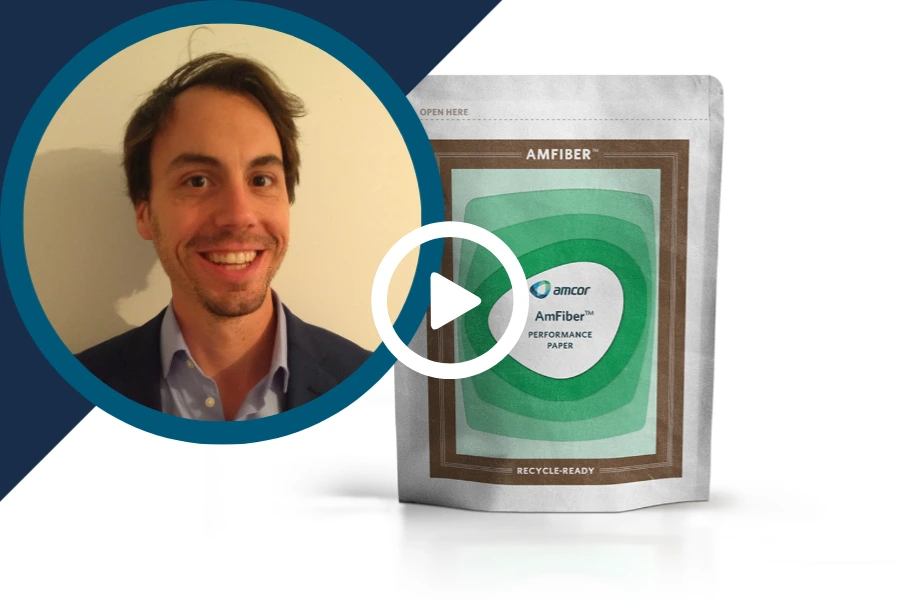 We discussed how Amcor combines sustainability with advanced functional performance in paper.
Appetite Creative director unpacks how EPR and QR codes reshape connective packaging strategies
Jenny Stanley, managing director at the UK-based creative technology studio Appetite Creative, released an updated edition of her book “Connected Packaging: The Game-Changing Marketing Tool.” The updates include a chapter on the ongoing regulatory changes in the US, including the California Consumer Privacy Act and the upcoming GS1-powered QR code. Packaging Insights sat down with Stanley to discuss the most significant recent regulatory developments in connected packaging.
UK government moves to amend packaging EPR while industry ponders costs
The UK government introduced draft amendments to the country’s pEPR before the UK Parliament. The amendments include offsets for companies implementing closed-loop waste management, fee adjustments, and fiber-based definitions. According to Ecosurety, the UK EPR compliance specialist, the draft changes are likely to pass and become applicable in January 2026. The pEPR fees came into effect at the start of October. We spoke to Ecosurety and the British Retail Consortium to explore the latest pEPR debates in the UK.
P&G lawsuit over misleading toothpaste packaging in the US moves forward
Procter & Gamble (P&G) was sued in the US over its Kid’s Crest toothpaste packaging, alleging it incorrectly promotes unsafe amounts of toothpaste for children. The toothpaste packaging in question features an image of a full strip of toothpaste on a toothbrush, accompanied by the seal of approval from the American Dental Association. Fluoride, in small controlled amounts, provides certain dental benefits, such as strengthening enamel. However, excessive fluoride exposure is unsafe, especially for children, who often swallow toothpaste during brushing. We took a closer look at the case.
Ineos faces new lawsuit over Project One as NGOs cite “alarming” plastic, emission and health risks
NGOs and community groups launched a new lawsuit against Ineos’s plastics facility in Antwerp, Belgium, and warned of fracking health issues, accelerated carbon emissions, and early deaths from pollution. Project One, which is currently under construction, is an ethane cracker representing the largest investment in the European chemical sector in over 25 years. We spoke to Ineos and environmental charity ClientEarth to hear more about this latest lawsuit. The FBCA director general talked to us about recyclability communication strategies in the EU.
Zappar and io.tt partner to elevate QR code accessibility in connective packaging
Zappar, creators of Zapvision and Accessible QR technology, and io.tt, the connected packaging platform born out of the SharpEnd creative studio, joined forces to accelerate the rollout of vision-inclusive, connective packaging. Dale Harper, head of design at io.tt, told us that the partnership provides a single pathway for brands to deliver digital experiences, in which consumers with visual impairments can independently access product information and engagement opportunities.
COP30: Braskem pushes for bioplastics integration and strong public policy
At this year's UN Climate Change Conference of the Parties (COP30), Braskem highlighted the role of biopolymers in sustainable packaging, envisioning a chemical industry fully integrated into the bioeconomy. Jorge Soto, director of Sustainable Development at Braskem, emphasized the importance of bio-based solutions in reducing carbon footprints while advocating for stronger public policies that foster industry collaboration.
US packaging sector achieves material reductions despite rising demand, finds report
A joint report from the American Institute for Packaging and the Environment, the Consumer Brands Association, the Consumer Technology Association, and Smithers, found that industry-led source reduction efforts have decreased US packaging volume by five million metric tons between 2019 and 2024. We took a closer look at the study findings.
EU pushes CLP rule updates to 2028 to ease industry burden
The Council of the EU approved pushing back the start date for several updated rules in the EU’s Classification, Labelling and Packaging (CLP) Regulation. The newly adopted law provides more time and legal certainty to businesses and will now take effect in January 2028. The “Stop-the-clock” legislation postpones all the dates of application of transitional provisions for relabeling, mandatory formatting requirements, advertisements, online and distance sales, and labeling of fuel pumps. An EU official told us more. We explored PPWR opportunities and challenges for transport packaging with Stora Enso’s director for Packaging Regulations.
Sealed Air’s US$10B buyout: How private ownership could reshape the packaging leader
Sealed Air entered into a definitive agreement in which it will be acquired by funds affiliated with CD&R. The private investment firm will purchase the food and protective packaging giant for US$10.3 billion. Packaging Insights sat down with industry analyst Neil Farmer about how this major acquisition could affect Sealed Air’s packaging innovation pipelines.
Researchers turn disposable cups into vitamin C health trackers
Scientists at the University of California San Diego in the US created a battery-free electronic sticker for drinking cups capable of detecting a person’s vitamin C levels using the sweat on their fingertips. We spoke to the study author who told us that the flexible sticker can be attached to the outside of a cup to collect information while the user consumes the drink and sends the results wirelessly to a nearby laptop.
FEVE warns EU PPWR undermines regional glass industry and discourages design innovation
The European Container and Glass Federation (FEVE) has warned that the EU’s Packaging and Packaging Waste Regulation (PPWR) could “negatively impact” the glass manufacturing industry. We sat down with FEVE to hear how PPWR risks creating legal uncertainty, discouraging investment and design innovation, and shifting production outside the EU.