

SmartSolve debuts bio-based film for consumer packaging


Key takeaways
- SmartSolve introduces PureNil 0, a bio-based, water-soluble film designed for dry and powdered products.
- The solution is durable, printable, and commercially available.
- PureNil 0 is approved for direct food contact and offers applications in multiple sectors including food, household care, and healthcare.
SmartSolve has launched a plastic-free, bio-based, and water-soluble film. Touting “global implications,” the solution is designed to replace single-use plastic in consumer-packaged goods.
PureNil 0 is a water-soluble packaging substrate designed for dry or powdered product formats and can run on standard form, fill, and seal equipment. It was introduced in October 2025 and, after validation and production readiness processes, is now commercially available.
According to SmartSolve, a US-based packaging company, the film offers durability, printability, and water solubility in a single substrate. The solution also allows for print-on unit-dose applications, brands’ product communication, and customizable design.
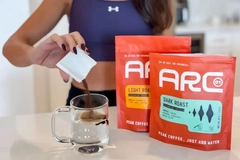
ARC 01, a California-based coffee company, is SmartSolve’s first customer to use PureNil 0 to develop instant coffee packaging that disperses in water.
Aron Pobereskin, founder at ARC 01, says: “Our single-serve coffee packets, formed of PureNil 0 feel pleasant and natural to the touch, are structured well enough to maintain their integrity and protect their contents, are easy to tear and pour, and can be deployed and disposed of anywhere.”
Bio-based innovations
SmartSolve explains that PureNil 0 aims to deliver the functionality of conventional flexible films, but “without reliance on fossil-derived plastics.”
“PureNil 0 serves as a compelling plastic-free alternative to PVA films, helping brands prepare for evolving legislative requirements while maintaining product protection, consumer convenience, and printability,” says the manufacturer.
The solution is SmartSolve’s first direct food-contact-approved product, opening opportunities to apply it to confectionery or snack packaging that does not require high-barrier properties.
Other applications for PureNil 0 include household cleaning products, feminine care, personal care, agriculture, home, and healthcare.
Recent innovations in the bio-based packaging space include Mondi and Kelpi joining forces with Guardpack, a UK manufacturer of wet wipes and liquid-filled sachets, to conduct early-stage trials of seaweed and paper-based materials for sachet packaging.
In addition, Sulapac partnered with TripleW, a Belgian innovator in circular biochemistry, for a closed-loop pilot, demonstrating that reusable cups made from Sulapac bio-based material can be chemically recycled on a commercial scale.
Meanwhile, Nexam Chemical and Verdofoam, a Netherlands-based biotech company, expanded Nexam’s lightweight product portfolio by developing a bio-based foam using “breakthrough” additive technology.