




AI in packaging: Boosting efficiency and sustainability with simple algorithms

Key takeaways
- Jude Pullen discusses how AI can enhance packaging efficiency and sustainability by using simple algorithms.
- The project with RS and Nvidia focuses on optimizing packaging by reducing human error, minimizing excess voids, and complying with the PPWR.
- Pullen emphasizes the potential for creative breakthroughs in packaging design, encouraging companies to consider accessibility and inclusivity.

As packaging companies navigate the evolving technological landscape, there is potential to integrate AI to complement human workflows, while avoiding excessive computational complexity, according to creative technologist, designer, and chartered engineer Jude Pullen.
Packaging Insights speaks to Pullen about his collaboration with product and service solutions provider RS Group and Nvidia to enhance efficiency in packaging production. He highlights that the partnership leverages minimal AI and focuses on a “lean and simple algorithm.”
“We used simple ‘sorting rules’ (heuristics) to organize the data better. This is about 80% of the optimization calculation, requiring no ‘AI magic’, and is relatively simple to implement virtually ‘free,’” he shares.
Pullen rejects the idea that a company needs to pay significant energy costs and “boil the ocean” with intense AI computing power. “With our project, we can run a global enterprise’s dataset on an Nvidia Jetson Nano Orin computer that costs about £200 (US$267.5). And we don’t have to share any of the sensitive private data with big tech companies.”
AI-assisted operations
Pullen cites a concept from Japanese industrialization, stating that work that is dull, difficult, dirty, or dangerous “should be automated by robots whenever economically, technically, or ethically possible, but to involve people of all levels in the evaluation of such tech transformations, to ensure buy-in.”
“So when I was presented with the challenge of improving packaging for RS Group, we sought to use AI to help reduce human error, but not eradicate jobs.”
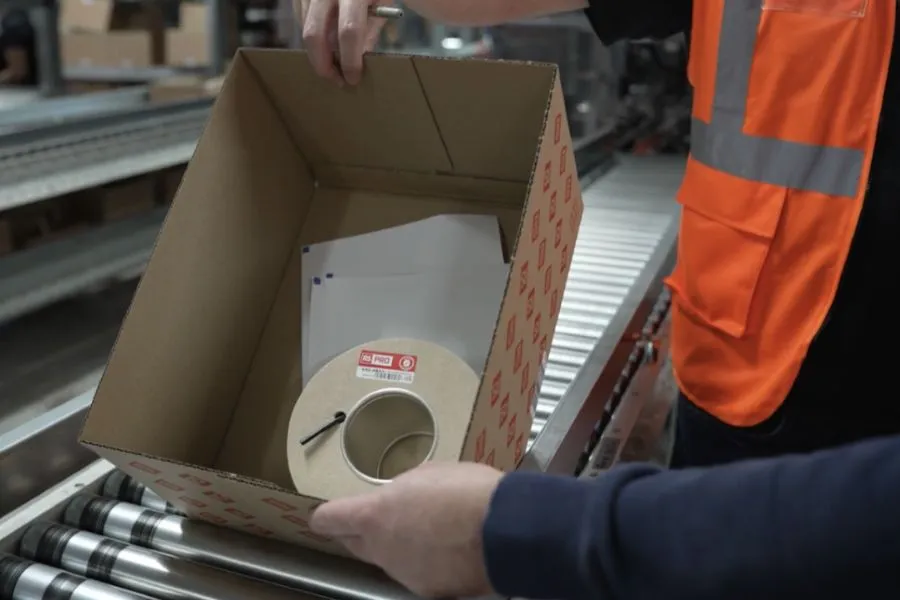 Jude notes that reducing the empty space ratio in packaging is essential for compliance with regulatory requirements.Pullen shares that the first pilot checks packaging dimensions and packing restrictions to ensure that the correct quantity and compatibility of items are included, while optimizing the use of space by minimizing excess voids and possible issues (avoid combining heavy and fragile items in the same box). The solution aims to improve operational efficiency and reduce packaging waste.
“One of the things I’ve been impressed by with working with RS Group and Nvidia on this optimized packaging project is that they started from an ethical starting point, but with an aspiration to make it as compelling as possible to the business.”
“The best products are a mix of the environment and economy. The solution can help save costs by using less material, paying for less postage, and complying with the EU’s Packaging and Packaging Waste Regulation (PPWR).”
According to the PPWR, from 2030, a maximum empty space ratio of 50% is set for grouped, transport, and e-commerce packaging.
The power of packaging
Despite the advancement of AI, Pullen suggests that there are still opportunities for creative breakthroughs in packaging. He says that packaging holds the potential to enhance experience and improve accessibility.
He recognizes that some organizations teach the “Social Model of Disability” in design courses, which posits that disability arises not from the individual, but from an environment that unfairly disables people.
“It encourages companies not to just see disability as a ‘0.01% problem’ that does not lead to mass-market innovation and profitability,” says Pullen.
He gives the example that consumers who are only able to use one hand might initially sound “marginal.” However, considering consumers might be [temporarily ‘impaired’] carrying a coffee, a shopping bag, or holding a child’s hand, the accessible solution can be reframed as a benefit for everyone.
Pullen encourages packaging teams to explore “fringes,” such as new cultures, accessibility, legislation, or uncovering needs that were previously unrecognized — as what might initially feel like a tedious problem to circumnavigate, might lead to an exciting and innovative new offering.
He says companies can conduct small pilot projects where young talent in the field of digital technology can explore the project. The company can provide “intermittent mentoring from the established team members to guide the vision of what problems you actually need to solve.”