


Amcor survey reveals EU shoppers support recycled plastic in packaging

Key takeaways
- Amcor’s consumer insight report has shown that 91% of European shoppers are aware of recycled plastic in packaging.
- The company says transparency and third-party certification are crucial for consumers, calling for independent verification of recycled material claims on packaging.
- Amcor recommends brands start adopting PCR solutions now to meet EU regulations and financial incentives.
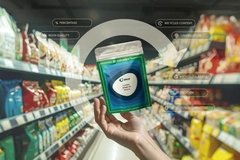
Amcor has unveiled a consumer insight report exploring how EU shoppers perceive the use of post-consumer recycled (PCR) content in packaging for supermarket products.
The report, titled “Recycled Content, Real Impact”, collected responses from 3,201 consumers and 32 qualitative interviews across six European countries.
The research found that 91% of survey participants know that some product packaging found in supermarkets, such as for F&B, pet food, cleaning, and beauty products, contains recycled plastic.
Lucie Charbonnel, sustainability director at Amcor, tells Packaging Insights: “While it may seem far off until the EU’s Packaging and Packaging Waste Regulation (PPWR) 2030 targets for PCR come into play, brands should start taking action now. There is a clear growth opportunity, with conscious consumers already appreciating products that use recycled plastic in their packaging.”
Market insights manager at Amcor and lead researcher on the project, Sarah Neerkorn, adds: “Consumers understand recycled material, and respond very positively to it. It’s clear how much consumers value third-party certification. Even though they may not understand what’s behind the certification, it gives them reassurance and adds to the credibility of the claim.”
Improving consumer trust
According to the report, more than three-quarters of European grocery shoppers knowingly purchase products that contain recycled material in their packaging. A further 79% of European consumers find using recycled plastic in product packaging to be an effective way to reduce environmental impact.
Consumers, particularly younger age groups, positively view the use of recycled material in product packaging, and 63% of European consumers claim that the use of recycled content strengthens their trust in a brand.
More than half of surveyed consumers say the use of recycled plastic in packaging makes “no difference” to how they view the quality of the product.
Almost a quarter of respondents feel that the use of recycled plastic enhances the perceived quality of the packaging. Young consumers, 34% of 18 to 34-year-olds, perceive higher quality in packaging that contains recycled plastic.
 Lucie Charbonnel, sustainability director at Amcor.Positive consumer attitudes toward PCR plastic are largely connected to its perceived sustainability benefits, with lower environmental impact cited most frequently (67%), as well as resource conservation (53%), reduced carbon footprint (43%), and support for a circular economy (40%).
Avoiding greenwashing
Despite this positivity shown by the respondents toward PCR content, consumers are wary of unfounded claims and seek verification about what is being said on packaging. Nearly four out of five respondents would like to be informed by independent certification of recycled material on packaging, while 58% want packaging to clearly show the percentage of recycled material used.
“Transparency is key. Brands should avoid using vague language such as ‘green’ or ‘eco-friendly’ as a critical first step. Instead, be specific, for example: ‘made with 40% certified recycled material,’” says Charbonnel.
“While it’s important to be clear and provide complete information, overly technical explanations can create distance or confusion for consumers. The packaging itself offers extremely limited space to explain sustainability claims. Brands can go further off-pack via QR codes that link to additional information for consumers who want to know more.”
“We know from the research that consumers value independent certification of recycled material. It gives them confidence in the validity of the claim. For recycled content, brands in Europe can work with certification programs such as International Sustainability & Carbon Certification and Recyclass.”
Leveraging financial incentives
Charbonnel recommends that brands secure the proper PCR qualification for their packaging now to meet the EU’s PPWR requirements in time.
“Mechanical PCR requires technical qualification, while advanced recycled material is a ‘drop-in’ solution, meaning its technical properties are the same as virgin plastic, but advanced recycled material requires setting up traceability and supply chain,” she says.
Charbonnel highlights that PCR solutions are available for contact-sensitive and non-contact-sensitive applications.
“When using a percentage of PCR material, it’s important to match the right recycled material to the packaging application. The differentiator most people are aware of is contact-sensitive packaging, such as for packaging food or medicine, versus non-contact sensitive packaging like packaging for household cleaning products.”
“The purity needed for contact-sensitive packaging is extremely high, which means using advanced recycled content. The quality level required for non-contact-sensitive packaging can be adapted depending on the needs of the end-application.”
Charbonnel suggests brand owners take advantage of financial incentives available in EU countries that reward the use of PCR, either through reduced plastic tax or bonuses within EPR schemes.
“Beginning to adopt PCR, even if only for specific SKUs or geographies, will enable technical validation and help brands to set up traceability processes for certifications. My advice is even if you start small, make that start. The learnings now will be sure to pay off in the long term,” she concludes.