

British Beauty Council and MYGroup propel cosmetic packaging recycling


Key takeaways
- The British Beauty Council partners with MYGroup to address cosmetic packaging recycling gaps.
- The Great British Beauty Clean Up campaign aims to tackle hard-to-recycle beauty packaging.
- MYGroup will collect, sort, and recycle items like mascara tubes and makeup compacts into new products.
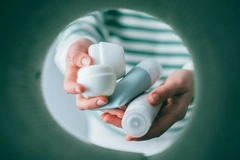
The British Beauty Council and recycling and waste management company MYGroup have partnered to recycle cosmetic packaging that cannot be collected through curbside collection.
The take-back aims to address a “major” recycling gap across the beauty packaging sector. The initiative is part of the Great British Beauty Clean Up campaign, which aims to bring industries together to tackle personal care packaging waste.
Steve Carrie, group director at MYGroup, says: “Our work with the British Beauty Council on the Great British Beauty Clean Up focuses on removing barriers and providing businesses with a straightforward way to capture what curbside systems simply can’t.”
Beauty packaging that is typically hard to recycle includes small, mixed-material, and hazardous items such as mascara tubes, makeup compacts, blister packs, and residual cosmetic products.

The British Beauty Council and MYGroup are calling on companies and brands from across the beauty industry to participate. A wider rollout of the take-back scheme is expected early next year.
Personal care waste
The British Beauty Council estimates that over 1.3 billion units of cosmetic items are produced annually, with up to 95% of cosmetics packaging being discarded. Other research suggests that nine in 10 beauty and cosmetic products never reach recycling facilities because they are too small, complex, or contaminated.
In the take-bake system, MyGroup will manage the collection, sorting, and treatment of materials that will be converted into new products, such as mirrors, furniture, and combs.
Carrie says: “We believe there must be a growing convergence between beauty brands and waste management partners to build the systems and drive the behaviors that will define a more sustainable sector.”
Take-back schemes
Return and reusable packaging schemes are gaining popularity in the personal care sector amid growing scrutiny of single-use packaging pollution.
Recently, Sephora collected more than 100,000 pounds (~45,000 kg) of empty beauty packaging through its Beauty Re(Purposed) program, which allows consumers to drop off clean, empty packaging at any Sephora store. The waste is then collected, sorted, and turned into new packaging, carpet, pallets, asphalt, or energy.
Meanwhile, Kaufland and VollCorner Biomarkt, two German retailers, partnered with the digital platform Reo to trial a deposit return system for personal care packaging.
In addition, Optical by National Pharmacies partnered with Opticycle, an Australia-based eye care recycling company, to introduce a return and recycling program for contact lens packaging waste in Adelaide, Australia.