


Finnish researchers unveil wood bark coatings as fossil-based alternative


Key takeaways
- The COCOBIN project develops bio-based coatings from suberin extracted from birch bark.
- The suberin coating can serve as a moisture and water vapor barrier for fiber-based packaging.
- Semi-pilot trials produced up to 1,500 meters of the coating, demonstrating scalable production and potential for circular use of forest industry side streams.
The Coatings and Composites from Novel Biobased Dispersions project (COCOBIN), coordinated by the University of Oulu, Finland, has developed packaging coatings from suberin, a natural compound found in birch bark.
COCOBIN focuses on engineering biobased coatings and composites to replace fossil-based polymeric materials. The project looked into suberin, which acts as a protective layer and prevents the loss of water in plants.
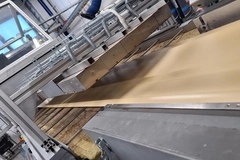
The project has developed up to 1,500 meters of a bio-based coating material prototype at a semi-pilot scale.
Professor Henrikki Liimatainen from the University of Oulu says: “The material can be applied especially in fiber-based packaging materials such as paper or paperboard as a moisture barrier, as well as in other products requiring durable and functional surfaces.”

Rajesh Koppolu, senior scientist at VTT Technical Research Centre of Finland, adds: “Suberin-based coatings can be used as a water vapor barrier in food packaging applications. Current coating materials are typically fossil-based and can present challenges for recycling. Suberin-based coatings can offer an alternative while achieving comparable performance.”
Forest industry innovation
The coating was developed by extracting suberin from birch outer bark, drying and processing it into a fine powder, and mixing it into a uniform formulation.
From this powder, a water-based coating was prepared, where suberin particles are evenly distributed in the liquid. Additional components were included to support the coating spreading evenly and to achieve the desired functional properties.
The coating was applied to two different wood fiber-based paper substrates from UPM and Metsä Board, with multiple trial runs carried out.
The results from the trials suggest that the coating can be processed in a similar way to conventional coatings and that production is feasible beyond laboratory scale.
“This development is important because it brings bio-based materials closer to real-world applications. At the same time, it supports the transition away from fossil-based materials and enables better utilization of forest industry side streams,” says Koppolu.