



Bioplastics expansion faces reality check on cost, infrastructure & consumer adoption


Key takeaways
- Industry experts warn that high production costs and infrastructure gaps continue to restrict bioplastics to niche use.
- Research shows consumers are positive about bio-based plastics but often misunderstand biodegradability.
- Scaling in low-income countries is difficult due to weak waste systems and low purchasing power.

As bioplastics innovation offers an increasingly viable alternative to fossil fuel-based plastics, experts are divided over whether bioplastic adoption is realistic, raising concerns about scalability, cost, and consumer adoption.
We explore the potential of scaling bioplastics, particularly in lower-income countries, with Antonio Ordovás, packaging researcher at Aimplas, and Dr. Gert-Jan Gruter, chief technology officer at Avantium.
“When it comes to bioplastics, it is tempting to think of them as a ready-made solution that can be applied anywhere in the world. The reality, however, is more nuanced. In high-income countries, where there are economic resources, solid regulatory frameworks, and well-developed waste management systems, bioplastics are already taking on a meaningful role,” Ordovás tells Packaging Insights.
Gruter adds that public awareness is central to scaling bioplastics.

“While public awareness of plastic’s impact on marine ecosystems is growing, many consumers remain unaware of the substantial CO2 emissions associated with their production and lifecycle. One promising solution lies in the introduction of more sustainable alternatives, such as bio-based plastics.”
Bioplastic obstacles
Ordovás cites Europe as a good example of where bioplastics are scaling successfully, especially in Italy, which, since 2011, has required compostable bags in supermarkets and built a strong composting infrastructure.
“Still, even in these advanced economies, bioplastics face significant obstacles,” explains Ordorvás.
“Producing a kilogram of polyhydroxyalkanoate (PHA) still costs around three times more than making conventional PE, and materials such as polylactic acid (PLA) cannot compete in all applications without being blended with fossil-based polymers.”
He argues that this “limits” bioplastic expansion to specific niches and explains why, despite the industry enthusiasm, they still account for only about 0.5% of the global plastics market.
However, scaling bioplastics in the industry can boost potential for further adoption. “Technical properties can be fine-tuned, and business models are explored that could later be replicated elsewhere,” adds Ordovás.
Consumer misconception
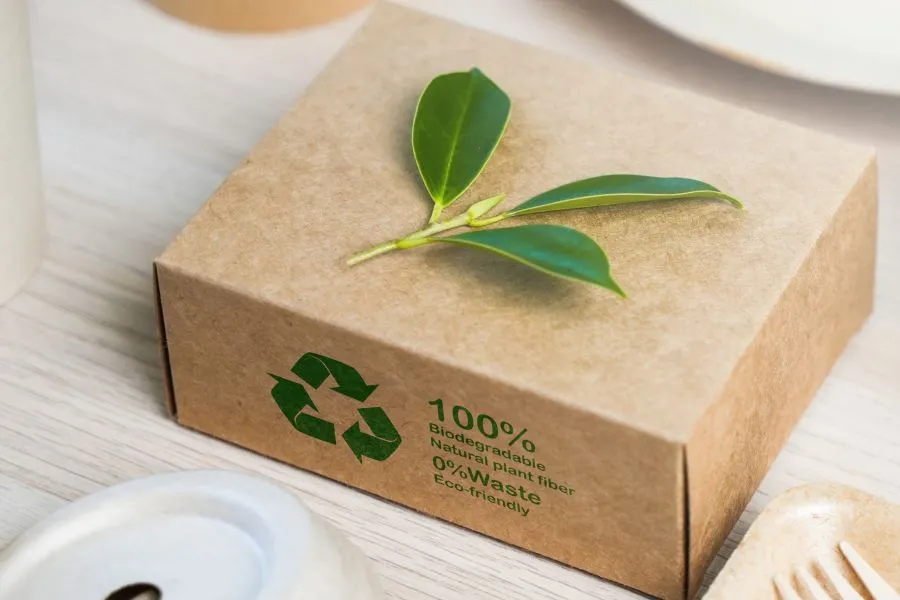 According to an Avantium and University of Amsterdam study, some consumers overestimate the biodegradability of bio-based plastics.Gruter explains that the transition to bioplastics depends on two key factors: “companies must offer environmentally friendly products, and consumers must be willing to adopt and purchase them.”
He notes that in a series of studies conducted by Avantium and the Social Psychology department at the University of Amsterdam, the Netherlands, consumers have “highly favorable” attitudes toward bio-based plastics and “are willing to pay a premium for them.”
However, the research, published in Sustainability, also reveals “widespread” misconceptions around bioplastics, particularly an overestimation of biodegradability and material properties.
He adds: “Importantly, we demonstrated that these misconceptions can be effectively addressed through brief written explanations. Once informed about the actual benefits and characteristics of bio-based plastics, consumers maintained their positive attitudes and continued to express willingness to pay a higher price.”
Gruter argues that, despite consumer misconceptions, the study's findings offer “encouraging” insights into consumer adoption.
“[The findings] contribute to the broader understanding of psychological drivers behind pro-environmental behavior—including the roles of emotions, values, norms, and beliefs.”
Low income countries
The disparity between bioplastic innovation and market adoption is even greater in low- and middle-income countries, says Ordorvás.
He suggests that, due to lower collection rates in “less developed nations,” combined with open-air landfills and limited purchasing power, bioplastics “are not seen as a priority.”
“Yet there are encouraging exceptions: countries like Thailand, Brazil, and China have shown that with government support and access to abundant raw materials, it is possible to produce at scale and open international markets.”
“The great challenge is to close the gap,” continues Ordorvás, highlighting reducing costs through R&D, fostering local production plants, transferring technology, and strengthening environmental education as “essential” steps.
He concludes: “Bioplastics will not be an immediate universal solution, but with international cooperation and smart policies, they can become a shared tool to reduce dependence on oil and move toward a more sustainable economy.”
Following the UN’s Global Plastic Treaty summit in August, Julie Pieters, European Bioplastics’ EU policy affairs manager, told us that for lower-income countries, “the most realistic pathway [of bioplastic adoption] is targeted deployment in priority applications, for example, agriculture, food-contact, or organics-recycling systems.”