

Borealis joins EU project to advance electricity-powered chemical recycling


Key takeaways
- Borealis has partnered with the EU-funded Project Electro to develop electrified, high-efficiency recycling technologies.
- The project aims to transform hard-to-recycle plastics into raw materials like ethylene and propylene.
- The project combines expertise from universities, research institutes, and industry players to advance circular plastics solutions.
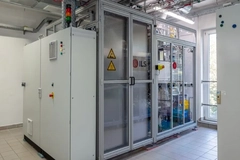
Borealis has partnered with Project Electro, an EU-funded initiative to develop electrified, high-efficiency recycling technologies capable of turning low-quality waste into premium raw materials.
The project is a collaboration between universities, including the University of Ghent, Belgium, research institutes, and industry players to develop electrified thermochemical processes. According to Borealis, the processes transform mixed and hard-to-recycle waste, including multilayer packaging and contaminated plastics, into “high-purity” olefins such as ethylene and propylene.
Manjunath Patil, senior engineer innovation and technology at Borealis, says: “We’re committed to scaling circular solutions through innovation and strong partnerships. Together with our Electro partners, we’re proving how electrified chemical recycling can turn challenging waste streams into valuable resources for a circular economy.”

Kevin Van Geem, professor at Ghent University and Project Electro coordinator, comments: “Project Electro combines top-tier scientific expertise with real-world testing. Our collaboration with Borealis — and the integration of material from Project Surface Transfer Of Pathogens — shows how cross-sector innovation can unlock scalable solutions for both industry and society.”
Advancing circular feedstocks
The project uses renewable electricity instead of fossil-based energy, targeting up to a 90% reduction in GHG emissions.
Borealis is working to make circular feedstocks usable for efficient steam cracking. The company is evaluating full-range pyrolysis oil and its fractions, improving the circular hydrocarbon mixtures for large-scale cracking, and developing cracking strategies to handle different pyrolysis oil qualities.
The company is also applying prefractionation, advanced filtration, and quality assessments to improve process performance.
This month, Borealis and Borouge launched Recleo, a global brand for mechanically recycled polyolefins suited for polyolefin applications. The Recleo brand complements the Borcycle M portfolio of premium mechanically recycled polyolefins.