
Philippines accelerates plastic packaging circularity through multi-sector push


Key takeaways
- The Philippines’ NPAP leads efforts to tackle plastic packaging waste through a National Plastic Action Roadmap.
- The initiative unites government, industry, civil society, and UNDP to support global plastic waste reduction goals.
- The Philippines aims to become a regional leader in circular economy and plastic recycling within ASEAN.
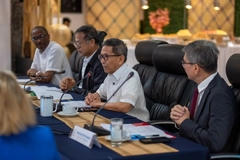 Image credit: UNDP Philippines.
 Representatives of the Philippines’ public- and private-sector National Plastic Action Partnership (NPAP) have discussed the country’s ongoing efforts to tackle plastic pollution, including packaging waste. The NPAP members have also developed the National Plastic Action Roadmap.
The country’s NPAP represents the government, industry, civil society, academe, and development partners, including the UN Development Programme (UNDP). The partners met to highlight ongoing progress in recycling and to discuss how to propel circularity.
The members are mapping out the strengths, challenges, and opportunities across the plastics value chain to create circular solutions in the Philippines.
“Through the NPAP, we can demonstrate our coordinated, multi-sectoral approach, and translate global commitments into national action and meaningful local impact,” says Raphael Lotilla, representative of the Philippines’ Department of Environment and Natural Resources and NPAP.

“The challenges before us are many, but there is also an opportunity to shape our systems and secure a safer, healthier, more resilient Philippines.”
As part of the National Plastic Action Plan, the NPAP conducted a Gender Equality and Social Inclusion (GESI) Assessment, while technical working groups focused on flexible plastic recycling and upstream interventions.
Packaging Insights recently discussed the aims of the Philippines' National Plastic Action Plan with a UNDP spokesperson.
Regulations tackle waste
According to the UN, the Philippines faces significant plastic leakage challenges. The NPAP aims to align national action with existing policies such as the country’s EPR Act and the Ecological Solid Waste Management Act, passed in 2000.
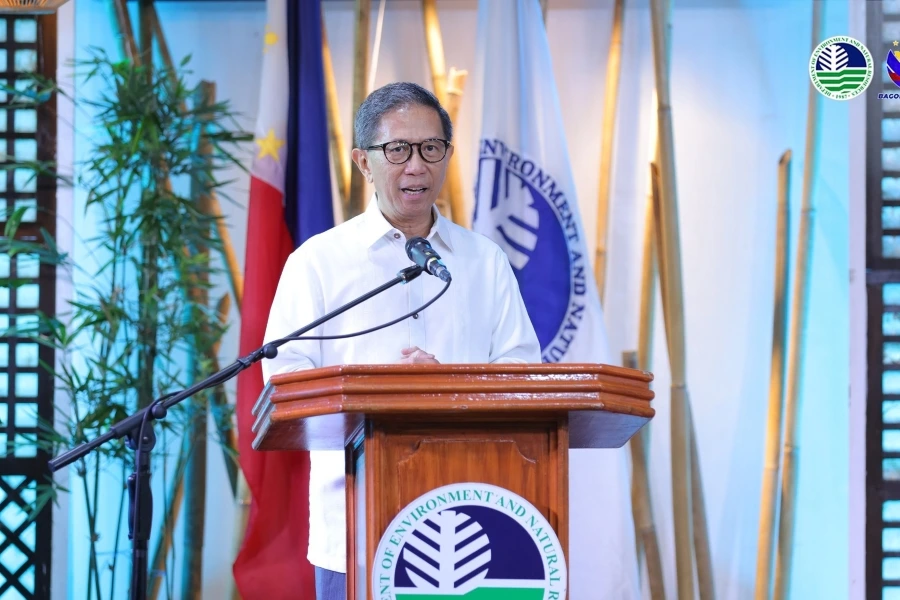 Raphael Lotilla of the Philippines’ Department of Environment and Natural Resources and NPAP.The NPAP further aims to support the Philippines’ engagement in global negotiations toward a legally binding agreement on plastic pollution.
Edwine Carrie, UNDP Philippines deputy resident representative, says: “Eliminating or reducing plastic pollution is an environmental imperative. It’s also an economic incentive, which comes with strong collateral health benefits.”
“From the standpoint of UNDP, we see the role of NPAP as important in the issue of just transition: the recognition that plastics still play a prominent role in the livelihoods of many vulnerable sectors in the Philippines, and that phasing out plastics will bring short-term pain for these communities.”
Carrie argues that it is therefore important for NPAP to ensure the focus remains on helping such communities at the local level to facilitate the transition away from plastic.
The National Plastic Action Roadmap demonstrates that the country can reduce its aquatic plastic pollution by up to 93% by 2040 through upstream reduction, reuse, and substitution, alongside improvements in collection, recycling, and disposal.
The NPAP members agreed that this data shows the need for coordinated systems change and investments.
ASEAN leadership
The Philippines will take over the Chairmanship of the Association of South-East Asian Nations (ASEAN) in 2026.
According to NPAP, the country’s efforts to boost plastic circularity on a local level present opportunities to elevate circular economy cooperation regionally.
“Our work here has implications beyond our sector and beyond our borders. The Philippines is actively participating in ASEAN regional dialogues and in the global negotiations towards an international, legally binding instrument on plastic pollution,” says Lotilla.
In a recent interview with Packaging Insights, Liviana Zorzi, Asia regional specialist at the World Economic Forum’s Global Plastic Action Partnership (GPAP), said that ASEAN countries are witnessing a shift toward mandatory, harmonized EPR frameworks for packaging, with the Philippines and Vietnam standing out as regional front-runners.