




ArcelorMittal confronted over emissions strategy as demand for green steel proliferates


Key takeaways
- Opportunity Green files the first OECD climate-related complaint in the steel sector, alleging ArcelorMittal’s climate strategy lacks alignment with the 1.5 degrees Celsius target.
- The NGO says the company expanded its coal-based steelmaking abroad, and calls for verified 2030 and 2040 emissions targets across Scopes 1–3.
- ArcelorMittal cites slower-than-expected progress due to policy and market conditions but says it remains committed to decarbonization and says it has invested in low-carbon steel technologies.
Opportunity Green has filed a complaint against ArcelorMittal, Europe’s largest and the world’s second largest steel producer. The NGO calls on ArcelorMittal to publish a revised climate strategy that addresses its “massive” climate impact.
“Our request is that ArcelorMittal publishes a revised climate action strategy that will ensure its GHG emissions are consistent with the internationally agreed global temperature goal of a 1.5 degrees Celsius temperature limit,” Kirsty Mitchell, legal manager at Opportunity Green, tells Packaging Insights.
Meanwhile, a spokesperson at ArcelorMittal tells us: “As stated in our 2024 Sustainability Report, between 2018 and 2024, ArcelorMittal’s absolute emissions reduced by almost 50%.”
“Over that period, we invested almost US$3 billion in decarbonization projects, including investments in electric arc furnaces (EAF), carbon capture, renewable energy, and the metallics required for low-carbon emissions steelmaking. EAF steelmaking has increased to 25% of our total production, compared with 19% in 2018.”

According to ArcelorMittal Europe, it produces 1.5 million metric tons of flat carbon steel for packaging each year at sites in France, Belgium, and Spain. The steel and mining giant also produces flat carbon steel for packaging applications in Kazakhstan.
But Mitchell maintains that ArcelorMittal has made “little meaningful progress” in strengthening and implementing its climate strategy, despite several previous engagements with civil society.
“Instead, the company has delayed and, in some cases, retreated (or signaled retreat) from its planned decarbonization projects in Europe, while expanding coal-based steelmaking capacity in India through a joint venture.”
Climate strategy questioned
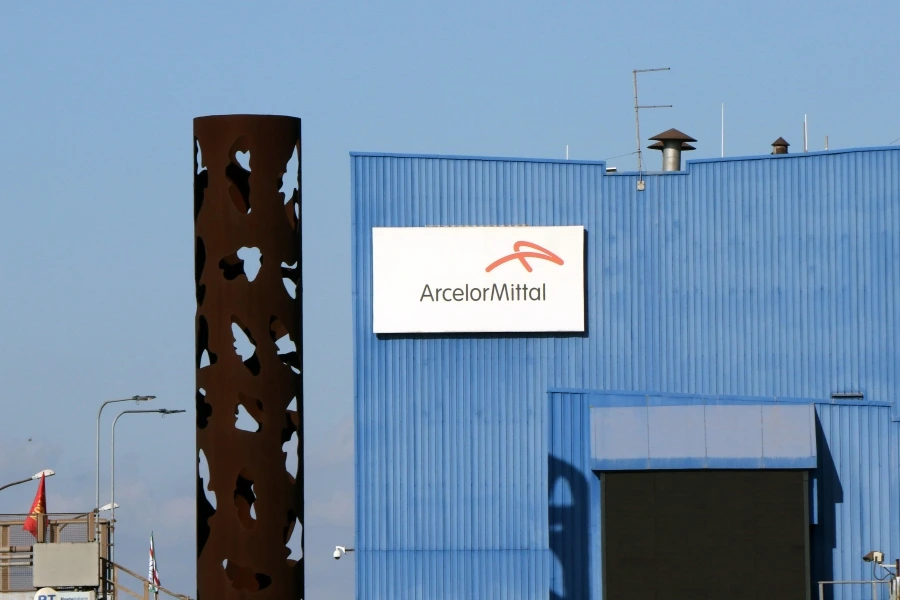 Opportunity Green says ArcelorMittal has delayed and signaled retreat from planned decarbonization projects.Opportunity Green filed its complaint against ArcelorMittal under the OECD Guidelines for Multinational Enterprises on Responsible Business Conduct, arguing that it is failing to address its climate impact. The case is said to be the first climate-related complaint in the steel sector submitted to the Luxembourg National Contact Point under the OECD.
Within this revised climate strategy, Mitchell outlines Opportunity Green’s requests for ArcelorMittal to adopt near-term (2030) and medium-term (2040) GHG reduction targets that are independently verified as science-based and aligned with the 1.5 degrees Celsius limit and are “absolute and intensity based.”
The targets should cover Scope 1, 2, and 3 GHG emissions, such that: “All joint venture emissions are included in Scope 3 targets, and all emissions resulting from the extraction and processing of coal as a raw material for iron and steelmaking are assessed and included in the Scope 3 targets.”
Such targets are further expected to represent an overall increase in ambition compared to the company’s existing targets to reflect the “urgency” of action required and the “lack of mitigation” action implemented to date, according to Mitchell.
However, ArcelorMittal’s spokesperson says: “We have also publicly acknowledged that progress in decarbonizing has been slower than initially expected, as our original plans were premised on a favorable combination of policy, technology, clean energy, and market developments that have not progressed as originally foreseen. We are not the only company — nor is steel the only industry — to be experiencing such challenges.”
Mitchell’s response to the company’s slowing decorganizing is: “Every delay to action is reducing our chances of limiting global temperature rise to 1.5 degrees Celsius, and avoiding further irreversible damage to our climate, ecosystems, and people. For this reason, Opportunity Green now considers it necessary to engage with the OECD complaint process, seeking examination and resolution of the issues raised.”
Steelmaking emissions
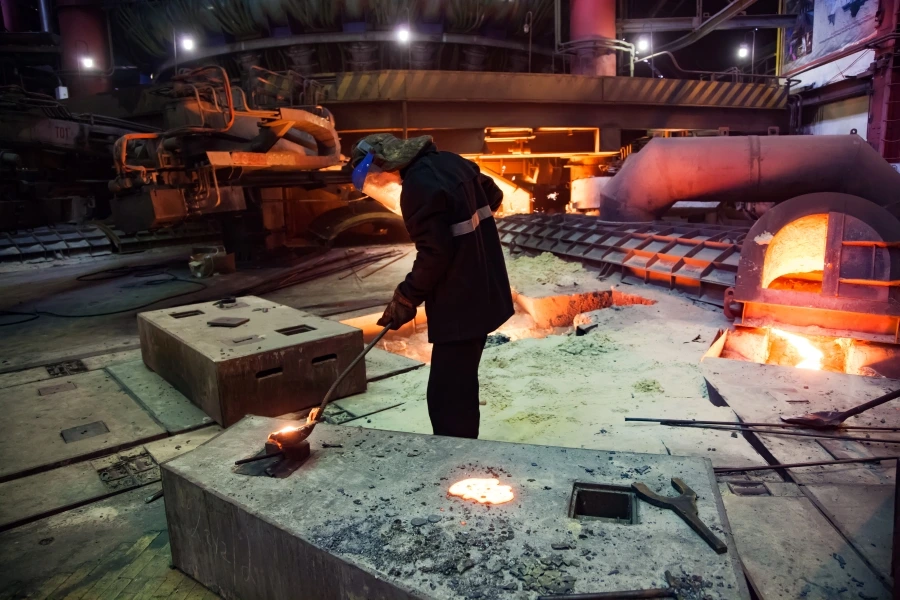 Steel packaging companies are also asking for greener material production, according to the NGO.According to Opportunity Green, stronger climate targets from steelmakers that result in genuine reduction of steelmaking emissions would influence brands, including steel packaging producers, many of which are SBTi-committed and are willing to decarbonize their supply chains.
“As brands demand green steel to meet their climate goals, they help create the demand-side pull needed to scale green steel production and establish lead markets. This creates the perfect cycle to make sure green steel becomes a reality,” says Mitchell.
“A clear green steel labeling system will allow brands to distinguish genuinely green steel, accelerating adoption and reinforcing the business case for producers to invest in clean technologies.”
ArcelorMittal’s spokesperson says the company remains “committed to decarbonizing” its operations, while adding that it would move forward with this commitment “when the pathway is technically and economically viable.”
“We continue to develop all the technologies that support lower emissions steelmaking in order to be ready to take final investment decisions when the regulatory framework offers the certainty required.”
“Furthermore, we have expanded into new business areas that support the energy transition, including renewable energy and solutions for low-carbon buildings.
Regulatory pressure on steel
The EU and national governments are essential to enabling the steel sector’s transition, says Opportunity Green.
The EU Industrial Accelerator Act should strengthen the business case for clean manufacturing and create predictability.“The EU Steel and Metals Action Plan adopted in March set the right direction, and the upcoming Clean Industrial Deal package now needs to turn that ambition into a clear and investable pathway for the industry,” Mitchell explains.
She argues that the Industrial Accelerator Act will be particularly important for strengthening the business case for clean manufacturing and creating predictable lead markets.
“Policy must also stay the course on the Emission Trading System and Carbon Border Adjustment Mechanism to ensure a reliable carbon price and a level playing field that rewards low-carbon production. Being consistent in this shows that ambitious climate policy can coexist with industrial strength.”
Mitchell also highlights that governments need to provide the frameworks that support investment in green hydrogen and renewable electricity, and introduce tools such as a near-zero-emissions steel label and climate-aligned public procurement to stimulate early demand.
“Together, these measures give the industry the confidence to move away from coal-based blast furnaces and toward green steelmaking.”
Mitchell furthermore asserts that “corporate climate action must advance in parallel.”
“Citing policy uncertainty — as some companies like ArcelorMittal have done — is not an acceptable reason to delay action in the face of a clear climate emergency.”