
Coveris and Sealed Air: Cutting carbon with lightweight, recycled packaging materials


Key takeaways
- Coveris and Sealed Air highlight lightweighting, recyclable monomaterials, and recycled content as key pathways to lower-carbon packaging.
- LCA’s are helping companies measure emissions, identify production hotspots, and substantiate environmental claims.
- Industry experts stress that decarbonization must preserve product protection, food safety, and shelf life.

Carbon emissions generated from packaging production are of increasing concern as global warming intensifies and the risk of irreversible impacts increases.
The industry has responded with climate-aware innovations, which include lightweight materials, recycled or bio-based content, and circular lifecycle planning.
Recent data from Innova Market Insights finds that 19% of global consumers are concerned about packaging’s impact on excessive CO2 emissions. It also finds that 66% of consumers globally believe that their actions can have an impact on lessening climate change.
Packaging Insights speaks to Coveris and Sealed Air about their climate-smart packaging innovations, detailing the current trends occupying this space as well as technical challenges in creating lower-carbon packaging.

“The climate-smart packaging trends gaining the most commercial momentum are those that deliver measurable environmental improvement, while continuing to protect the product, support food safety, maintain shelf life, and work efficiently in real production environments,” says Carmen Roveda, EMEA director of sustainability and application, Food Segment, at Sealed Air.
CO2 emissions vary by material type. For aluminum and metals, the “hotspot” of CO2 emissions happens during smelting, while for glass, the CO2 driver is furnace melting. In paper and cardboard packaging, carbon emissions are released during chemical pulping.
For plastics, the majority of CO2 is released during steam cracking, as turning crude oil into plastic pellets, like PET or high-density PE, requires high amounts of energy. According to a 2024 study published in Science, annual GHG emissions from the global plastics system — not packaging alone — are projected to grow by 37% to 3.35 billion metric tons CO2 equivalent by 2050.
Evidencing carbon claims
Packaging companies use LCAs to determine the carbon output of a packaging process. Fiene Szaki, group sustainability director at Coveris, tells us that LCAs and carbon data help producers compare packaging options, identify emissions hotspots, and make informed decisions about materials, production, and end-of-life scenarios.
“For example, our LCA tool showed that producing one million square meters of 85-micron shrink hood film containing 50% PCR, compared with a 90-micron virgin-plastic alternative, reduced carbon emissions by 35%, water consumption by 24%, and energy consumption by 45%,” she outlines.
Roveda adds that carbon data is especially significant to food packaging design, in which some environmentally focused designs are not always more sustainable.
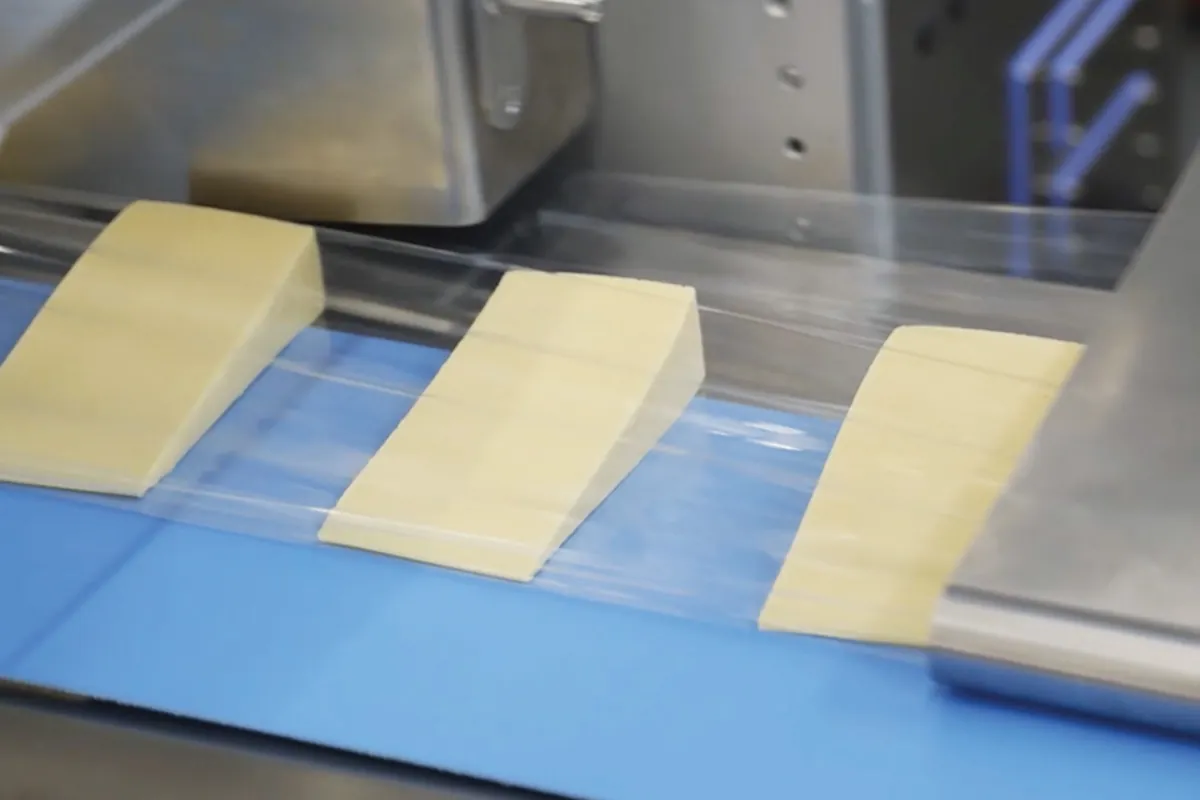 Sealed Air’s AutoWrap Lite film wrapped around cheese (Image credit: Sealed Air).She adds: “Carbon data can help compare the impact of material reduction, production efficiency, transport efficiency, shelf life performance, and end-of-life options. In food packaging, it is especially important to consider the relationship between packaging and food waste, because product loss can carry a significant environmental burden.”
LCAs are also increasingly significant as consumers demand that sustainability claims be scientifically verified, amid a rise in corporate greenwashing.
Szaki notes that to “ensure credibility,” environmental claims must be based on measurable data, recognized methodologies, and clearly defined comparisons. Roveda corroborates this, highlighting Sealed Air’s AutoWrap Lite, in which the plastic-reduction claim is linked to internal packaging trials using a defined 300 g cheese portion and a comparison against selected conventional vacuum thermoforming systems.
“Claims need to be specific, measurable, and qualified where appropriate,” she outlines.
Climate-smart packaging trends
Roveda highlights that in food packaging, there is “strong momentum” in lightweighting, downgauging, recyclable materials, simplified structures, and automation-enabled innovations that aim to reduce carbon emissions.
She says that regulatory requirements, customers’ carbon-reduction targets, retailers’ expectations, cost control, operational efficiency, and the need to improve recyclability without compromising product protection are informing these innovations.
Sealed Air’s Cryovac AutoWrap Lite system, developed for hard and semi-hard cheese portions, uses thin barrier, recyclable films certified by Cyclos-HTP Institute to create lightweight packaging with a premium appearance, while maintaining the required shelf life and freshness conditions.
“For perishable foods such as cheese, the strongest solutions are those that reduce packaging impact and help preserve product quality through the supply chain,” says Roveda.
Innova Market Insights data reveals that dairy led carbon-neutral packaging claims from July 2025 to June 2026, with folded boxes leading in format type during the same period.
Szaki points to recyclable monomaterial packaging, increased PCR content, and closed-loop recycling models as innovations gaining the strongest momentum in climate-smart packaging.
She underscores that developments in co-extrusion and material science are also enabling lighter packaging that retains the protection and shelf life, “reducing both material use and packaging-related tax exposure.”
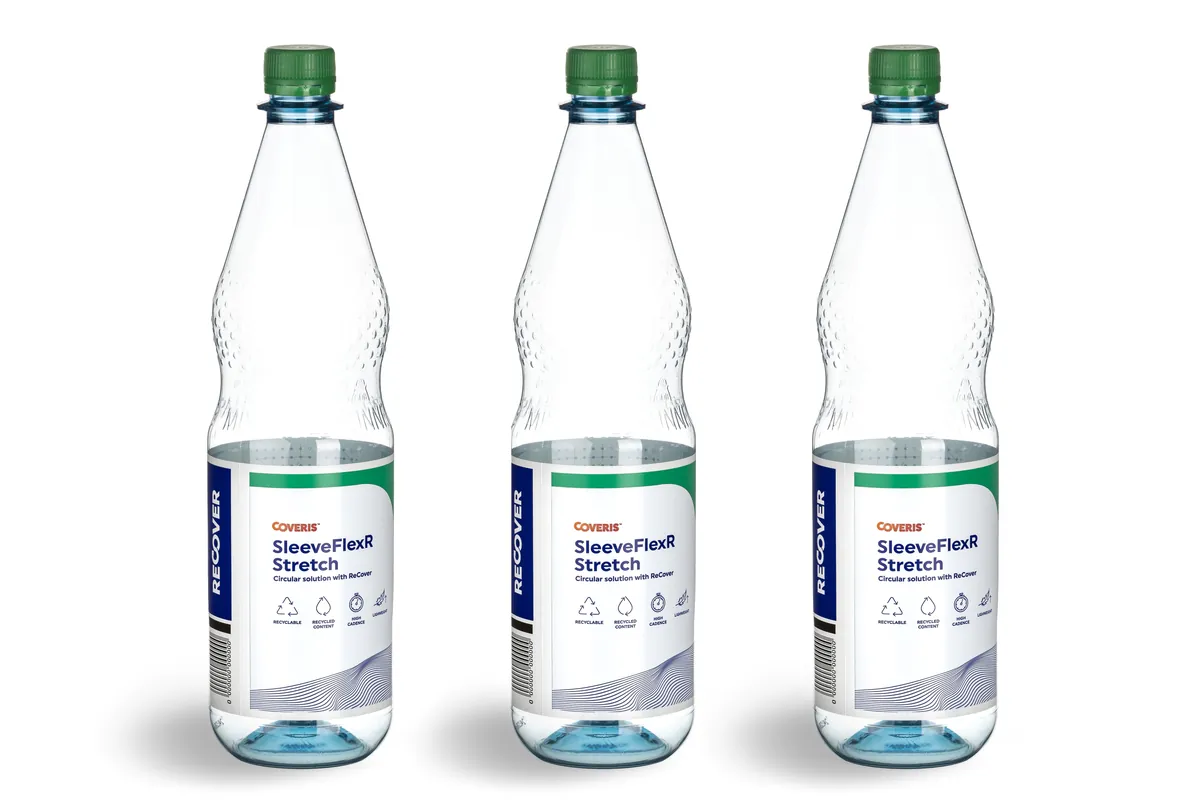 Coveris’ ReCover stretch sleeve which can contain up to 75% PCR (Image credit: Coveris).Coveris’s ReCover platform can source, process, and recycle waste into recyclates. It offers mechanical recycling technologies and, through partnerships with solvent-based and chemical recycling partnerships, the company supports plastic recycling for a wide range of products, explains Szaki.
Also of note, Szaki adds, are de-inking and recycling technologies that are making these solutions increasingly scalable and commercially viable.
“Adoption is driven by EU Packaging and Packaging Waste Regulation and EPR requirements, brand, and retailer sustainability targets, and demand for credible carbon reduction without compromising performance or cost,” she explains.
Balancing decarbonization with demand
The International Energy Agency estimates that, with current climate commitments, global energy-related CO2 emissions will increase by an average of 0.4% per year between 2024 and 2035.
Bringing this concern to the packaging experts, Szaki says that over the next five years, the “greatest impact” on reducing CO2 emissions in packaging is “likely” to come from combining recyclable monomaterial packaging, higher levels of post-consumer recycled content, and closed-loop recycling models.
For example, Coveris’ monomaterial PE solutions can incorporate up to 45% PCR in selected applications while maintaining the required performance. “For highly regulated sectors such as healthcare, we demonstrated a closed-loop proof of concept at Compamed 2025, converting hospital waste into new medical packaging using chemical recycling,” she adds.
Roveda suggests that innovations in climate-smart packaging in the next five years will be in advanced materials, equipment innovation, automation, and credible circularity pathways.
“We’re developing recyclable flexible packaging that delivers the performance demanded by food applications, while using less material and helping to reduce waste,” she adds.
Additionally, Rovema outlines that Sealed Air is investing in automated packaging systems and design-for-recycling principles that align with recognized industry standards.
She concludes: “Ultimately, the most effective climate-smart packaging will not be defined by one material or one claim. It will be defined by measurable performance across the full system: lower material use, reduced carbon impact, strong product protection, credible recyclability, efficient operations, and less product waste.”
Climate scientists warn that, if CO2 emissions rise along the current trajectory, keeping global warming below 1.5 degrees Celsius is no longer possible. The UN Environment Program estimates that current policies put the world on a roughly 2.8 degrees Celsius warming pathway.
Despite innovations targeted at carbon emissions, the packaging landscape is grappling with how to decarbonize rapidly while balancing cost, performance, regulatory requirements, and growing market demand.