


Interpack 2026 preview: Industry experts highlight efficiency & regulatory compliance in packaging


Key takeaways
- Packaging companies at Interpack 2026 will prioritize efficiency-driven solutions as regulatory and supply chain pressures intensify.
- Digital tools and compliance software are becoming essential to manage complexity, improve line performance, and meet evolving EU requirements like PPWR.
- Material innovations, including recycled content and monomaterial designs, are advancing cost efficiency while supporting recyclability and operational performance.
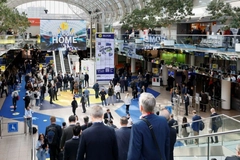 (Image credit: Interpack.)
Efficiency is emerging as a key theme among packaging companies exhibiting at the 2026 edition of Interpack. As the industry faces a complex operating environment with mounting regulatory and supply chain pressures, companies plan to showcase high-performance solutions, including machinery, materials, and digital tools.
Ahead of the world’s largest processing and packaging trade show, taking place in Düsseldorf, Germany (May 7–13), we speak to Greiner Packaging, PakTech, Recyda, and TNA Solutions to find out how they aim to streamline operations and improve performance while ensuring costs remain feasible.
“We expect Interpack 2026 to be shaped by a focus on packaging solutions that improve line performance without adding unnecessary complexity,” Steve Burgess, general manager for EURAF at TNA Solutions, tells Packaging Insights.

“That means more attention on systems that can handle faster changeovers, reduce manual intervention, stabilize product flow, and maintain consistent output under increasingly varied production conditions. This ethos underpins the solutions that we will be highlighting in line with our ‘Innovation Simplified’ theme for the show.”
Keenan Hoar-Perez, international sales manager at PakTech tells us that “two forces” will shape the upcoming trade show.
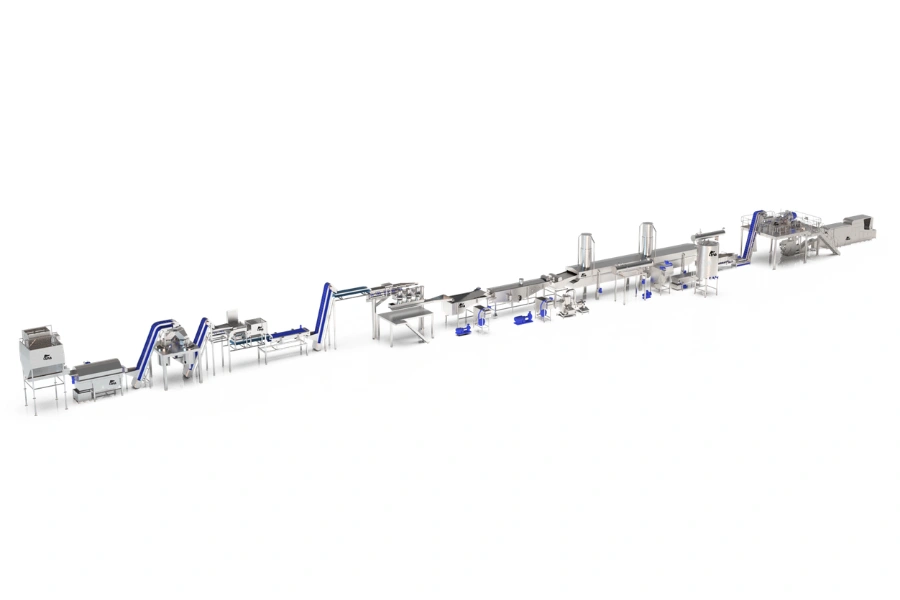 TNA Solutions says it will showcase how integrated systems can simplify production (Image credit: TNA Solutions).“First, regulation is no longer optional. Sustainability has moved from a brand story to a business requirement, with real financial and operational consequences. That’s pushing companies to focus on materials and solutions that can deliver exceptional performance and stand up to scrutiny, beyond sounding good on paper.”
Second, he echoes Burgess’ statement, highlighting the “intense pressure on efficiency” in the packaging industry.
“Margins are tight, production needs to run smoothly, and downtime is expensive. These factors are fueling a growing demand for smarter production and packaging that performs reliably in the real world.”
“What’s interesting is that companies aren’t treating these as separate challenges anymore. They’re looking for solutions that can deliver on both fronts: meeting [regulatory] requirements while improving how their day-to-day operations run.”
Compliance software
As packaging companies increasingly emphasize production optimization, Vivian Loftin, co-founder and managing director at Recyda, says software solutions have become “essential for managing the industry’s fundamental shift under new regulations.”
“The reasons for this include data complexity, complex reporting requirements, and the need for system integration. While the ‘hardware’ [machines and materials] is the body of the industry, software like Recyda is the intelligence that ensures those materials are compliant, cost-effective, and circular.”
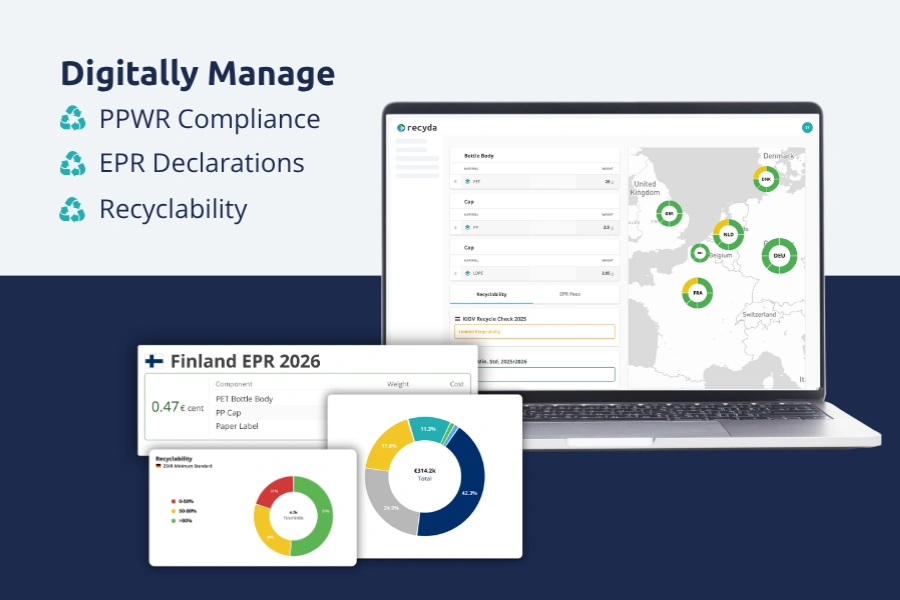 Recyda described software solutions as essential for managing the industry’s shift under new regulations (Image credit: Recyda).“At Interpack 2026, we expect the conversation to shift from ‘experimental sustainability’ to ‘operational compliance’. A move away from complex multi-layer plastics toward designs optimized for existing mechanical recycling streams,” Loftin adds.
She also expects a focus on monomaterial structures and solutions that work well in sorting, such as a self-separating cardboard solution designed to meet the EU recyclability grades under the Packaging and Packaging Waste Regulation (PPWR).
“Recyda acts as the digital backbone for these physical innovations. We respond by providing the digital infrastructure needed to manage the data behind these materials. We also support companies in designing these packaging structures for recyclability and building business cases on top of the compliance case by helping them design for EPR.”
She explains that new materials often come with different EPR costs, and Recyda helps brands calculate the financial impact.
“Our solution offers automated workflows to ensure that a company can adopt Interpack-inspired innovations while ensuring compliance of their entire global packaging portfolio.”
A spokesperson at Greiner Packaging adds: “We expect software solutions to play an increasingly important role in enabling data availability and information exchange across the entire supply and value chain.”
“This includes topics such as the EU’s Digital Product Passport, traceability of materials, and sharing sustainability-relevant data between brand owners, converters, recyclers, and authorities.”
Efficiency through software innovation
TNA Solutions’ Burgess points out that developments in the software for packaging also improve line performance “in a measurable way.”
“The strongest use cases are not software as a layer on top of the process, but software that gives operators better visibility, supports more accurate control, and helps reduce avoidable downtime. In packaging, that can take the shape of better handling of recipe changes, clearer diagnostics, easier fault finding, or improved coordination between packaging equipment and upstream systems.”
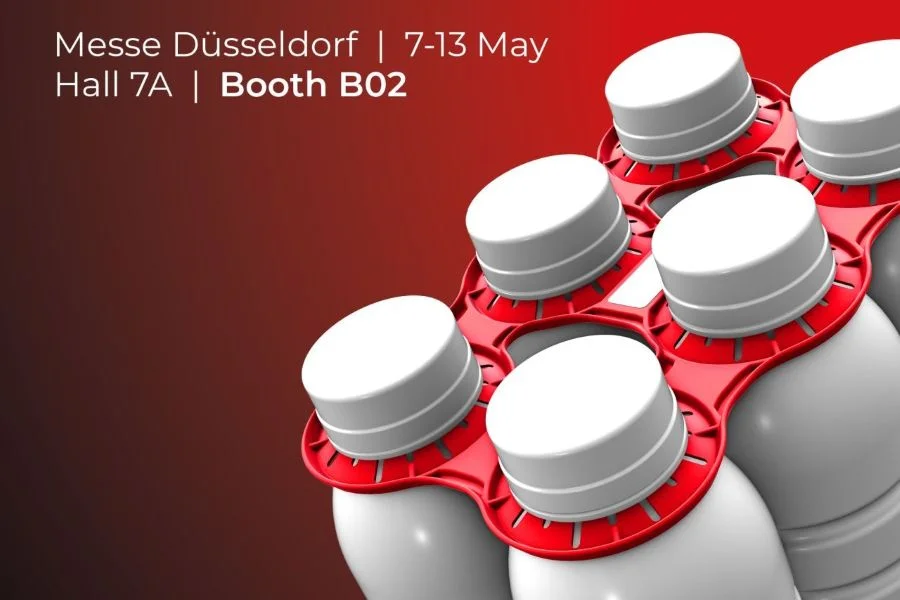 PakTech will showcase its recycled HDPE secondary packaging solutions (Image credit: PakTech).For TNA Solutions, digitalization needs to support operators rather than compete with them. “That is why our focus is on simplified interfaces, improved visibility, and tools that help customers understand how the full line behaves under real operating conditions.”
“Additionally, a simplified interface reduces complexity and training time, minimizing operator error and freeing staff for higher-value tasks.”
At Interpack 2026, the company will highlight its tna intelli-assist, showing how XR can help customers visualize control points, system interaction, and future upgrades more effectively.
“Ultimately, software is becoming more central because manufacturers need better decision-making at the line level, not because they want more screens.”
TNA solutions will also showcase its new tna roflo conveying technology, tna mogul enhancements, and batch frying advances.
Recycled content for cost efficiency
Greiner Packaging expects a focus on “future-ready packaging solutions” that balance functionality and environmental sustainability with cost efficiency.
“Key trends include solutions designed to comply with upcoming PPWR requirements, even as the industry is still awaiting guidelines from the European Committee for Standardization. Many exhibitors will already showcase packaging concepts that are compatible with future legislation and enable customers to adapt step by step over the coming years.”
“Another central theme is material and cost reduction. Lightweight designs, optimized geometries, and smarter use of plastics remain critical levers for improving total cost of ownership while maintaining performance.”
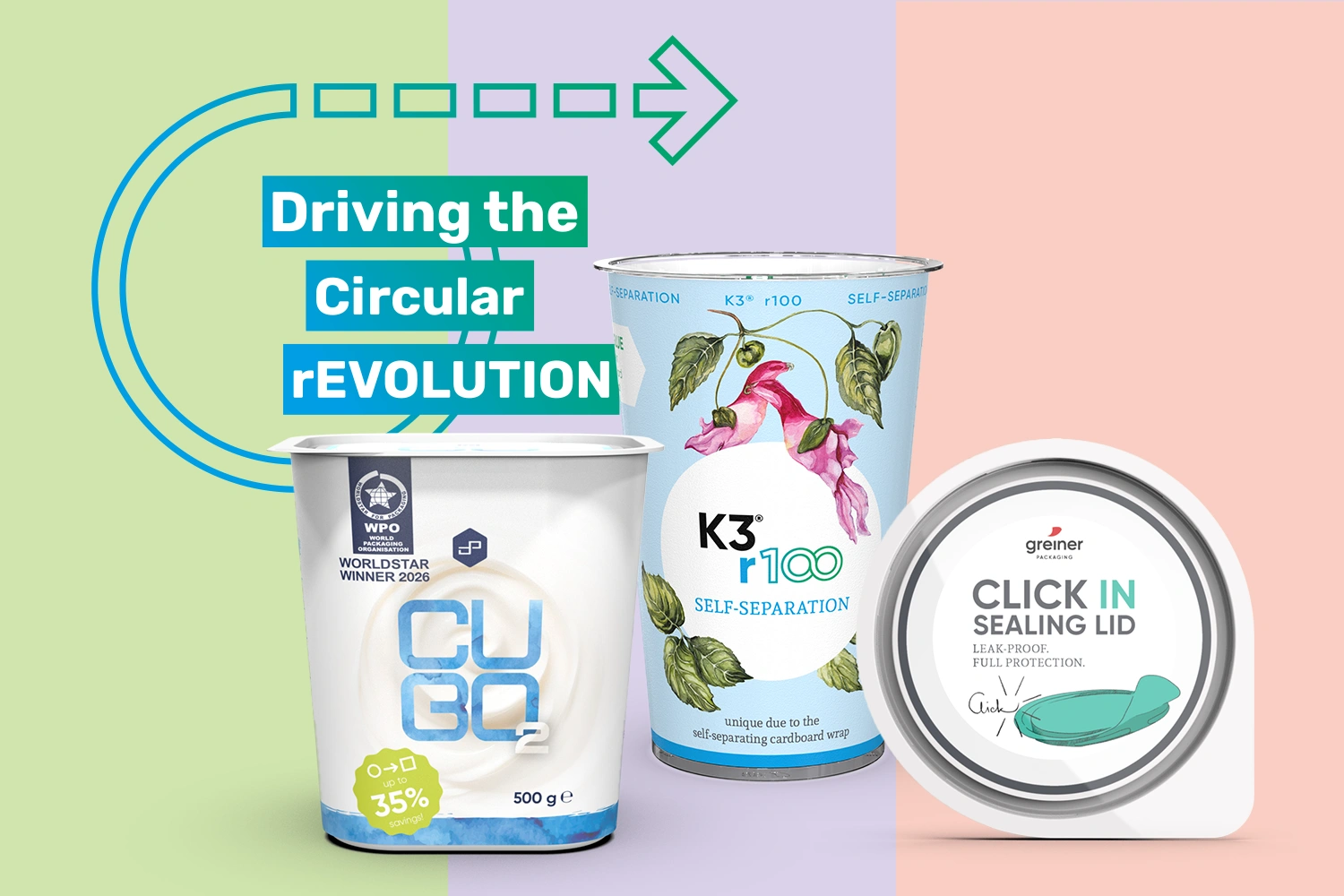 Greiner Packaging its range of rigid, plastic packaging, including CUBO (Image credit: Greiner Packaging).PakTech’s Hoar-Perez adds: “At interpack, we’re focusing on showing how materials behave in practice and based on data — under pressure, in transit, and across different environments.”
“It’s about going beyond claims and giving people something tangible to evaluate. Materials like recycled high-density PE can deliver on performance and sustainability fronts — while powering efficient, scalable multipacking production with high-speed applicators.”
“The goal is to help decision-makers make better calls to help balance performance, cost, and requirements with more clarity.”
Greiner Packaging agrees that the use of recycled content continues to gain significance.. “There is a noticeable progress in recycled PET and recycled PP.”
“One example is our K3 r100, a monomaterial cup concept made entirely from recycled material and supported by RecyClass certification, enabling high recyclability and clear material transparency.”
Greiner Packaging will also present its CUBO and the Click In Lid packaging solutions featuring recycled content, alongside its portfolio covering health, reuse and refill, dairy, food, and household packaging solutions.
“With CUBO, we focus on logistics optimized packaging, designed to reduce transport volume and improve overall total cost of ownership across the value chain.”
“We continuously optimize our packaging designs to support material reduction, such as lightweight concepts and geometry optimizations that reduce plastic use while preserving performance and handling.”