


Bioplastics confusion undermines sustainable packaging potential, study finds


Key takeaways
- A new study finds consumer misconceptions around “bio-based,” “biodegradable,” and “compostable” packaging claims persist.
- Poor labeling and unclear disposal pathways risk undermining the potential environmental benefits of bioplastic.
- An integrated approach is needed across behavior, infrastructure, and communication.
A recent study finds that current assessments of bioplastic food packaging overlook consumer misconceptions, leading to oversimplified conclusions that “are not adequate for guiding effective intervention.”
It calls for a more realistic examination of consumer knowledge, systemic constraints, and real-world disposal behaviors so policy, communication, and industry strategy can build off actionable insights.
“Ultimately, bioplastics can only realize their potential within a circular economy if consumer behavior, communication practices, and infrastructure are studied and addressed in an integrated manner,” say the study authors.
The study, published in Food Research International by researchers from Aarhus University, Denmark, argues that bioplastic food packaging is a “promising yet complex” alternative to conventional plastics.
It adds: “While consumers often express positive attitudes and some willingness to pay, widespread misconceptions remain around key terms such as ‘bio-based,’ ‘biodegradable,’ and ‘compostable.’”
Ambiguous terms
The study notes that prior studies have explored bioplastic packaging from technical and behavioral perspectives. However, it argues that there is a “lack of systematic synthesis” of consumer responses to bioplastic, biodegradable, compostable, and bio-based food packaging.
Moreover, these terms are often used interchangeably, with their real meaning distorted or misrepresented.
Last year, Packaging Insights spoke with Avantium, Aimplas, and Oceana about recent bioplastic innovations.
Antonio Ordovás, packaging researcher at Aimplas, told us: “When we talk about bioplastics, it’s important to clarify a common source of confusion: ‘bio’ does not always mean ‘biodegradable,’ nor does it always mean ‘bio-based.’
“Some plastics of renewable origin do not degrade, such as bio-PE or bio-PET, and there are fossil-based polymers that do, like polybutylene adipate terephthalate.”
Aarhus University’s study further highlights that beyond industry, academic research on bioplastics is “not immune” to misuse and conflation of terminology.
Consumer demand
Bioplastic solutions are on the rise as consumers and manufacturers seek to reduce reliance on fossil fuel-based virgin plastics.
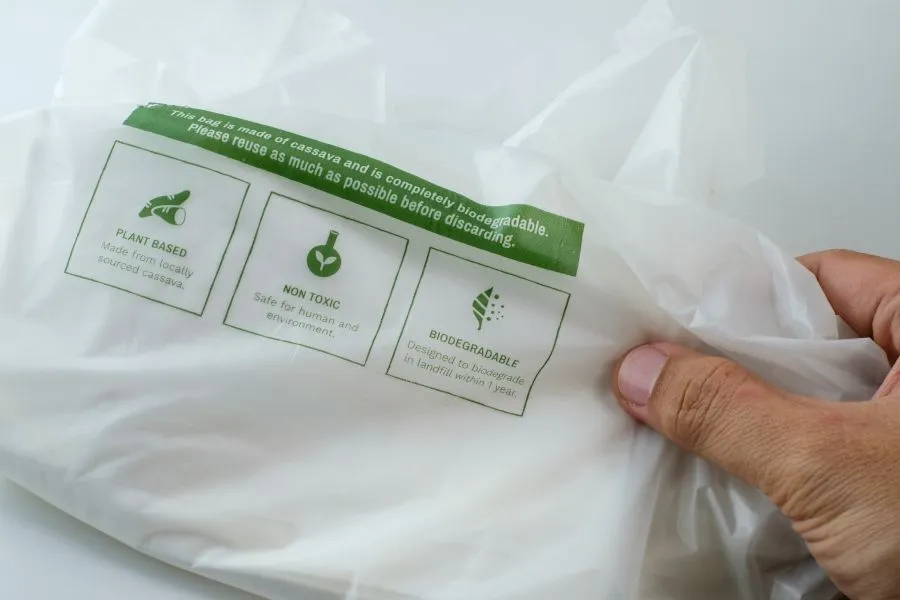 Bioplastic solutions are rising, but the study finds that unclear labeling and low awareness cause confusion and improper disposal.Recently, Aimplas transformed spent grains from brewery waste into high-performance bioplastics for packaging applications, including bottles and coatings for cups and trays.
Meanwhile, at last year’s COP30, Braskem emphasized the role of bioplastics in sustainable packaging, envisioning a chemical industry fully integrated into the bioeconomy.
However, the study finds that ambiguous definitions, limited label clarity, and a lack of consumer education may result in improper disposal and confusion among stakeholders.
“As a result, the environmental potential of these materials may be undermined. Consumer behavior is therefore central to the effectiveness of bioplastic food packaging solutions,” says the study.
The researchers notice that consumers generally have positive attitudes toward bioplastics packaging and are willing to pay more. However, it concludes that purchase and disposal are heavily influenced by misperceptions of end-of-life pathways, price sensitivity, and distrust fueled by greenwashing.
Bioplastics can often be challenging to dispose of, with various options depending on the material and local waste management infrastructure.
Last year, the Advertising Standards Authority banned online adverts by Lavazza UK and Dualit that describe their coffee packaging as “compostable.” It stated that the ads imply home compostability when the pods can only be composted through an industrial process.