



Fragmented EPR rules push packaging industry toward value-chain collaboration


Key takeaways
- EPR laws are expanding globally with little harmonization, pushing packagers toward Design for Recycling, granular eco-modulated reporting, and material optimization.
- Industry leaders stress value-chain collaboration over waiting for simpler, unified rules.
- US momentum is building, with seven states now holding EPR laws.

EPRs are rolling out across countries and regions, but harmonization remains low. Packaging Insights speaks to Bay Cities Packaging, Constantia Flexibles, Flint Group, Korozo Group, and Recyda, to find out how industry players can work together to ensure compliance.
“EPR frameworks are evolving beyond Europe, including in the UK, North America, and parts of Asia, each with its own timelines and reporting obligations,” Thomas Schulz, VP of Group Marketing Communication at Constantia Flexibles, tells us. “The EPR environment is clearly accelerating the shift toward Design for Recycling, greater material efficiency, and increased transparency.”
Schulz highlights that packaging solutions today must balance regulatory requirements with core functions such as product protection, machinability, and performance on existing filling and sealing equipment.

“From our perspective, this has led to even closer alignment between material development, packaging design, and real downstream recycling conditions. It also reinforces the importance of working closely with customers and partners to ensure that solutions are not only compliant with regulatory requirements, but also validated for real-world implementation.”
At the same time, Vivian Loftin, co-founder and managing director at Recyda, calls on packagers not to wait on harmonization, but rather to make their data robust now. She asserts that the most notable challenge in EPR is the “massive” fragmentation of rules and the shift from weight-based reporting to highly granular eco-modulation.
“A company can no longer just report ‘tons of plastic.’ They must report details down to the exact color, component ratios, and barrier types. Managing this globally on traditional spreadsheets is highly prone to human error, resulting in financial penalties or overpayments.”
At the same time, she sees opportunity in the shift of EPRs from a “passive compliance cost” to a “major” financial lever.
“Eco-modulation actively rewards sustainable packaging choices. Companies that master their data can use these regulations as a roadmap for Design for Recycling, uncovering significant cost savings by optimizing their portfolios to trigger lower fee brackets.”
Collaborating for EPR preparedness
 EPR frameworks are expanding across Europe, North America, and Asia, with limited harmonization between schemes.For Korozo and Flint Group, the discrepancies in EPR frameworks across countries and regions can be a planning hazard for which packagers need to collaborate to ensure readiness.
“EPR is expanding quickly with the EU Packaging and Packaging Waste Regulation setting ambitious targets for recyclability and recycled content. In the US, state-level EPR legislation is also gathering momentum, and comparable initiatives are developing across Latin America and the Asia Pacific region,” a Flint Group spokesperson outlines.
“Each of these has specific regional nuances that require careful navigation, but the overall direction of travel is clear — packaging needs to be designed for circularity, and every component, including inks, must support that end goal,” the printing, packaging, and labeling expert adds.
Dr. Betül Türel Erbay, chief innovation and sustainability officer at Korozo, argues that compliance with evolving packaging regulation is genuinely complex, adding that no single company can manage it effectively in isolation.
“Collaboration across the value chain, from material suppliers, converters, and brand owners, to recyclers and waste management operators, remains critical for turning regulatory requirements into practical, scalable solutions. The testing, validation, and certification work needed to demonstrate regulatory conformance requires coordinated effort and shared investment.”
It is also worth recognizing that regulation, while operationally demanding, is a driver of meaningful innovation, she further asserts. “Companies such as Korozo that engage with regulatory change proactively and are investing in developing next-generation materials and structures, building the data infrastructure for transparency, and integrating sustainability into core business planning, are better positioned to differentiate themselves.”
“The organizations that will navigate this landscape most successfully are those that treat compliance not as a constraint to be managed at minimum cost, but as a framework within which more robust, more circular, and more competitive packaging solutions can be developed.”
US latest: SB 54 and beyond
Sahar Mehrabzadeh, chief revenue officer at Bay Cities, based in California, US, says that the custom packaging producer’s work is shaped by the country’s rapidly expanding regulatory landscape.
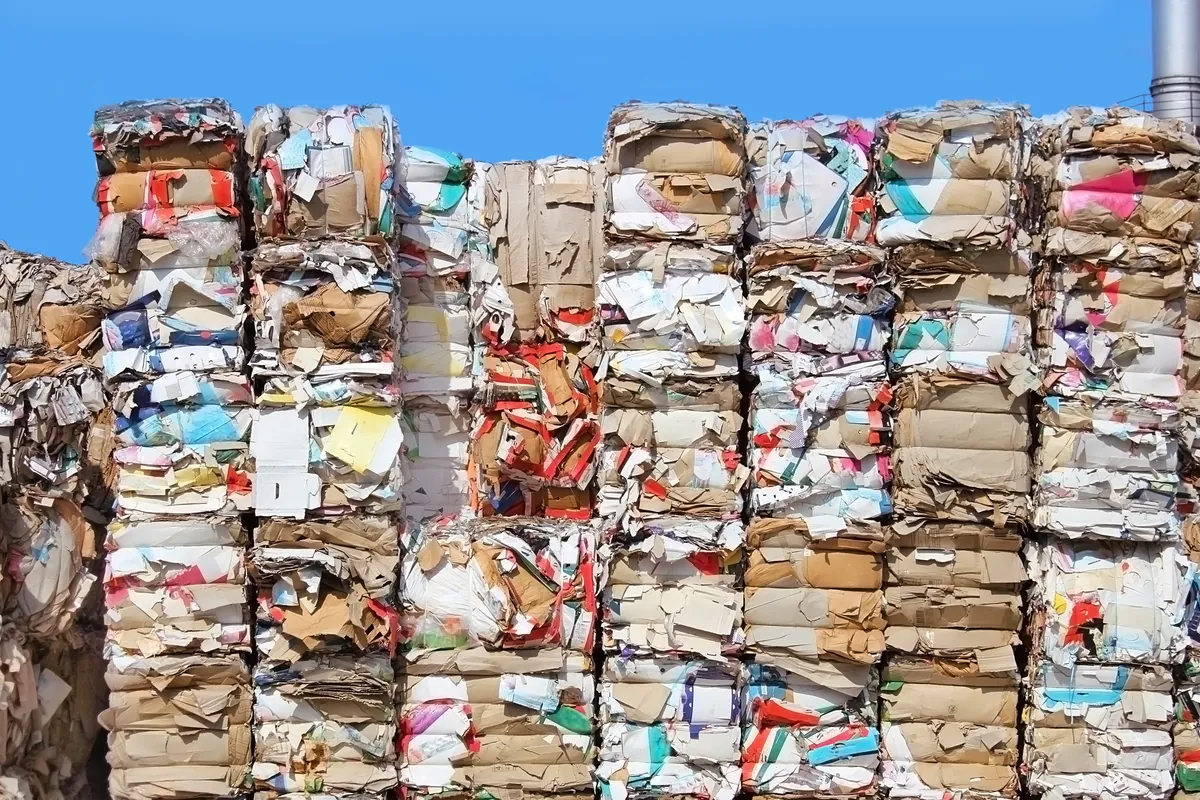 Eco-modulated fees reward fiber-based, high recycled-content, and right-sized packaging designs.“Seven states have now enacted packaging EPR laws: California, Oregon, Colorado, Maine, Minnesota, Maryland, and Washington. California’s SB 54, the Plastic Pollution Prevention and Packaging Producer Responsibility Act, is the most aggressive and the one driving most of our work, with final regulations effective May 1, 2026.”
“More states are close behind. Georgia introduced HB 1237 in February 2026, with bills also advancing in New York and New Jersey. With roughly one in five US Americans already living in an EPR state, these rules are steadily reshaping how brands think about materials, package design, labeling, and end-of-life responsibility.”
SB 54 and the wider US EPR landscape are changing Bay Cities’ packaging solutions, with material selection standing out as the most significant transformation.
“Fees are eco-modulated, so hard-to-recycle plastics like PVC, EPS, LDPE, multi-material laminates, and plastic windows and hooks pay the most, while all-fiber construction, high recycled content, water-based inks, and right-sized designs pay the least. Material selection is becoming a much more strategic decision.”
Because fees are eco-modulated, materials that are difficult to recycle generally carry higher costs, while fiber-based materials, high recycled-content formats, and right-sized designs are often better positioned, she elaborates. “In many cases, the more sustainable choice is also becoming the more economical one.”
“Design is the second. Because each package component is reported separately by material, weight, and recycled content, we simplify designs and consolidate materials to cut both fees and reporting burden,” Mehrabzadeh continues.
“Labeling is the third. With SB 343 regulating recyclability claims, what a package says now matters as much as what it’s made of, and we help clients align their on-pack messaging accordingly.”
She says Bay Cities plays a growing advisory role. “Brands can’t complete SKU-level reporting without granular data from their packaging suppliers, so because we work directly with their teams, we build compliant material and design choices from the start.”
Global reporting necessity
Loftin says that within the EU, Recyda fully supports established EPR frameworks and their evolving eco-modulation rules, including France, Italy, Spain, Portugal, Germany, Belgium, and the Netherlands.
 California’s SB 54 final regulations take effect May 1, 2026, driving packaging material and design changes.“We also support new, rapidly expanding European schemes, such as the UK’s pEPR and Denmark’s new EPR framework.”
Beyond Europe, Recyda is expanding to cover emerging international frameworks, including Canadian EPR schemes and state-level programs in the US, such as California, Oregon, and Colorado, as they roll out. In Asia, Recyda covers Japan and several other markets.
Constantia Flexibles’ Schulz sees the growing complexity of regulatory frameworks across markets as a challenge. “EPR requirements are not globally harmonized and continue to evolve, which increases the need for flexible solutions and strong regulatory expertise.”
At the same time, he says that EPR creates opportunities for Constantia Flexibles. “EPR opens the door to deeper collaboration with brand owners and partners, driving innovation and material optimization. Early investment in application‑focused, compliant solutions allows us to support customers more effectively as regulatory expectations increase.”
Loftin adds that while the packaging industry frequently laments the lack of harmonized global standards, companies shouldn’t let a lack of regulatory harmonization stall their progress.
“The secret to mastering global EPR doesn’t lie in waiting for the laws to become simpler; it lies in making your internal packaging data robust, structured, and agile. If your data foundation is strong, your business will remain resilient and compliant no matter how the global regulatory map changes.”