


US PET recycling: Domestic feedstock and policy support critical as rate slips


Key takeaways
- North America’s PET bottle recycling rate fell to 30.2% in 2024 but remained above the decade average.
- PET thermoform recovery rose 52% as reclaimers expanded the collection of non-bottle packaging.
- rPET use in bottles stayed dominant despite market fluctuations and increased virgin resin volumes.
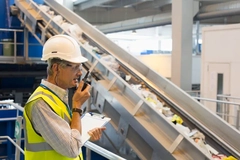
The National Association for PET Container Resources (NAPCOR) has released its 2024 PET Recycling Report, revealing that the PET bottle recycling rate in North America was 30.2% in 2024 — a decrease from 32.5% in 2023, but above the decade’s average of 29.5%.
Packaging Insights speaks to Laura Stewart, executive director of NAPCOR, and Lauren Laibach, director of data services at NAPCOR, about the report’s findings, identifying rising collecting rates, increased thermoform recovery, and improved process efficiency and material utilization in the region.
Stewart says: “Our new 2024 PET Recycling Report confirms what the data have consistently shown: PET recycling in North America works, and it works at scale.”
However, there is some concern about the industry viability of the North America reclaimers.

Stewart says: “We are concerned about the competitiveness of North American reclaimers, particularly given that three facilities have announced closures this year, at the time of this report’s release. Achieving a truly circular economy requires prioritizing recycled materials generated within the region as a primary feedstock.”
The report reveals that the PET collection rate in North America was 39.2% in 2024, which NAPCOR notes is “well above” the 30% threshold defined by the Ellen MacArthur Foundation.
Thermoform recovery
In the US and Canada in 2024, 264 million pounds of PET thermoforms were collected for recovery. The countries witnessed a 52% increase from the previous year. NAPCOR explains this increase demonstrates “continued progress” in the collection of PET packaging beyond plastic bottles.
“In our analysis of the PET thermoform market, over time we’ve seen PET thermoform converters shift between virgin PET and rPET depending on market conditions,” say Stewart and Laibach.
“Because thermoforms face fewer mandatory PCR requirements than beverage bottles, feedstock choices often come down to package specifications and price. When economic drivers dominate, converters naturally gravitate toward the lower-cost option — whether that’s virgin PET or PCR.”
Furthermore, NAPCOR says that while increased PET thermoform recovery should be matched by corresponding material feedstock demands, market demand has remained “inconsistent.”
Stewart and Laibach note that while thermoforms are not always the optimal material of reclamation, they are routinely reclaimed with bottles.
“Thermoform fractions in bales are now more evident in the data due to AI and optical technology improvements, which allow reclaimers better visibility into their feedstock stream, as well as refinements in NAPCOR’s survey method.”
Bottles dominate end markets
The report outlines end markets for rPET in the US and Canada. Sales of rPET saw a decline of 3% from 2023, while imported rPET accounted for 23% of rPET supply.
rPET used for bottle production still dominates, accounting for more than 60% of all rPET sold domestically, according to the findings.
The report details that the average rPET content in US PET bottles measured 15.9% in 2024, remaining above the prior three-year average of 13.7%, but decreased from 2023, “driven by increased volumes of virgin PET resin in the market.”
Laibach asserts that one obstacle driving increased sales of virgin PET resin is the high price of premium domestic rPET.
She adds: “Mandatory recycled content minimums would help incentivize brands to use more recycled content. For example, California has a 25% rPET content minimum in bottles by 2025 that drove a large increase in rPET consumption in bottles after the legislation was passed. In 2030, that requirement steps up to 50%, so we may see another increase as that deadline gets closer.”
Non-traditional feedstock use
The report highlights improved material process efficiency and utilization, as the share of usable material recovered from PET recycling in the US and Canada increased from 81.5% in 2023 to 85.2% in 2024.
Stewart concludes: “These results underscore the value of continued investment in recycling infrastructure and policies that strengthen domestic feedstock supply, support innovation, and ensure PET remains the leading material in the circular economy.”
In addition, the report reveals that US and Canadian reclaimers recycled nearly four times more non-traditional feedstock (material that is not post-consumer packaging) than in 2023, propelled by depolymerization technologies, a type of chemical recycling, “operating at scale for the first time in 2024.”