


Bioplastics gain momentum as India and China reshape industry


Key takeaways
- India’s fast-growing packaging market is accelerating demand for bio-based and compostable materials, driven by urbanization, e-commerce, and FMCG expansion.
- China’s bioplastics sector is transitioning from start-up–led innovation to adoption by major chemical producers and consumer brands.
- GS Biomats showcases furan-based materials as a PET alternative, supported by government policies and advanced bioeconomy development plans.
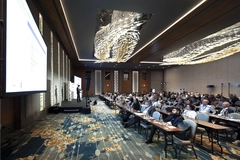
India’s rapidly expanding packaging sector is establishing new opportunities for bio-based materials, while China’s domestic bio-based industry is shifting from being start-ups driven to attracting major national chemical producers and consumer goods companies, industry experts highlighted at the European Bioplastics Conference 2025 (EBC25) in Berlin, Germany, this week.
At the event, which Packaging Insights attended, Panelist Vikram Bhanushali, president at the Indian Compostable Polymer Association (ICPA), notes that India’s packaging market is valued at US$101.12 billion as of 2025 and is expected to reach US$169.73 billion in 2030.
“Urbanization and the rapid growth of city populations are driving demand for on-the-go formats. At the same time, convenience-focused delivery platforms are accelerating the need for tamper-evident packaging and supporting the expansion of e-commerce,” he explains, adding that this trend creates a “major opportunity” for the adoption of bio-based materials in one of the world’s largest markets.

Susan Zhu, the global marketing director of the Chinese Zhongke Guosheng (Hangzhou) Technology, also a panelist, says that China’s bio-based industry is experiencing “a strong momentum for growth.”
She points to data from the China Center for Information Industry Development, which finds that the total scale of the country’s advanced biomanufacturing industry is now worth RMB150 billion (US$21.2 billion).
The most notable recent change, according to Zhu, is that the bio-based space is no longer driven by start-ups, but Chinese chemical giants are entering the industry and transitioning to bio-based production, including Kingfa, Wanhua, Sinopec, and Huafon.
As a result, top consumer brands based in the country are adopting bio-based materials, including BYD, Huawei, Xiaomi, sports equipment manufacturer Anta, and Yili, Asia’s largest dairy company.
She also highlights furan bio-based materials created by GS Biomats, a subsidiary of Zhongke Guosheng (Hangzhou) Technology, and claims that these are more environmentally friendly than conventional PET.
India’s packaging industry
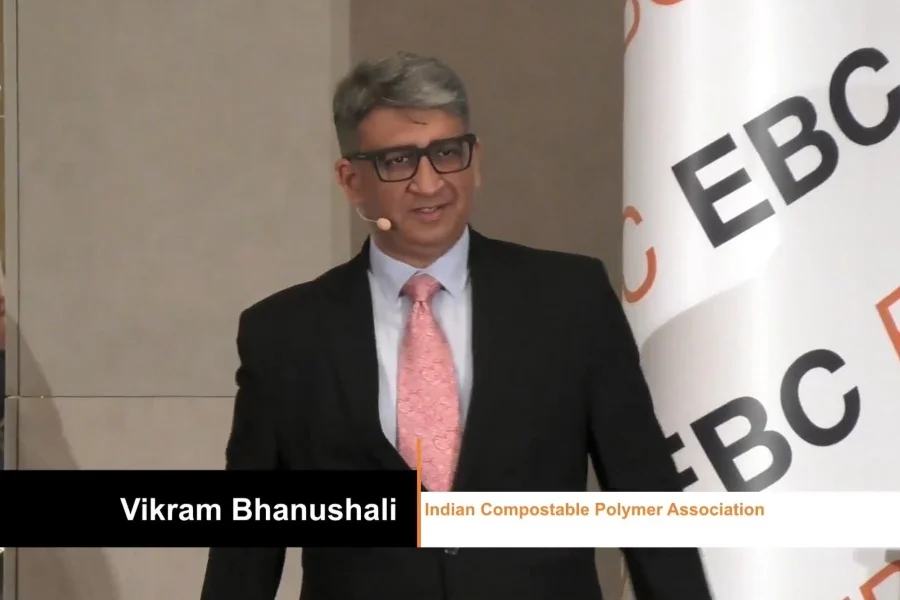 Vikram Bhanushali, president at the Indian Compostable Polymer Association.Bhanushali outlines the current growth outlook for the Indian packaging industry, identifying an overall market CAGR of 10.73%.
The growth of the packaging segment is driven by India’s expanding FMCG, F&B, cosmetics, small packaged goods, and apparel industries, according to the ICPA president.
F&B packaging alone is worth US$38.3 billion, and is expected to reach US$52.5 billion by 2030, according to the same data source.
Meanwhile, official statistics by India reported a CAGR of 11.46% for flexible packaging and 6.31% for rigid packaging.
Bhanushali argues that the growing consumption of packaging has exacerbated the country’s existing waste management issues. He suggests that alternatives to conventional plastic, such as bioplastics, could play a role in facilitating a transition to a circular economy.
“Since ancient times, India has embraced zero-waste habits rooted in biodegradability, durability, and circularity, creating a society where ‘waste’ is simply a resource in transition. Wooden cups for tea, meals served on banana leaves, and traditional pottery remain in use across rural and remote regions.”
He highlights several opportunities for collaboration between ICPA and EUBP, including joint advocacy through coordinated submissions and industry awareness programs. Bhanushali also suggests joint market development initiatives to showcase bio-based materials on global platforms and establish partnerships with governments, academia, and the industry.
The speaker calls for the harmonization of standards and an India-EU alignment roadmap to facilitate certification equivalence.
Chinese furan bio-based materials
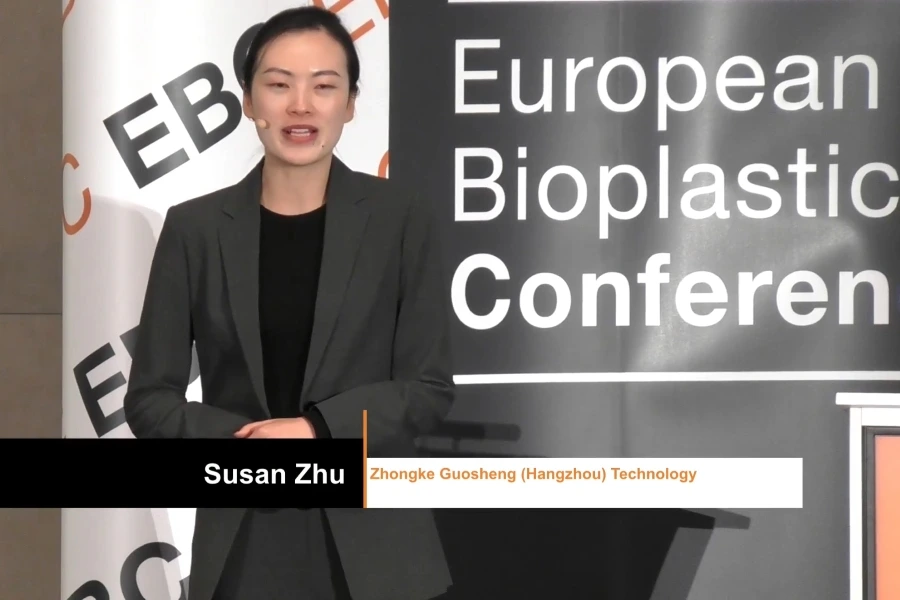 Susan Zhu, global marketing director at Chinese Zhongke Guosheng (Hangzhou) Technology.Zhu says that China is adopting policies to accelerate the development of its bio-based industry.
She presents the work of GS Biomats, part of Zhongke Guosheng (Hangzhou) Technology, a specialist in the development of furan bio-based materials 5-ydroxymethylfurfural (HMF) and its downstream derivatives. Zhu refers to the final product as a more environmentally sustainable alternative to conventional PET.
She says the producers employ a closed R&D loop, including turning biomass feedstock into HMF for downstream derivatives used to create the final products. Multiple types of non-crop biomass, such as corn starch and biomass waste, are used for the feedstock, according to Zhu.
She argues that GS Biomats’ bio-based material production technology stands out with its original catalytic system, said to facilitate efficient dehydration reaction and to prevent the self-polymerization of HMF, resulting in a shortened production process.
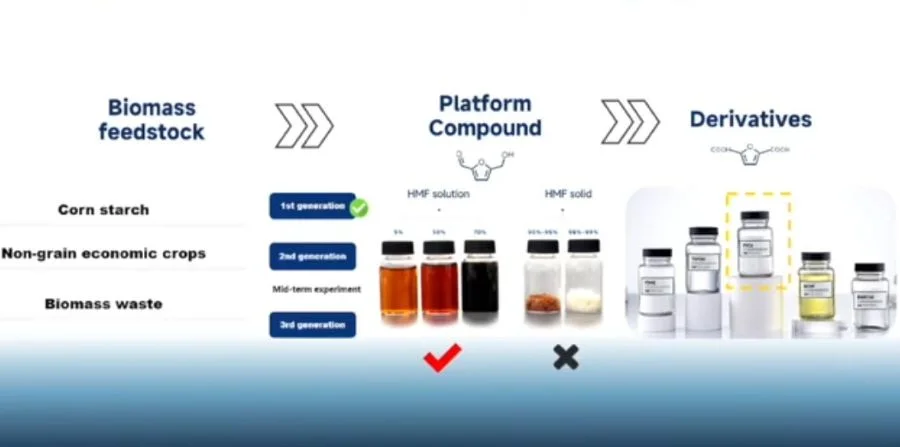 GS Biomats’ furan bio-based material has functionality and packaging applications comparable to PET.The industries where GS Biomats can be implemented are high-transparency packaging due to its “premium look and tactile feel, enhanced recyclability in PET streams, lower production costs, and PET performance uplift,” according to Zhu. She adds it can be used for cosmetic packaging in particular due to its UV protection.
The bio-based material can also be used in high-gas barrier packaging for carbonated beverages, and for clothing fiber with anti-bacterial properties, Zhu outlines.
According to GS Biomats’ verification, the material derived from the chemical recycling of bio-based material is purer than chemically recycled PET.
GS Biomats is the first company in the country to complete the China 2, 5-Furandicarboxylic acid (FDCA) Registration of a new chemical substance. It holds the Registration, Evaluation, Authorisation and Restriction of Chemicals (REACH) certification by the EU, as well as the USDA Certification for 100% bio-based content.