


Recycle-ready solutions and convenience formats reshape snack packs


Key takeaways
- Snack packaging innovation is being shaped by demand for convenience, portion control, recyclability, and reduced environmental impact.
- Packaging providers are developing recycle-ready, lightweight, and recycled-content solutions, and reclosable options, according to insights from Greiner Packaging, LYB, PureCycle, and TNA Solutions.
- Snack manufacturers are seeking flexible, high-throughput packaging systems that support product variety, healthier formulations, and changing consumer lifestyles.
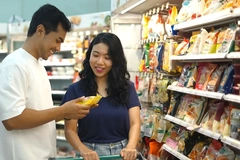
Snack packaging providers spotlight low environmental footprint as a notable consumer trend that is impacting how they approach design, including recyclability and the inclusion of recycled content. At the same time, snackers are looking for on-the-go products and appropriately packaged healthy treats.
Packaging Insights speaks to Greiner Packaging, LyondellBasell Industries (LYB), PureCycle, and TNA Solutions to learn more about the most significant developments changing snack packaging conventions.
“Snack packaging equipment demand is increasingly shaped by the need to balance value, variety, convenience, and sustainability,” Simon Hill, group product innovation manager at TNA Solutions, tells us.

“Nearly 70% of consumers globally seek portion-controlled snacks, while multipack formats continue to expand as shoppers look to manage their budgets without sacrificing choice. At the same time, inflation and value pressures are contributing to smaller pack sizes. Demand for new flavors and seasonal or limited-edition products is increasing the number of formats and changeovers manufacturers must manage.”
Eva Müller-Axmann, product group manager at Greiner, says that consumers are looking for packaging that focuses on convenience and on-the-go consumption. “As snacking increasingly takes place on-the-go, demand is growing for packaging formats that are easy to re-close, leak-proof, and easy-to-carry, as well as suitable for portion control.”
“These shifts are taking place in a steadily growing market that is still packed almost exclusively in flexible formats, with rigid solutions playing only a marginal role today. Demand is growing faster than format diversity,” she notes.
Al Pizzuti, industry marketing manager for consumer packaging at LYB, agrees that demand for convenient, on-the-go formats is driving snack pack development. He adds that regulation is also playing a key role in packaging design decisions.
“In Europe, the Packaging and Packaging Waste Regulation introduces requirements related to packaging recyclability, material efficiency, and recycled-content mandates. At the same time, EPRs in Europe and a growing number of states in the US are increasing producers’ responsibility at the end of life.”
“Together, these policies are encouraging companies to evaluate packaging structures, recyclability, and material use earlier in the development process, accelerating interest in recycle-ready solutions.”
Environmental expectations
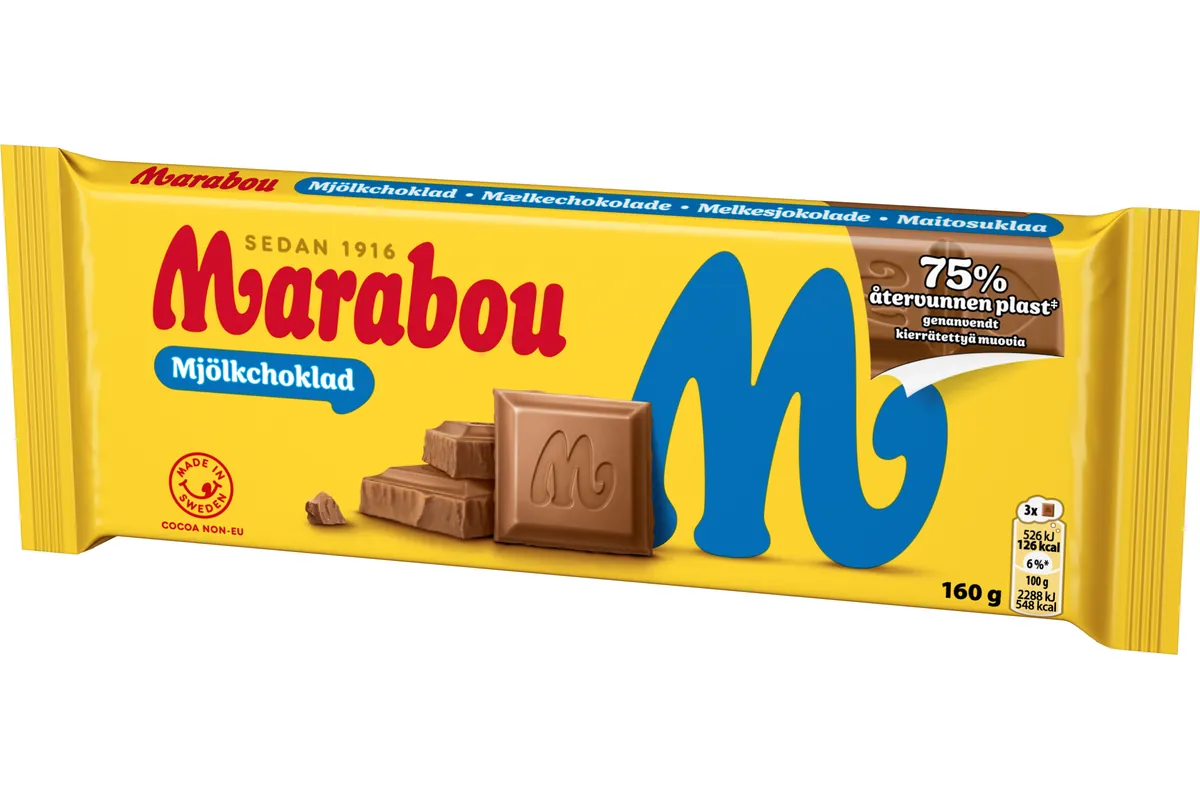 LYB’s collaboration with Mondelēz on Marabou chocolate-bar packaging with recycled-content (Image credit: LYB).PureCycle, a provider of patented PP purification recycling technology developed by Procter & Gamble, notes that its customers are seeking sustainability credentials that can become a “built-in attribute” of their packaging for snacks.
“That means solutions that support recycled content goals while still delivering the consistency, processability, and shelf appeal needed for high-volume snack applications,” Christian Bruey, director of sustainability and external affairs at PureCycle, tells us.
“As a result, our focus is on producing recycled PP that functions as a true drop-in solution for demanding packaging formats while helping brands accelerate progress toward their sustainability commitments.”
Pizzuti also states that LYB’s customers in the packaging space are increasingly being asked to meet sustainability and regulatory objectives while at the same time maintaining product protection, shelf life, manufacturing efficiency, and affordability.
“Rather than focusing on a single material or attribute, we work with customers to optimize the entire packaging structure based on the specific application,” he continues. “For example, our recent collaboration with Mondelēz on Marabou chocolate-bar packaging demonstrated how recycled-content solutions can be incorporated into a demanding food-packaging application while maintaining the performance required.”
Discussing shopper preferences when choosing snacks based on packaging, TNA’s Hill says that premiumization remains important, but it is increasingly associated with product quality, provenance, and sustainability rather than price alone.
“Consumers are willing to pay almost 10% more for products that are sustainably produced or ethically sourced, reinforcing the commercial importance of efficient production and waste reduction.”
Recycle-ready lightweights
Pizzuti adds that sustainability expectations are creating demand for packaging solutions that use less material. “Technologies such as machine-direction orientation (MDO) and biaxially oriented PE are helping accelerate this transition.”
“By enabling thinner, higher-performance PE films, these technologies can support downgauging, improve material efficiency, and create pathways from traditional multimaterial laminates to recycle-ready monomaterial structures,” he elaborates.
“MDO, in particular, can serve as a bridge between the high-performance structures used today and future recycle-ready PE packaging.”
PureCycle’s recycled-content PP film for snack packaging applications (Image credit: PureCycle).PureCycle’s Bruey argues that as recycled-content requirements and broader circular economy programs gain momentum, companies are looking for packaging materials that can help them reduce virgin plastic use. “We expect the industry to continue moving toward packaging designs that are easier to recycle, incorporate higher levels of recycled content, and simplify material structures.”
“We also anticipate growing investment in new forms of recycling, such as dissolution that expand the range of food-grade recycled content available to packaging manufacturers.”
Consumers seek convenience
Greiner’s Müller-Axmann highlights that demand for convenient snacking is influencing the Austrian company’s packaging solutions for snacks.
“Convenience is a key driver, with strong demand for packaging that is easy to open, easy to carry, and suitable for consumption anytime and anywhere.”
She adds that reclosable and portion-controlled formats support mobile lifestyles and healthier snacking habits, as consumers want to reduce food waste and enjoy products over multiple consumption occasions.
“Formats such as Greiner’s K3 snack cup solution offer a compelling alternative to conventional flexible pouches, particularly for products consumed over several occasions. In combination with a Click In sealing lid, the cup supports on-the-go snacking with easy and secure re-closing and helps maintain product quality after opening.”
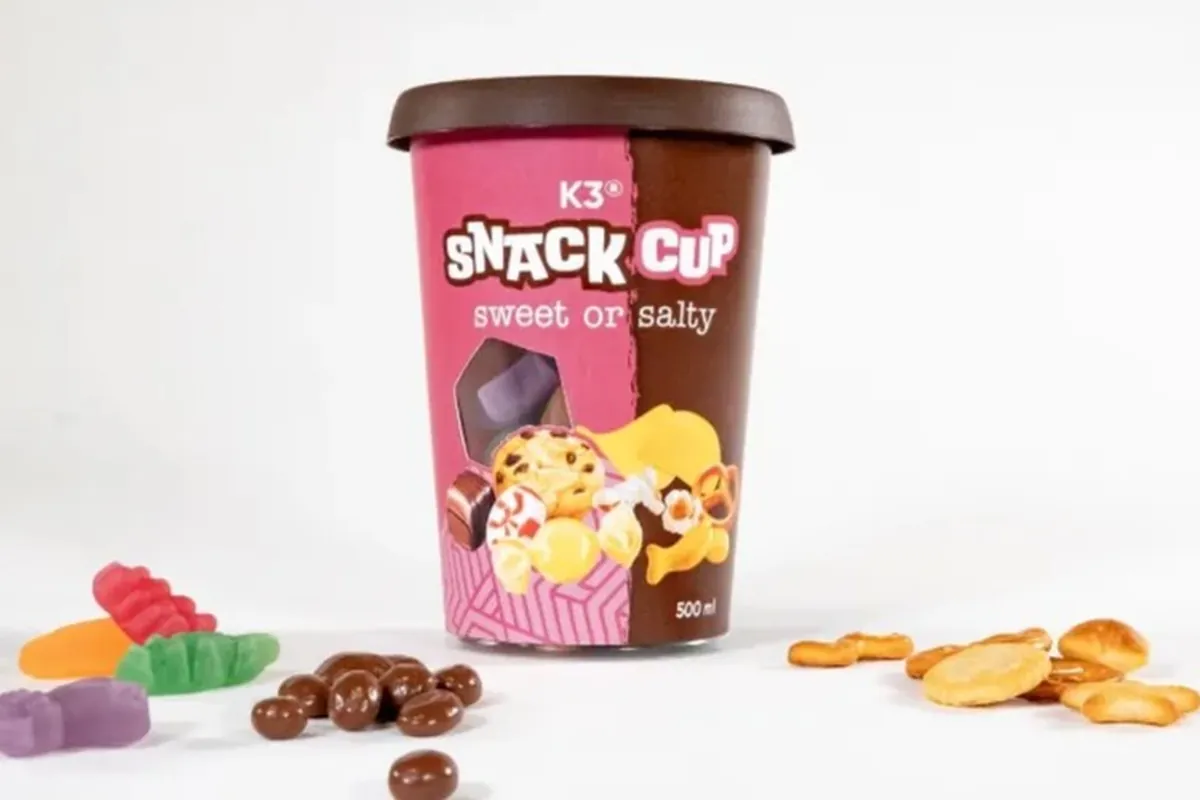 Greiner’s K3 snack cup with a Click In sealing lid that supports on-the-go snacking (Image credit: Greiner Packaging).She points out that the K3 snack cup’s cardboard wrap creates additional space for brand communication, promotions, or interactive elements, while supporting clear guidance on component separation and recycling.
Pizzuti also says that LYB customers’ demand for convenient formats, including on-the-go and single-serve portions, continues to grow.
Packing healthy snacks
Convenience considerations intersect with health and wellness consumer trends. Pizzuiti says that healthy nutrition trends are further elevating the importance of packaging performance as brands simplify ingredient lists and reduce reliance on preservatives.
Such healthy snack brands still have to meet expectations surrounding freshness, product protection, and shelf life, he points out.
TNA’s Hill sees pack innovation for healthy snacks as increasingly driven by greater product and format diversity. “Portion-controlled packs, multipacks, nutrient-dense snacks, protein-led products, cleaner-label recipes, and functional propositions are all likely to influence how manufacturers plan their packaging operations.”
Greiner’s Müller-Axmann spotlights portion-control packaging as a trend that has emerged alongside buyers’ growing health consciousness. “Consumers increasingly look for better-for-you products, natural ingredients, and new flavor experiences.”
“At the same time, flexible packaging still dominates the snack market. This creates an opportunity for rigid, reclosable formats in selected applications where they can offer a clear added value through easier handling, portioning, product protection, and stronger shelf differentiation.”
PureCycle’s Bruey foresees innovations that improve circularity while preserving product protection will be especially important in the coming years, particularly as brands seek solutions to satisfy environmental objectives and consumer expectations for freshness and quality.
Snack pack machinery
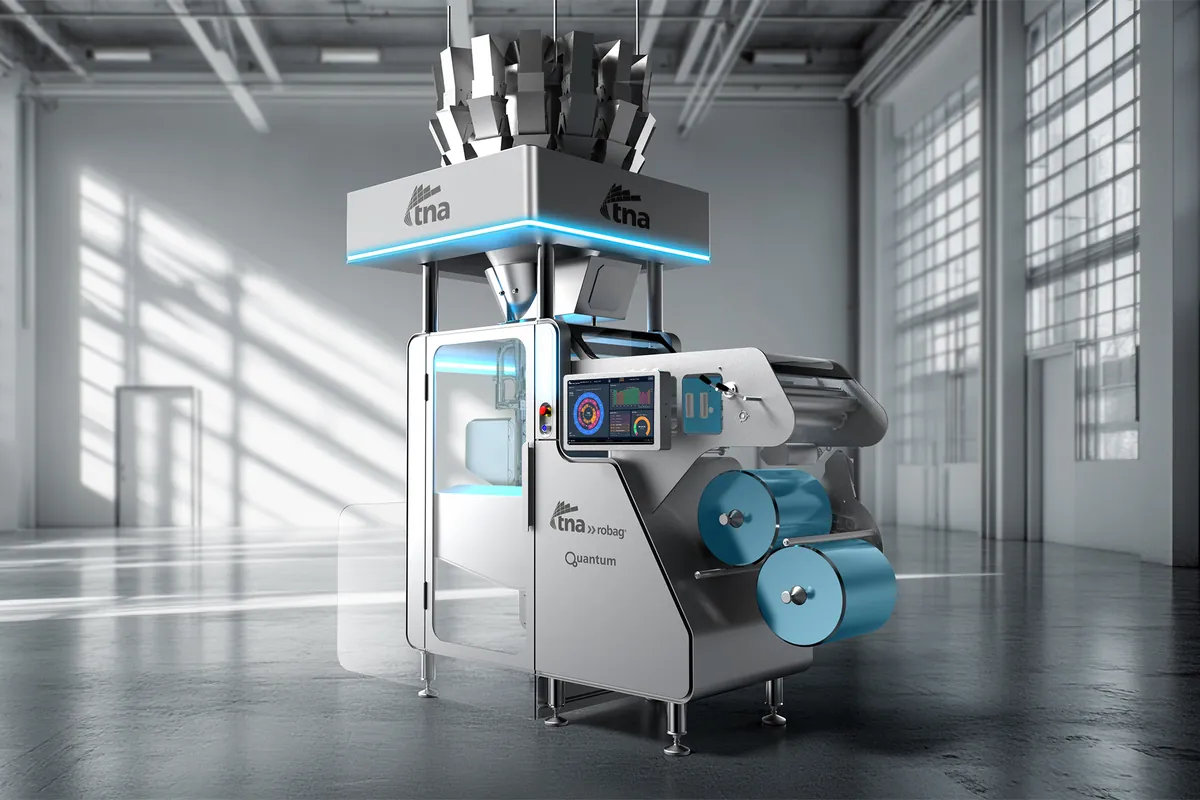 TNA says its tna robag Quantum provides snack packagers with faster changeovers and simpler operation (Image credit: TNA Solutions).As a developer of snack packaging machinery, TNA faces unique customer demands linked to the previously discussed consumer demands, including surrounding considerations for the environment and the demand for convenience.
“Snack manufacturers are being asked to produce more packs, greater variety, and more value, often without additional labor or factory space,” Hill outlines. “Labor shortages, rising costs, and increasing product variety are reshaping production, while the growth of smaller bags and multipacks means more packs must be formed, filled, and moved through the line.”
He says that TNA’s customers are asking for more than machine speed alone. “They are looking for higher throughput without making the factory floor harder to operate, clean, and maintain. They need faster changeovers, repeatable, pack quality, and simpler operation without relying on constant intervention by specialist operators.”
“The tna robag Quantum addresses these requirements. Rather than treating additional capacity as a case of adding more bagmakers, the Quantum focuses on increasing output per tube.”
“This can help manufacturers meet production targets with fewer machines and a more manageable overall line configuration, while reducing the associated infeed and outfeed equipment, cleaning requirements, maintenance demands, and total line complexity.”
The snack packaging innovation Hill expects to impact the industry the most over the next five years is the development of more connected, flexible, and future-ready systems. He adds that these should be able to maintain high throughput across a changing product mix.
“We expect manufacturers to take a different approach to capacity,” he continues. “Rather than automatically adding more machines and the equipment required around them, producers will increasingly look to generate more output from each packaging tube, simplify line configurations, and use available space more effectively.”