



Toppan expands BOPP film capacity with lightweighting focus


Key takeaways
- Toppan and Irplast have opened a new BOPP film production line in Italy, expected to deliver up to 30,000 metric tons of annual capacity from late 2026.
- The high-performance films are designed for demanding packaging applications, including durable formats and retort sterilization processes.
- The companies are focusing on downgauging to reduce plastic use while maintaining film strength, supporting packaging lightweighting efforts.
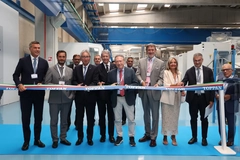 (Image credit: Toppan).
 Toppan Group and its Italy-based film manufacturing subsidiary Irplast have opened a production line for high-performance biaxially oriented PP (BOPP) films, estimated to produce up to 30,000 metric tons of BOPP films annually.
“This deployment expands the Toppan’s production capabilities and enhances manufacturing efficiency, ensuring a stable, local supply to meet the surging demand for sustainable packaging in Europe and beyond,” says the company.
According to Toppan, the BOPP films have uniform properties and stability through linear simultaneous stretching machine processes — a type of biaxial film orientation technology. Therefore, they are said to be suitable for high-end packaging applications that require durability, as well as further demanding processes, such as retort sterilization.
The new line is expected to be operational by late 2026.

Reducing plastic in BOPP films
Using the new manufacturing line, the development of BOPP films will be focused on “downgauging,” says Toppan. Reducing film thickness supports a “steady and continuous” reduction in plastic consumption while maintaining strength.
The company concludes: “The combination of Irplast’s BOPP film manufacturing expertise and Toppan’s broad base of technologies and solutions will expand sustainable solutions worldwide.”
Innovations in plastic reduction through lightweighting continue to rise as brands respond to regulations like the EU’s Packaging and Packaging Waste Regulation. Recently, Packaging Insights spoke to Natalia Ciesla, strategic segment manager at Industrial Physics, about how reducing material weight can create challenges around strength, durability, and quality control.
Lightweighting has helped brands reduce material use and transport emissions, but lightweight formats can also create trade-offs around recyclability, sorting performance, and end-of-life recovery. We recently explored these trade-offs in the pharmaceutical packaging sector with Great Earth and ACG Group.
Toppan’s latest developments
Last year, Toppan and its India-based subsidiary Toppan Specialty Films installed a hybrid manufacturing line in India for producing BOPP and biaxially oriented PE (BOPE) film on the same machine.
Meanwhile, alongside PureCycle Technologies, it developed flexible films and thermoformed packaging using high-quality recycled content to address global regulatory requirements.
More recently, Toppan engineered a light-shielding paper-based pillow solution to eliminate plastic use in trading cards packaging.